Bird
Bird
Ringed Kingfisher
Megaceryle torquata
The Ringed Kingfisher is the largest kingfisher in Trinidad and Tobago and one of the largest in the entire New World, a robust, loud, and conspicuous presence along rivers, reservoirs, and coastal swamp edges.
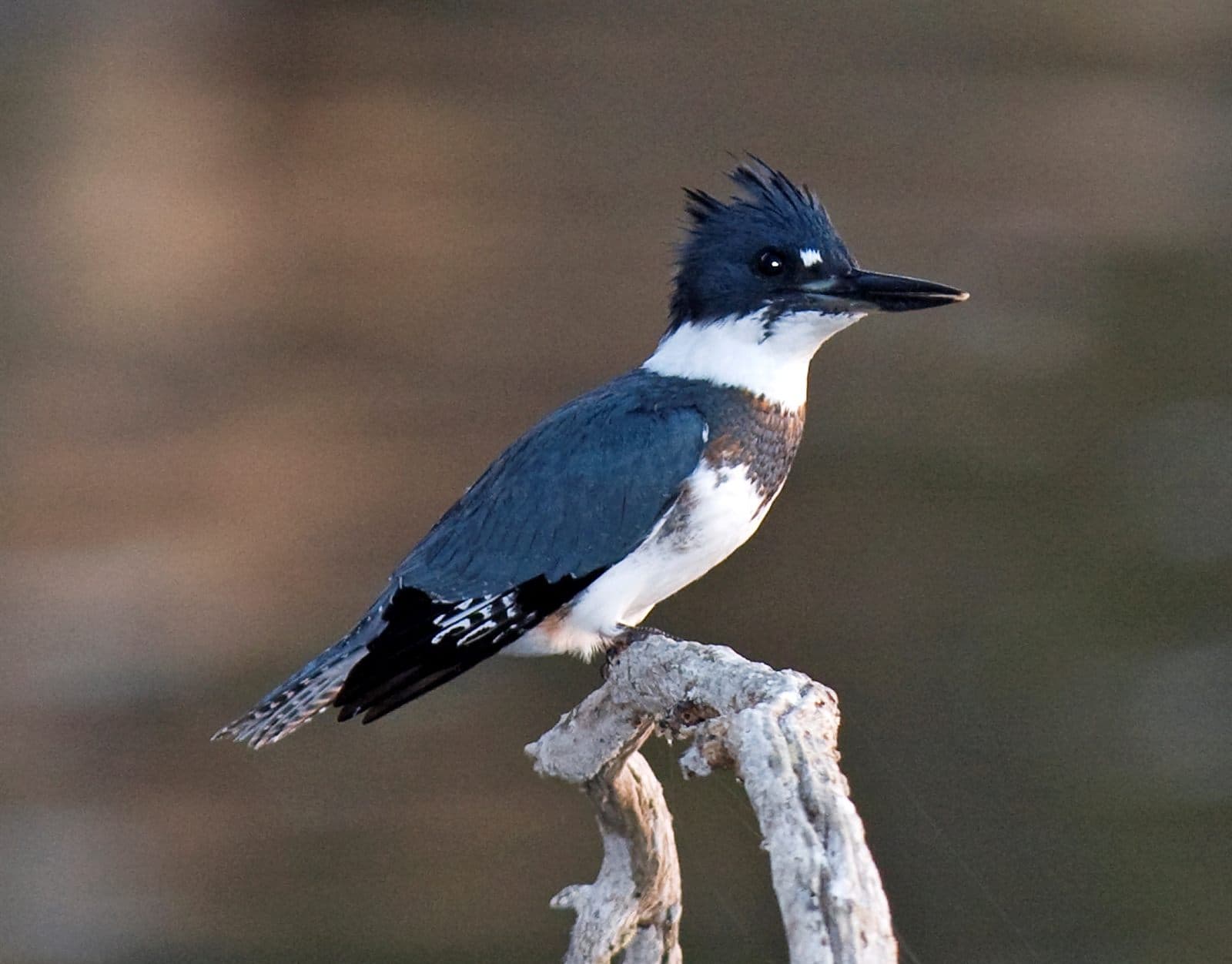
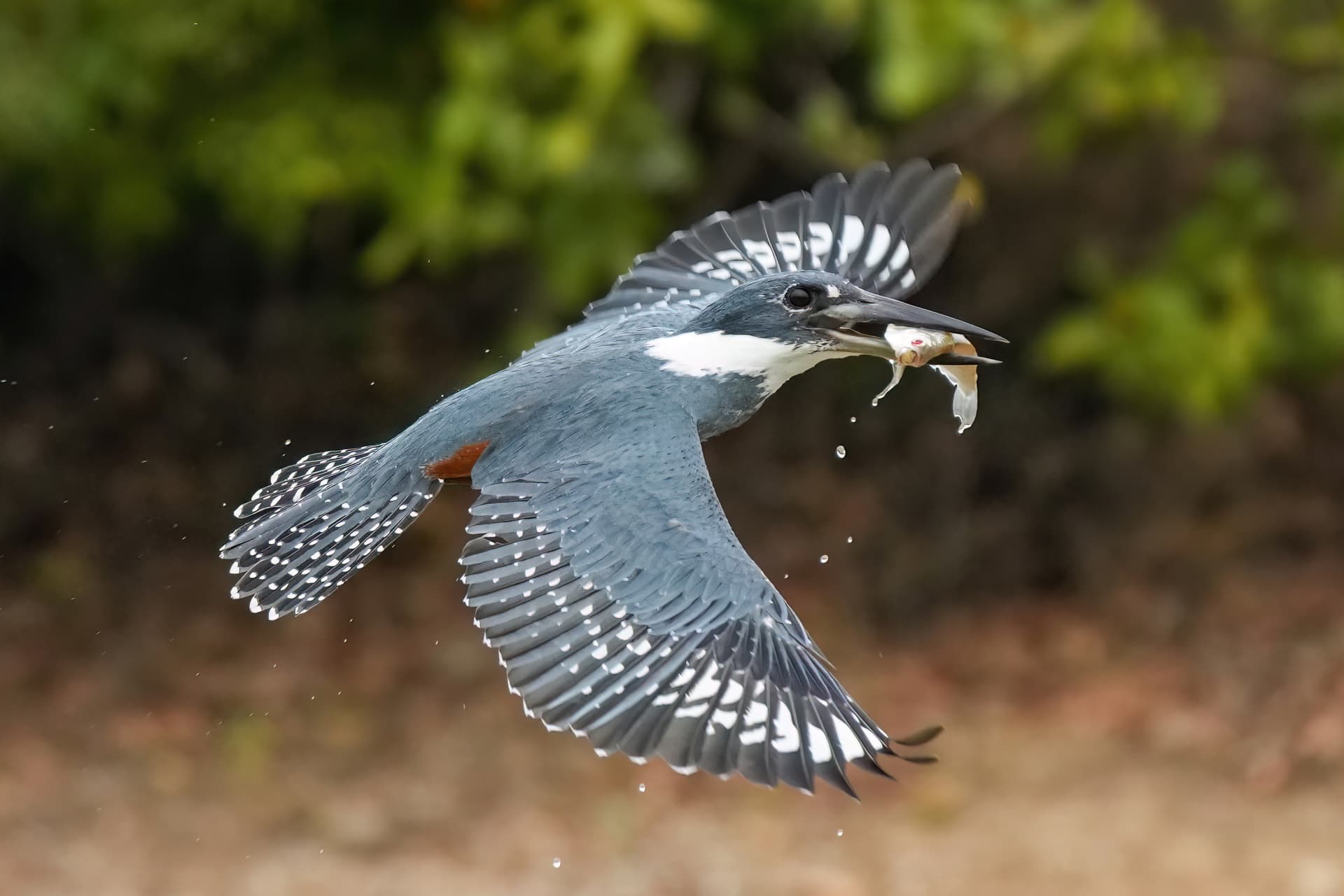
The Ringed Kingfisher is the largest kingfisher in Trinidad and Tobago and one of the largest in the entire New World, a robust, loud, and conspicuous presence along rivers, reservoirs, and coastal swamp edges. Its rattling call carries far across open water, and its habit of perching prominently on dead snags over rivers before plunging headlong after large fish makes it a favourite subject for birdwatchers. The male is distinguished by a rich rufous-chestnut breast, while the female wears a blue-grey band across the chest above the rufous belly.
Identification
The Ringed Kingfisher measures 38 to 41 cm, roughly the size of a small crow. Both sexes have blue-grey upperparts with a prominent white collar at the base of the neck. The male has an entirely rufous-chestnut underside from throat to undertail. The female has a blue-grey breast band separating the white throat from the rufous belly, giving a distinctly different pattern to the male. The bill is long, heavy, and dagger-like. In flight, white spots on the wings are visible. The call is a loud, harsh, machine-gun rattle audible at considerable distances.
Ecology
Ringed Kingfishers hunt fish by hovering or plunging from a prominent perch above the water, diving steeply and entering the water headfirst. Their size allows them to take larger fish than smaller kingfisher species. They are territorial along rivers, defending stretches of waterway with frequent calling. Pairs excavate a burrow in an earthen bank to nest, digging a tunnel 1 to 2 metres long ending in a nest chamber. Typically 3 to 5 eggs are laid and both parents share incubation and chick-rearing duties.
Status in T&T
The Ringed Kingfisher is found on Trinidad, primarily along rivers, large streams, and reservoirs such as Caroni Swamp margins, the Nariva Swamp, and the Arena Dam area. It is less common on Tobago. The species is fully protected under the Conservation of Wild Life Act. It is sensitive to freshwater pollution, river channelisation, and the collapse of fish populations through overfishing or chemical contamination, making clean river management important for its conservation.
Threats
- River pollution and sedimentation
- Fish population depletion
- River bank disturbance and channelisation