Bird
Bird
Belted Kingfisher
Megaceryle alcyon
The Belted Kingfisher is a large, crested, blue-grey kingfisher that visits Trinidad and Tobago as a non-breeding migrant from North America, typically encountered solitarily along rivers, lagoons, and coastal waters giving its harsh, rattling call as it flies off ahead of an approaching observer.
The Belted Kingfisher is a large, crested, blue-grey kingfisher that visits Trinidad and Tobago as a non-breeding migrant from North America, typically encountered solitarily along rivers, lagoons, and coastal waters giving its harsh, rattling call as it flies off ahead of an approaching observer.
Identification
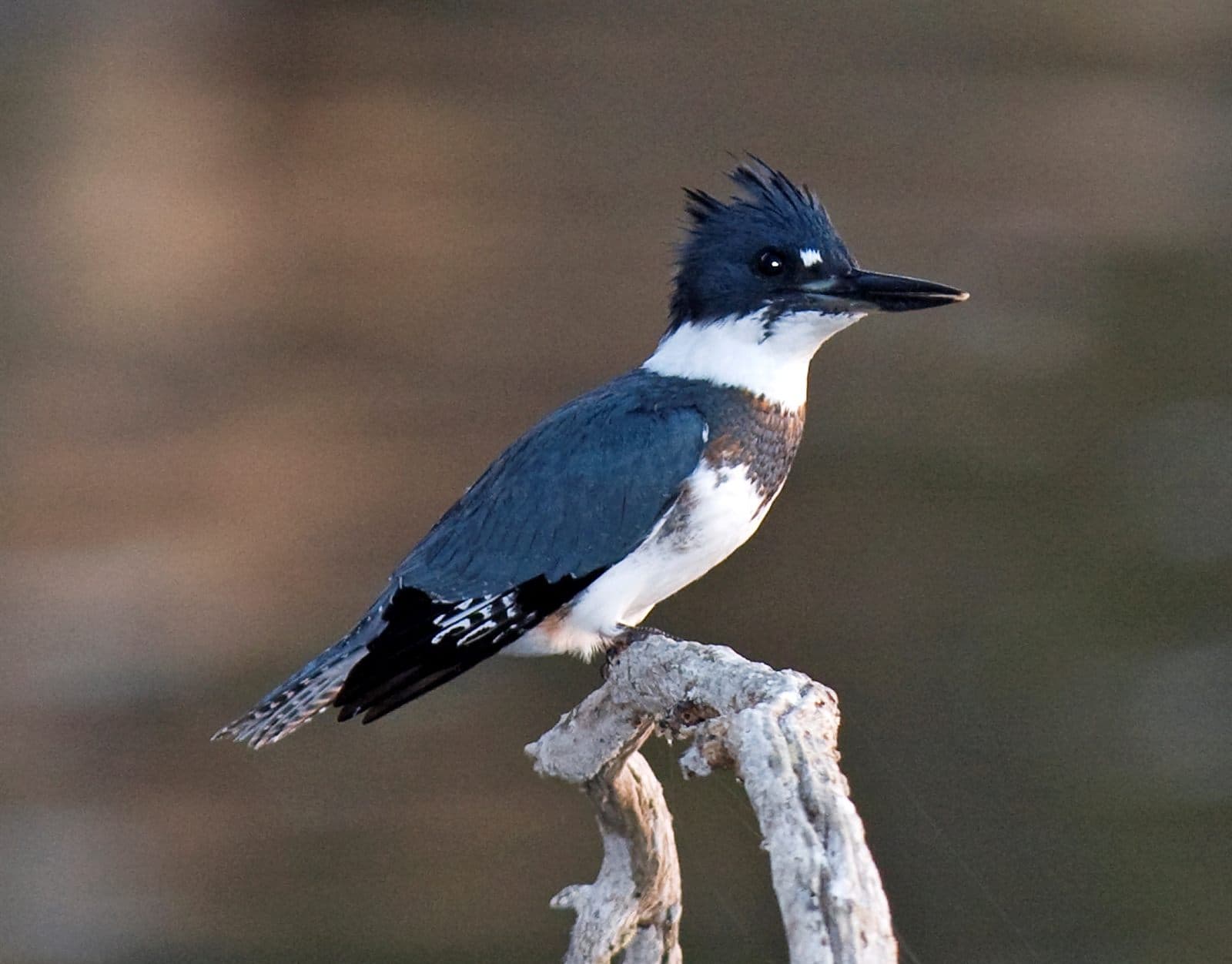
A large kingfisher around 28 to 35 cm long, slate-blue above with a shaggy double-pointed crest, a white collar, and a heavy black bill. Both sexes show a blue breast band, but females are distinguished by an additional rufous band across the belly and flanks that males lack, an unusual case of the female being more colourful than the male among birds. Flight is strong and undulating, often accompanied by the loud, dry, rattling call.
Ecology
The Belted Kingfisher hunts by perching over water or hovering before plunge-diving to catch fish, and also takes crustaceans, amphibians, and aquatic insects. It is strongly territorial even outside the breeding season, with individuals defending a stretch of shoreline or riverbank against other kingfishers during the non-breeding period. In its breeding range it excavates a long horizontal burrow nest in earthen banks, but no breeding activity occurs in T&T.
Migration
The Belted Kingfisher does not breed in T&T; birds recorded here are non-breeding winter visitors from North American breeding populations, present mainly from the northern autumn through spring along rivers, lagoons, and coastal waters of both Trinidad and Tobago before returning north.
Threats
- Freshwater and coastal habitat degradation at wintering sites
- Disturbance of feeding perches along rivers and shorelines