Mammal
Mammal
Red-rumped Agouti
Dasyprocta leporina
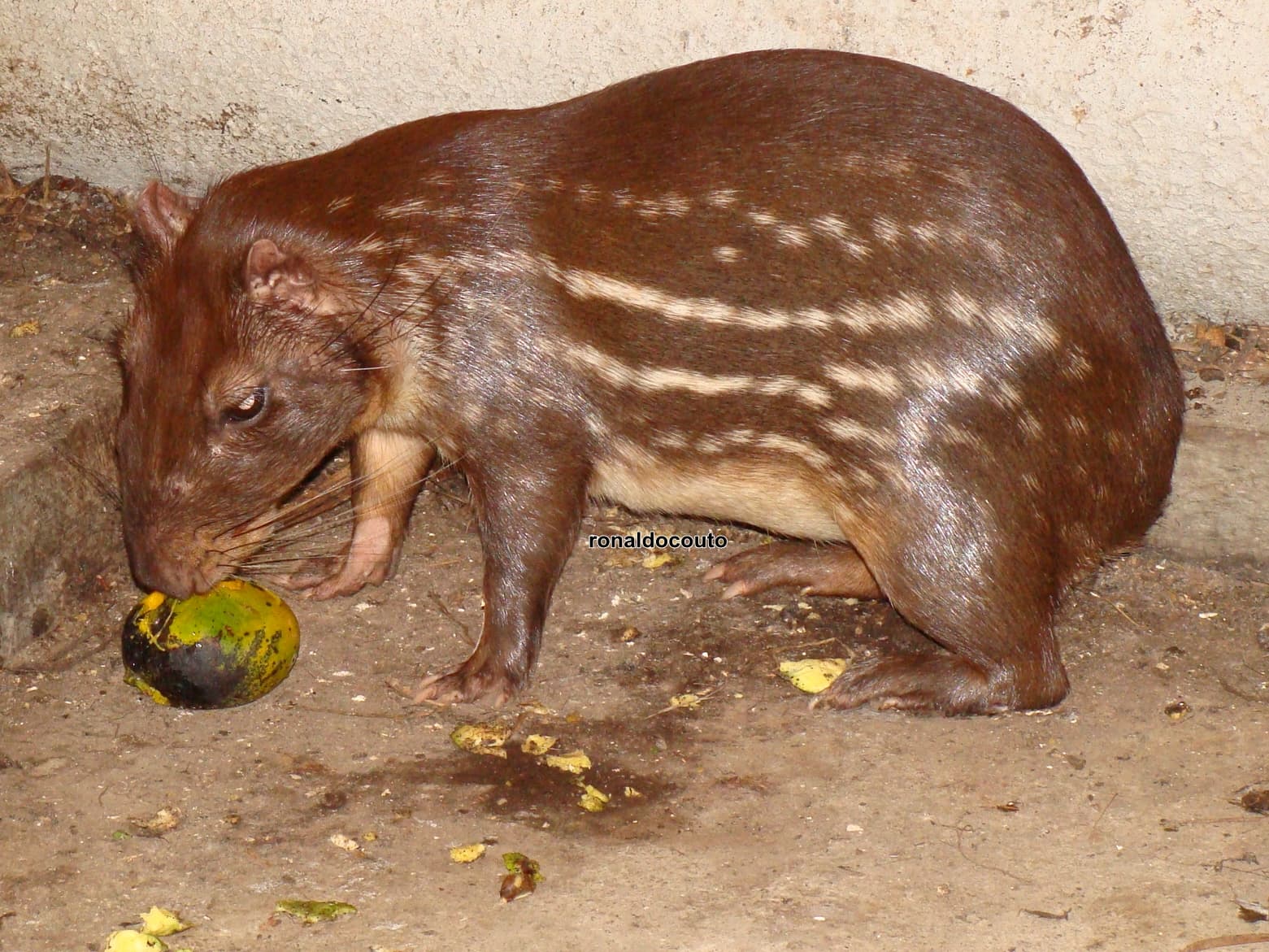
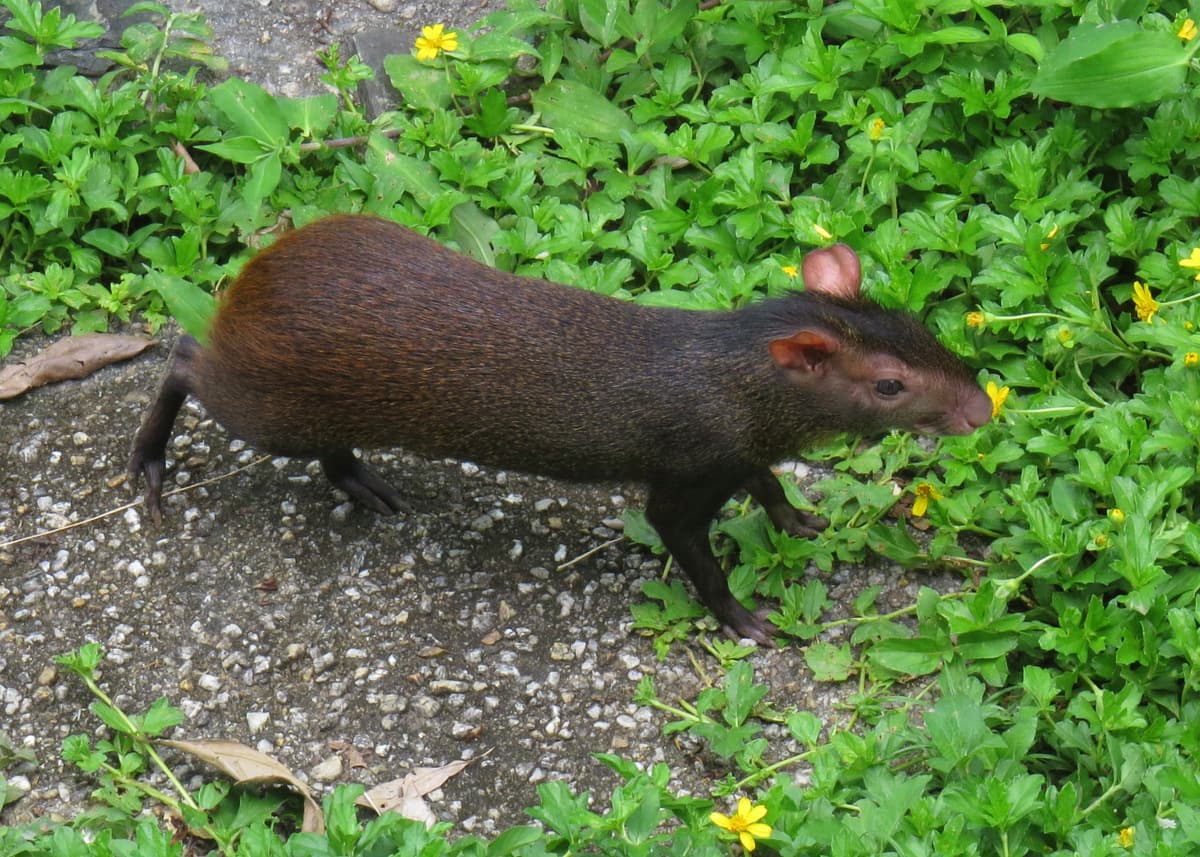
The Red-rumped Agouti, known locally simply as the 'agouti' or 'goat', is a medium-sized ground-dwelling rodent of forest floors across both Trinidad and Tobago.
The Red-rumped Agouti, known locally simply as the 'agouti' or 'goat', is a medium-sized ground-dwelling rodent of forest floors across both Trinidad and Tobago. It is one of the most familiar wild mammals on the islands and a prized game animal hunted for its meat.
Identification
The agouti is a compact, long-legged caviomorph rodent with coarse, glossy fur that is brown to grizzled over the body and warms to a reddish or orange tone over the rump, the feature that gives the species its name. The underparts are paler, and the tail is reduced to a tiny stub. Adults typically measure around 49 to 64 cm in body length and weigh roughly 3 to 6 kg, moving across the forest floor in a series of quick, nervous hops.
Ecology
The agouti is mainly frugivorous, feeding on fallen fruit, nuts, and seeds, and supplementing this with leaves, roots, and occasionally insects. It is a key seed disperser: it scatter-hoards surplus seeds in shallow buried caches, and the seeds that are never recovered germinate, helping regenerate the forest.
It is largely diurnal, foraging on the ground by day and sheltering in burrows or dense cover. Natural predators include wild cats, large snakes, and birds of prey, and the animal is famously wary, pausing frequently to watch and listen.
Status in T&T
Globally the species is assessed by the IUCN as Least Concern, with a wide South American and Caribbean range and a stable overall population. In Trinidad and Tobago it remains widespread in forested areas.
The agouti is a designated game animal under the Conservation of Wild Life Act (Chapter 67:01) and is one of the most heavily hunted wild mammals in the country, taken for its meat during the open hunting season (October 1 to February, with March reserved for disposal of game). Hunting is permitted only under licence and within the legal season; sustained hunting pressure is the main local management concern.