Mammal
Mammal
Proboscis Bat
Rhynchonycteris naso
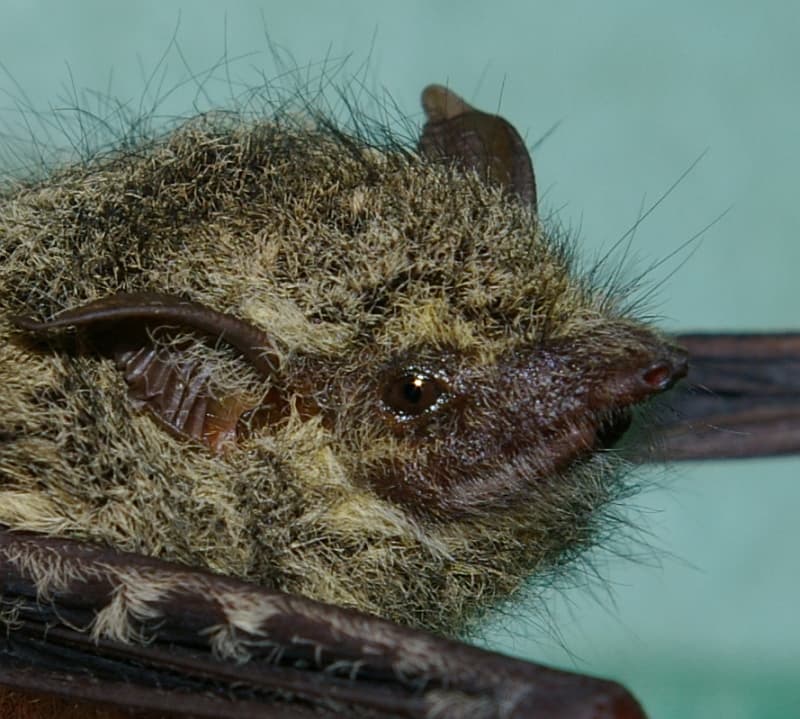
The Proboscis Bat is a tiny, delicately marked bat instantly recognisable by the neat, evenly spaced rows it forms while roosting in daylight on tree trunks and under bridges along Trinidad's rivers.
The Proboscis Bat is a tiny, delicately marked bat instantly recognisable by the neat, evenly spaced rows it forms while roosting in daylight on tree trunks and under bridges along Trinidad's rivers. Unusually for a bat, its roosting groups are easy to see by day, making it one of the few species regularly observed without special equipment.
Identification
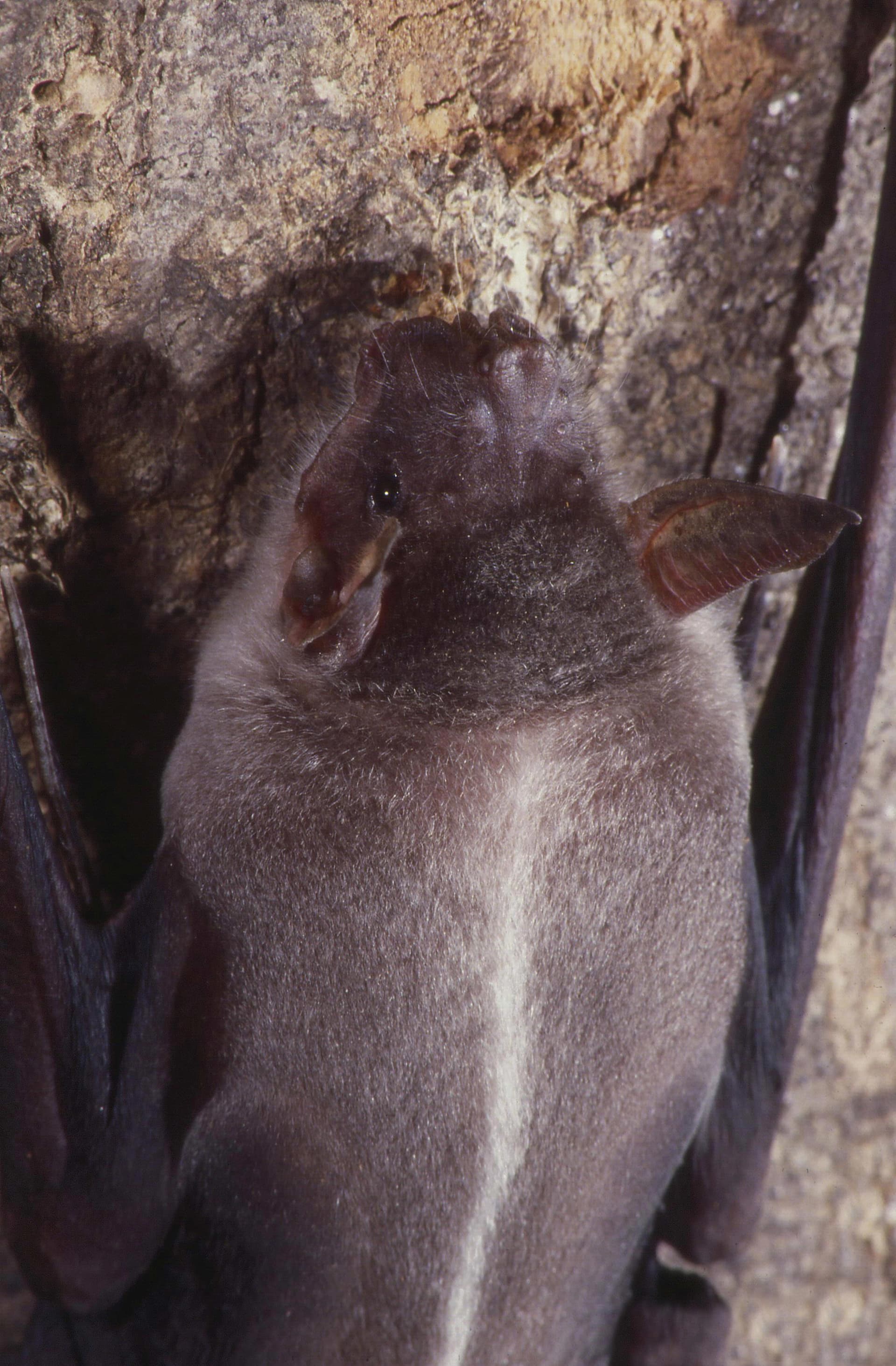
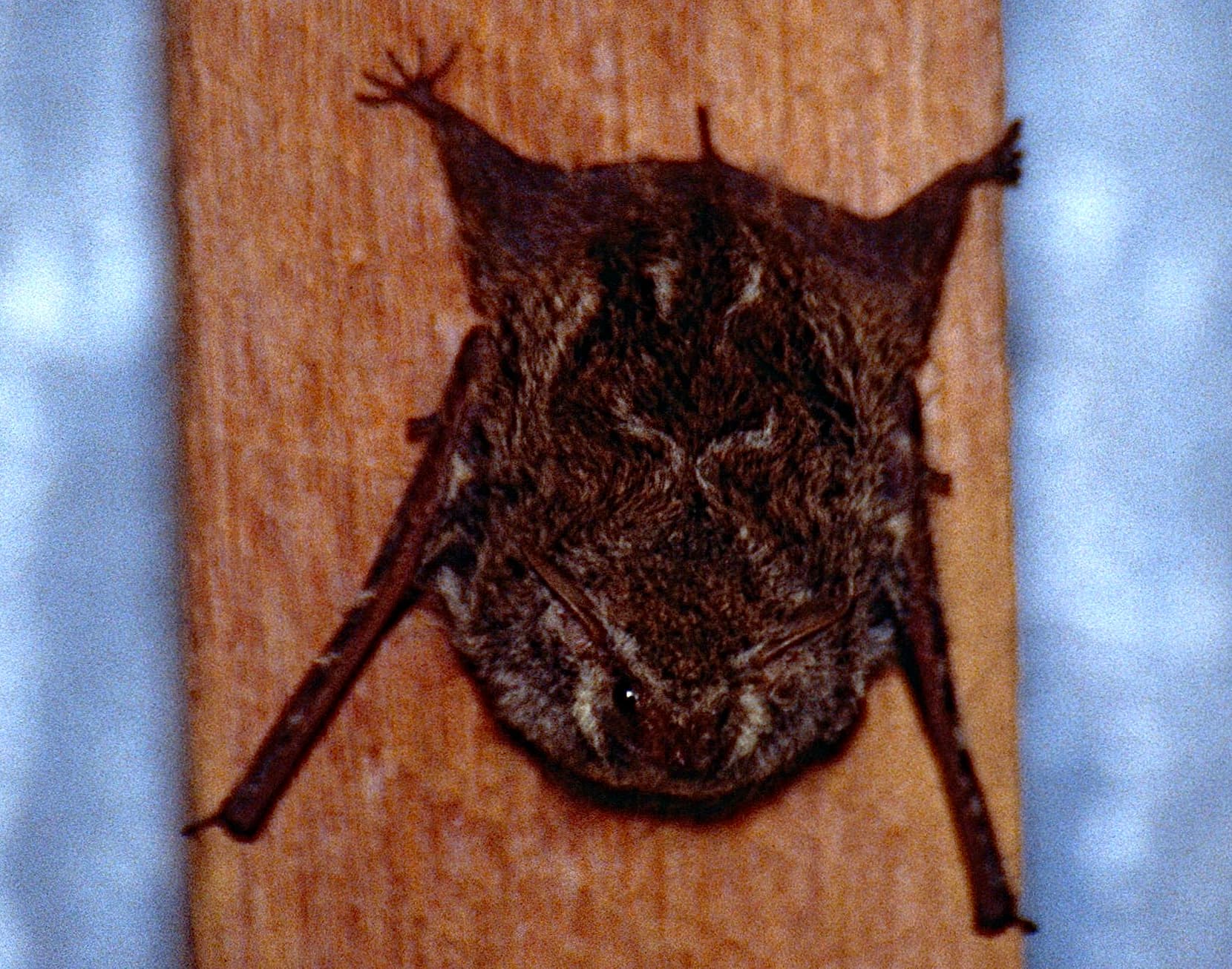
One of the smallest bats in Trinidad, with a body length of only around 4 cm and a forearm of 35 to 40 mm. Fur is grizzled grey-brown with faint pale wavy lines across the back, providing effective camouflage against tree bark. The snout is elongated and pointed, giving the species its common name, and there is no nose-leaf, unlike the leaf-nosed bats.
Ecology
Roosts by day in small groups of typically 4 to 10 individuals, lined up head-to-tail in a single evenly spaced row on vertical surfaces such as tree trunks, fallen logs, and the undersides of bridges, almost always directly over or very close to water. This behaviour and its cryptic colouration make roosting groups look like a strip of lichen or bark texture until they take flight. By night it forages low over rivers and streams for small flying insects, using rapid, fluttering flight.
Status in T&T
Common along rivers, streams, and mangrove creeks across Trinidad, particularly where overhanging trees and calm water combine. Not threatened, though sensitive to disturbance of riverside roost sites and to water pollution reducing insect prey. It is protected as native wildlife under the Conservation of Wildlife Act.
Threats
- Disturbance of exposed daytime roost sites
- Water pollution reducing insect prey