Bird
Bird
Pied-billed Grebe
Podilymbus podiceps
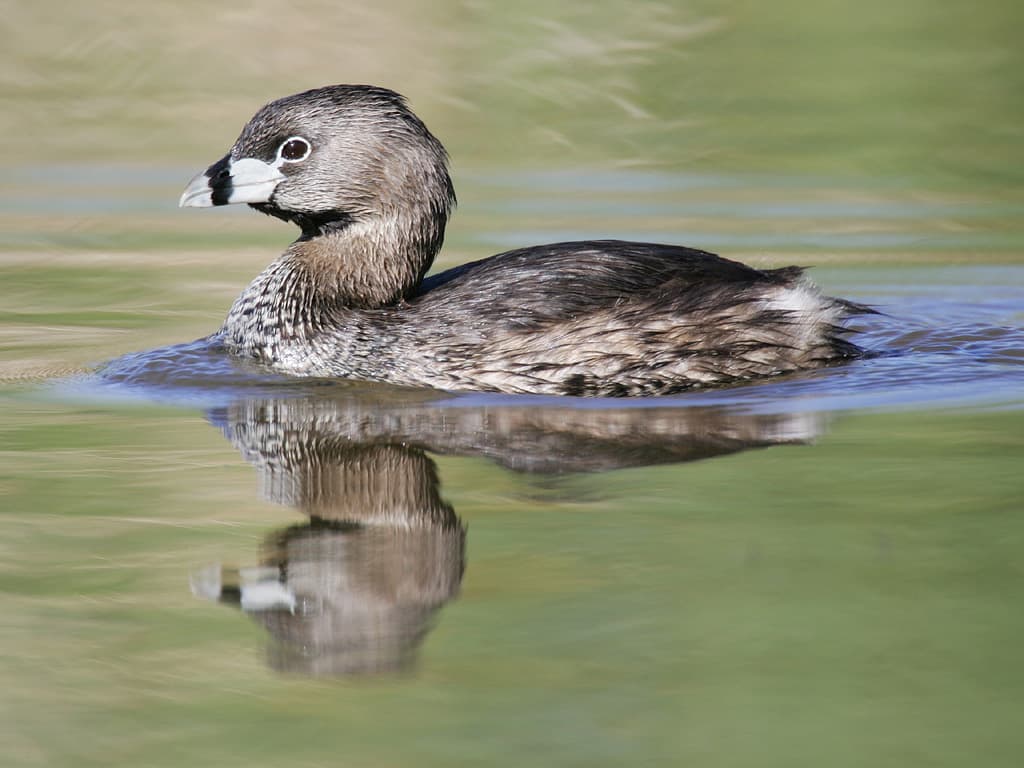
The Pied-billed Grebe is a small, stocky, expert diving waterbird found on quiet freshwater ponds across Trinidad and Tobago, more often detected by its far-carrying, whooping call than seen, given its habit of diving underwater and slipping away at the first sign of disturbance.
The Pied-billed Grebe is a small, stocky, expert diving waterbird found on quiet freshwater ponds across Trinidad and Tobago, more often detected by its far-carrying, whooping call than seen, given its habit of diving underwater and slipping away at the first sign of disturbance.
Identification
A small, chunky waterbird around 31 to 38 cm long, brown overall with a short, thick, pale bill crossed by a bold black band in breeding condition, giving the species its common name. The tail is essentially absent, and the body sits low in the water. Unlike ducks, grebes have lobed rather than webbed toes and legs set far back on the body, an adaptation for efficient underwater swimming at some cost to walking ability on land.
Ecology
The Pied-billed Grebe is an expert diver, pursuing small fish, aquatic insects, crustaceans, and amphibians underwater, and can adjust its buoyancy to sink slowly and silently below the surface rather than diving conspicuously, a behaviour used to avoid predators and disturbance. It builds a floating nest anchored to emergent marsh vegetation on quiet, well-vegetated freshwater ponds and lagoons, and is generally solitary or found in pairs rather than flocks.
Status in T&T
Found on quiet freshwater ponds, lagoons, and marshes on both Trinidad and Tobago, generally in low numbers and easily overlooked owing to its secretive, diving habits. It is not threatened. It is protected under the Conservation of Wildlife Act and is not a game species.
Threats
- Freshwater wetland pollution and habitat loss
- Disturbance of nesting vegetation