Bird
Bird
Ornate Hawk-Eagle
Spizaetus ornatus
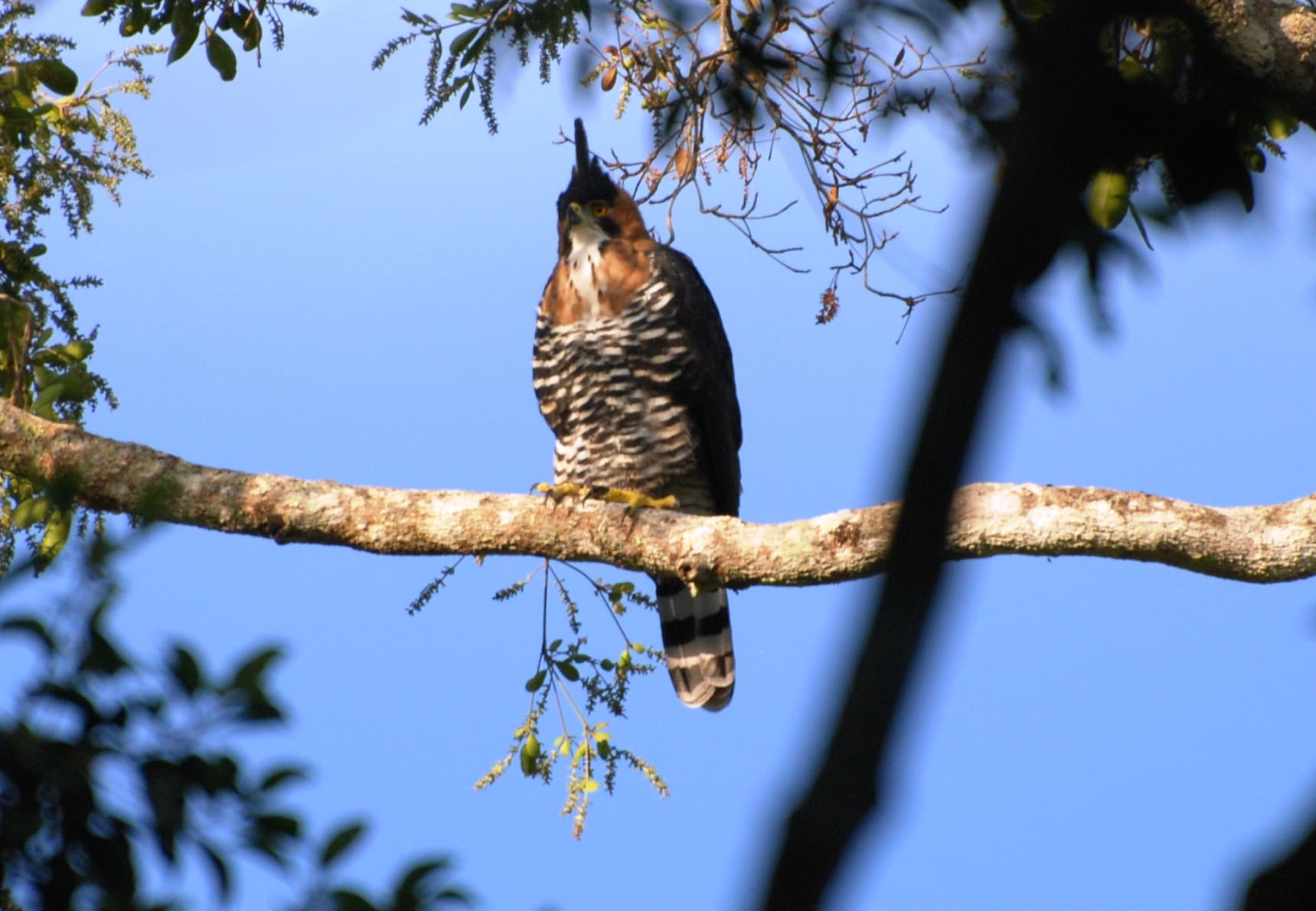
The Ornate Hawk-Eagle is one of the most spectacular raptors of T&T's rainforests, a powerful, crested eagle of the interior forest that combines bold rufous and black-and-white patterning with a dramatic black-and-white crest, giving it the bearing of a heraldic emblem.
The Ornate Hawk-Eagle is one of the most spectacular raptors of T&T's rainforests, a powerful, crested eagle of the interior forest that combines bold rufous and black-and-white patterning with a dramatic black-and-white crest, giving it the bearing of a heraldic emblem. A demanding indicator of intact primary forest, it is rarely seen but occasionally heard through its distinctive rising whistle call, and a sighting above the Northern Range canopy is among the most prized encounters for visiting birdwatchers. Its presence is a direct signal of healthy, undisturbed high forest on both islands.
Identification
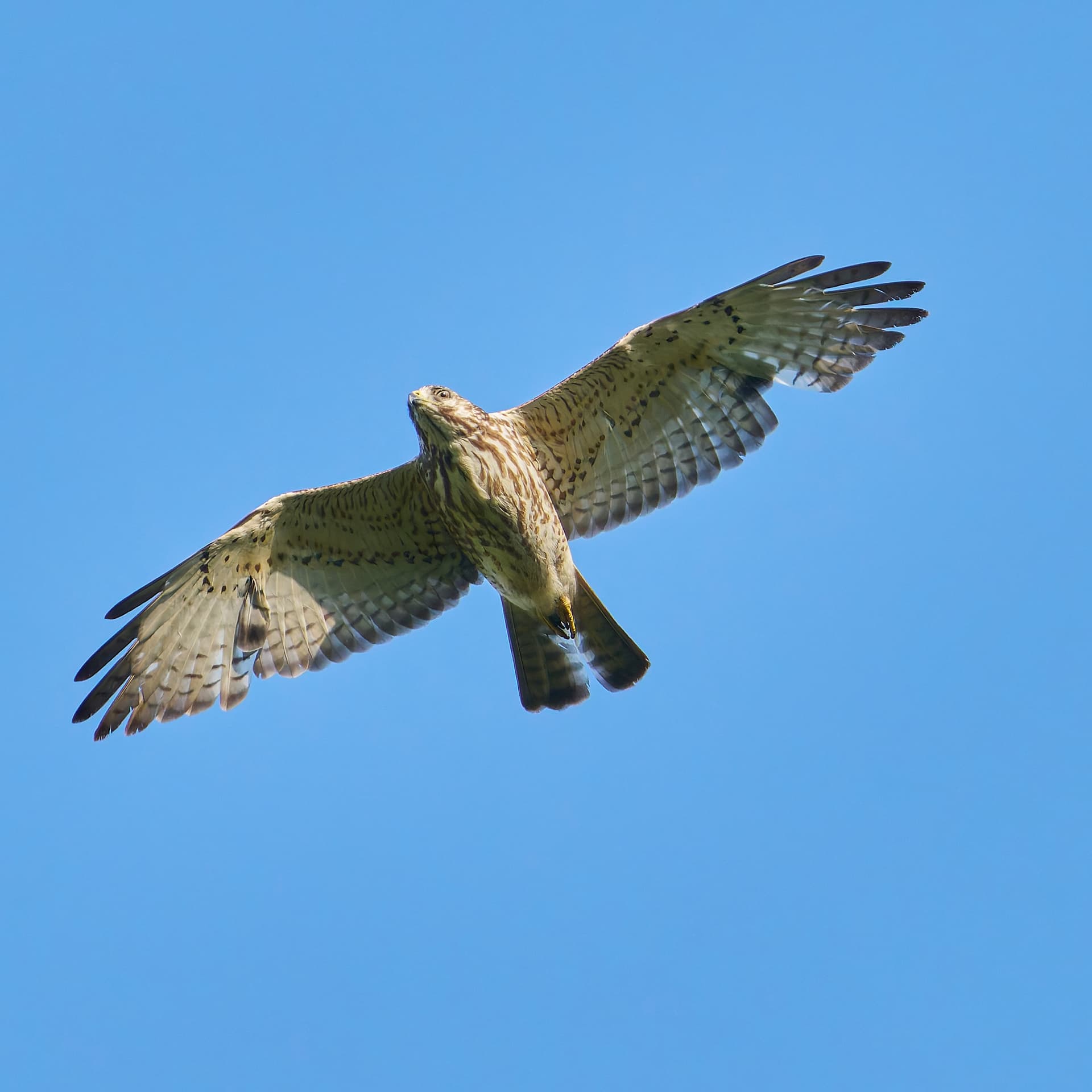
The Ornate Hawk-Eagle measures 56 to 65 cm with broad, rounded wings and a long, banded tail. The upperparts are dark slate-brown. The head has a bold black-and-white crest that is frequently raised when alert, giving the bird a dramatic horned appearance. The face and sides of the neck are rich rufous-chestnut. The underparts are white with dense black streaking and barring on the breast and flanks. The eyes are large and yellow-orange. In flight the underwing shows barred flight feathers and rufous wing linings. Juveniles are paler and less strongly marked, developing adult pattern over several years.
Ecology
Ornate Hawk-Eagles are forest interior predators, hunting from perches within the canopy or making fast surprise attacks through the understorey. Prey includes medium-sized birds up to the size of toucans and small parrots, squirrels, lizards, and small mammals. They are territorial over large home ranges of several square kilometres of intact forest, and the low density of suitable habitat combined with slow breeding (a single egg per nesting attempt, long fledgling dependency period) makes populations very sensitive to forest loss. Their persistent whistled call, a series of rising notes, carries through the forest and is often the first indication of their presence.
Status in T&T
The Ornate Hawk-Eagle is a resident of Trinidad's Northern Range primary forest and is also recorded in Tobago's Main Ridge Forest Reserve. It is uncommon and thinly distributed, requiring large tracts of undisturbed interior forest. The species is fully protected under the Conservation of Wild Life Act and is not a game species. Its strict dependence on intact high forest makes it one of the most sensitive avian indicators of forest quality in T&T; any detected decline in its population would signal serious deterioration of forest conditions.
Threats
- Primary forest loss and fragmentation
- Reduction of large forest home range availability
- Prey depletion from hunting within forests