Mammal
Mammal
Ocelot
Leopardus pardalis
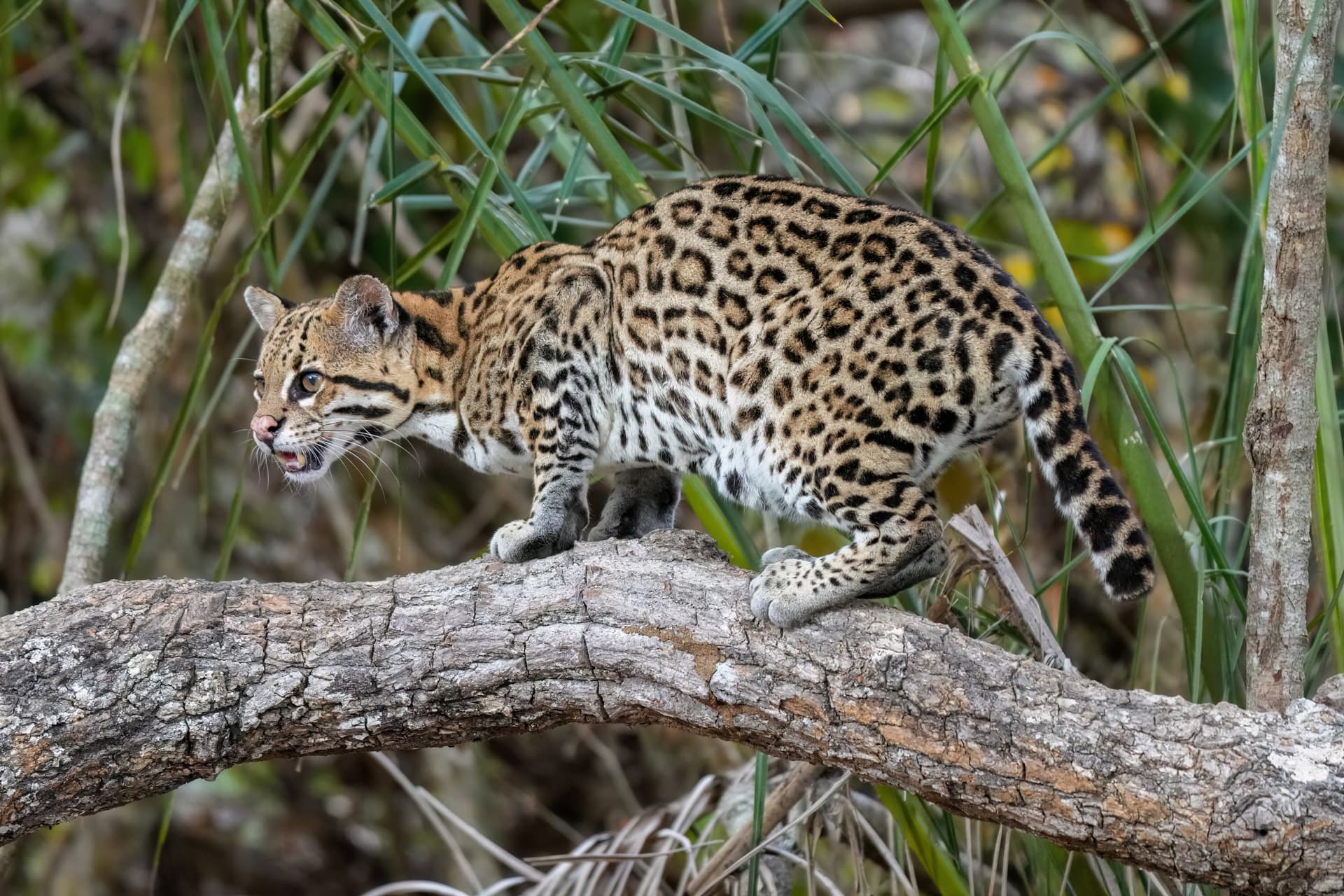
Photo: Giles Laurent · Pantanal, Brazil (CC BY-SA 4.0)
The Ocelot is Trinidad's only native wild cat and the island's largest wild felid.
The Ocelot is Trinidad's only native wild cat and the island's largest wild felid. A nocturnal, solitary predator of forest, wetland and scrub, it is a designated Environmentally Sensitive Species (ESS) and is strictly protected. It occurs only in Trinidad and has never been recorded as a native resident of Tobago.
Identification
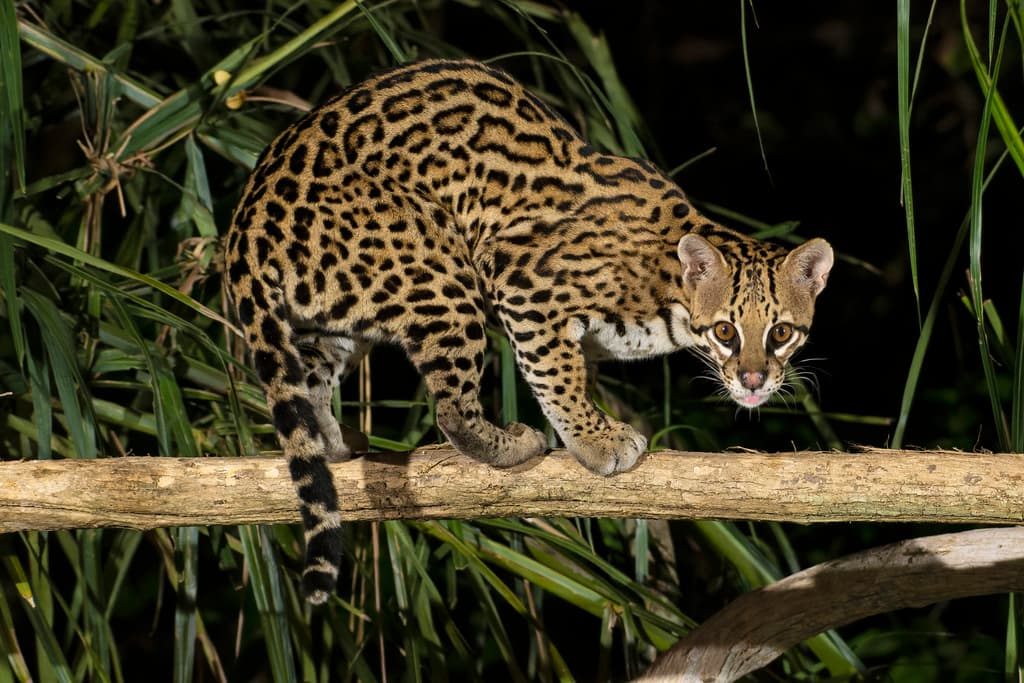
A medium-sized spotted cat with a head-and-body length of roughly 55 to 100 cm plus a tail of about 30 to 45 cm, standing some 40 to 50 cm at the shoulder and weighing around 7 to 18 kg. The tawny to greyish coat is patterned with dark rosettes, chain-like blotches and stripes, with a pale underside and a banded tail. It is the largest of the small cats of tropical America and the largest wild cat found in Trinidad.
Ecology
The Ocelot is mainly nocturnal and crepuscular, solitary and territorial, resting by day and hunting from dusk through the night. It uses dense forest cover, mangrove and coastal swamp, savanna and scrub, generally near water and away from roads and settlement. As a generalist carnivore it takes small terrestrial mammals such as rodents, agouti, opossums and armadillos, along with birds, reptiles, fish, crustaceans and insects, helping regulate prey populations as a top forest predator.
Status in T&T
Globally the Ocelot is listed as Least Concern by the IUCN, but in Trinidad and Tobago it is nationally a designated Environmentally Sensitive Species (ESS) and is strictly protected: hunting, harming or disturbing it is prohibited. It is found only in Trinidad, where it is the sole native wild cat, and is absent from Tobago. Harming an ESS contravenes the Environmental Management Act, which carries penalties of up to TT$100,000 and two years imprisonment.