Bird
Bird
Neotropic Cormorant
Phalacrocorax brasilianus
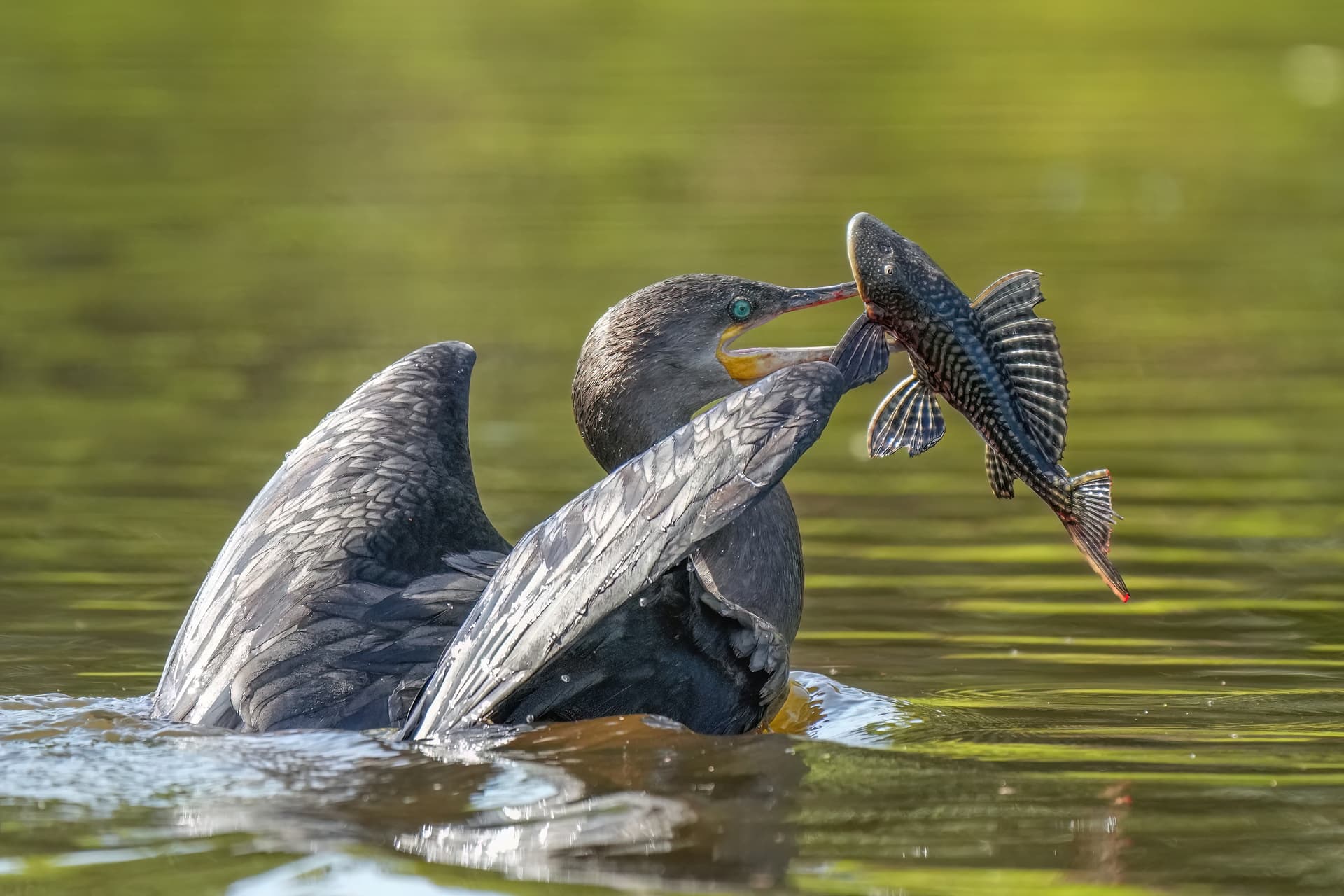
Photo: Charles J. Sharp · Costanera Sur Ecological Reserve, Buenos Aires, Argentina (CC BY-SA 4.0)
The Neotropic Cormorant is a sleek, dark waterbird found throughout Trinidad's freshwater and estuarine wetlands, a skilled pursuit diver that hunts fish underwater with powerful webbed feet.
The Neotropic Cormorant is a sleek, dark waterbird found throughout Trinidad's freshwater and estuarine wetlands, a skilled pursuit diver that hunts fish underwater with powerful webbed feet. Often seen in small groups perched on snags, mangrove branches, or coastal structures with wings outstretched to dry in a posture shared with its relative the Anhinga, the cormorant is a regular and familiar sight along the waterways and wetland edges of both islands.
Identification
The Neotropic Cormorant is 58 to 73 cm long with a long tail, relatively small head, and slender hooked bill. Plumage is entirely glossy black with a greenish sheen; during the breeding season adults develop a small white tuft behind the eye and a white border to the small yellow-orange gular pouch beneath the chin. The gular pouch has a pointed rear edge that distinguishes this species from the larger Double-crested Cormorant. Immatures are brown. In flight, the species has a long neck, long tail, and beats its wings rapidly with brief glides.
Ecology
Neotropic Cormorants are foot-propelled divers that pursue fish underwater, herding them cooperatively when feeding in groups. Like the anhinga, the feathers lack full waterproofing and must be dried after diving sessions. They roost and nest colonially on trees over water or on coastal structures, often alongside herons, egrets, and anhingas. Nests are stick platforms that are reused and added to in successive years. This cormorant is highly adaptable, using freshwater ponds, rivers, estuaries, mangroves, and sheltered coastal bays.
Status in T&T
The Neotropic Cormorant is found in Trinidad, particularly in the Gulf of Paria coast, Caroni and Nariva swamps, and associated freshwater bodies. It is less commonly recorded in Tobago. The species is fully protected under the Conservation of Wild Life Act and is not a game species. It has benefited from the establishment of protected wetland areas in Trinidad and from legal protection of nesting colonies.
Threats
- Wetland pollution
- Disturbance of nesting colonies
- Overfishing reducing prey availability