Bird
Bird
Muscovy Duck
Cairina moschata
The wild Muscovy Duck is the ancestor of the familiar barnyard Muscovy kept worldwide, but the true wild form is a large, dark, forest-loving duck of Trinidad's swamps and rivers, considerably wilder in habits and appearance than its widely domesticated descendant.
The wild Muscovy Duck is the ancestor of the familiar barnyard Muscovy kept worldwide, but the true wild form is a large, dark, forest-loving duck of Trinidad's swamps and rivers, considerably wilder in habits and appearance than its widely domesticated descendant.
Identification
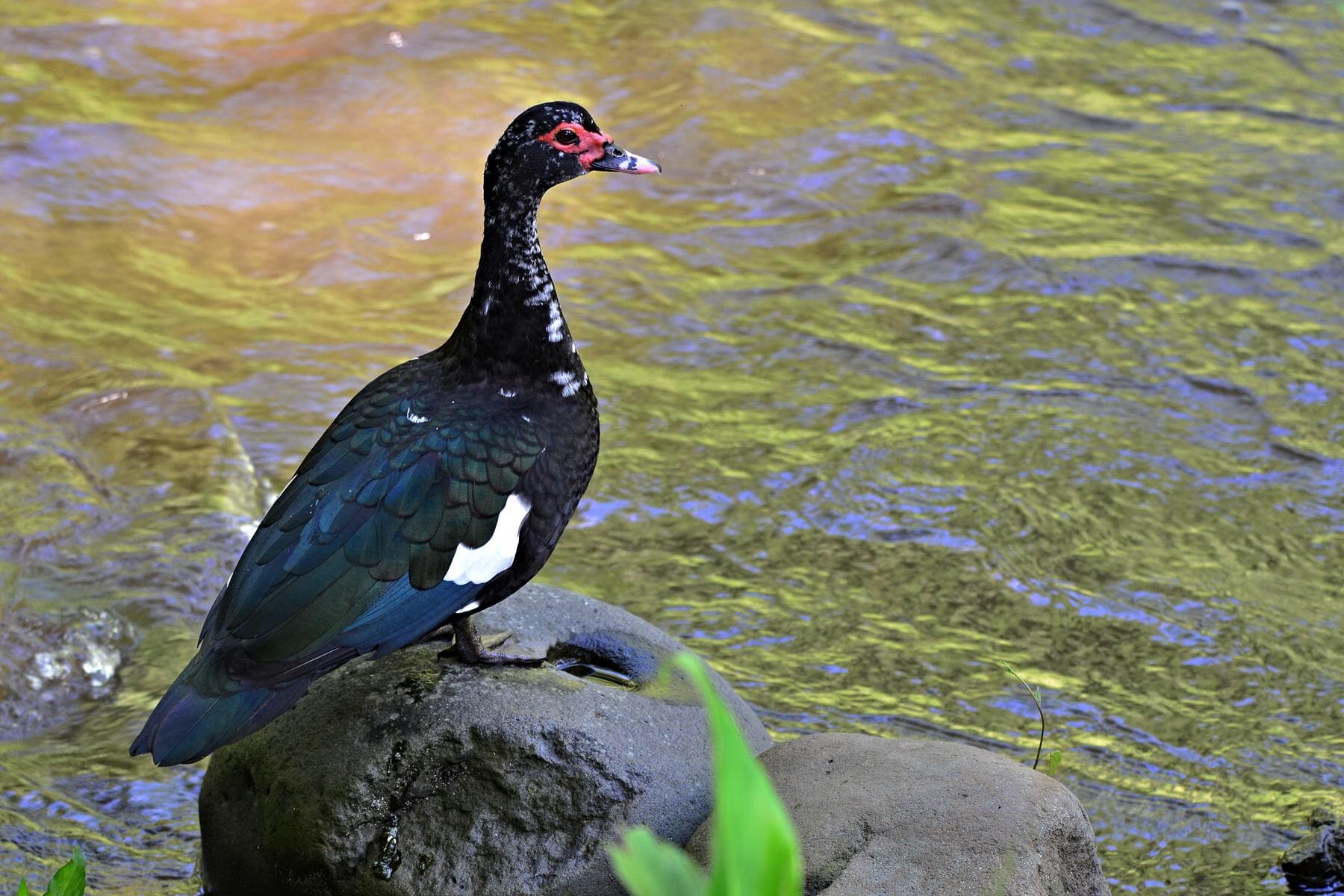
A large duck, with wild males reaching around 84 cm and considerably larger than females. Wild-type plumage is glossy blackish overall with iridescent green and purple sheens on the back and wings, and a bold white wing patch visible in flight, distinct from the mottled black-and-white or all-white variants common in domesticated stock. Wild birds lack the fleshy red facial caruncles that develop heavily in domesticated Muscovies, showing only a small area of bare red-black facial skin.
Ecology
True wild Muscovy Ducks are found around forested rivers, swamps, and freshwater wetlands, nesting in tree cavities close to water, unusually for a duck. They feed on aquatic vegetation, seeds, small fish, and invertebrates, dabbling and grazing in shallow water and on wetland margins. Wild birds are generally wary and roost in trees at night, in contrast to domesticated forms bred for docility and ground-dwelling habits.
Status in T&T
Genuinely wild Muscovy Ducks persist in Trinidad's swamp forests and river systems, notably Nariva Swamp and other freshwater wetlands, though populations are increasingly affected by hybridisation with free-ranging domesticated and feral birds derived from farmyard stock. The wild form is not considered globally threatened, but genetically pure wild populations are a conservation concern in parts of its range. It is named as a game species in the Second Schedule of the Conservation of Wildlife Act, but the Waterfowl State Game Licence category has been revoked since at least the 2019-2020 season, so hunting it is currently prohibited T&T-wide.
Threats
- Hybridisation with feral domesticated Muscovy Ducks
- Wetland habitat loss and degradation
- Illegal hunting