Mammal
Mammal
Lowland Paca
Cuniculus paca
The lowland paca, known throughout Trinidad as the lappe, is a large, secretive rainforest rodent and one of the biggest in the Americas.
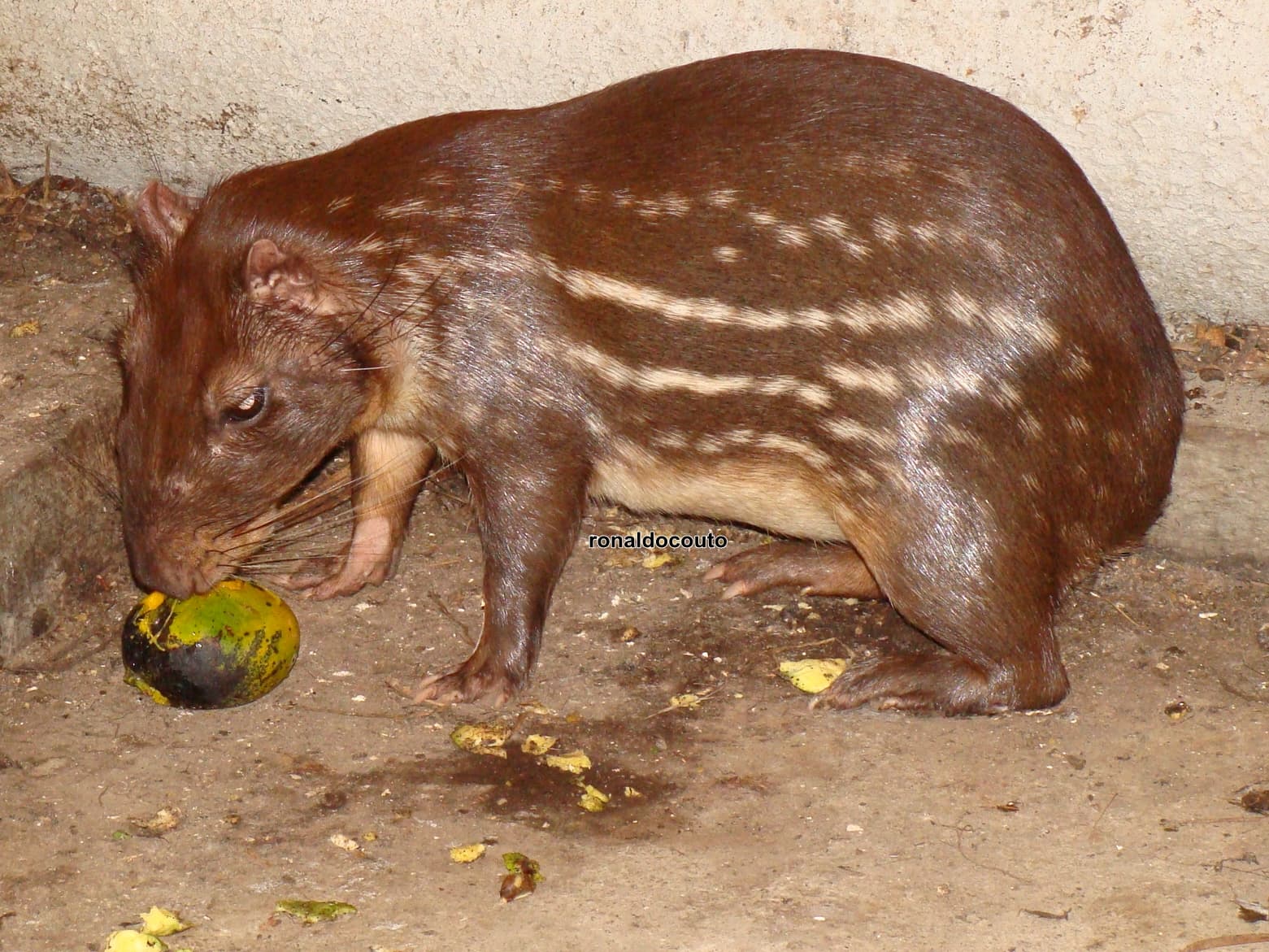
The lowland paca, known throughout Trinidad as the lappe, is a large, secretive rainforest rodent and one of the biggest in the Americas. Its rich brown coat marked with rows of pale spots and its reputation as a prized bush meat make it one of the most familiar wild mammals in Trinidadian hunting culture.
Appearance
The lowland paca is a stout, pig-like rodent reaching 60 to 80 cm in body length and weighing 6 to 12 kg, making it the second largest rodent in the region after the capybara. Its coarse fur is reddish to dark brown above and paler below, marked along each flank by three to five longitudinal rows of white spots. It has a large blunt head, short rounded ears, almost no visible tail, and powerful hind legs built for short bursts of speed.
Behaviour
Pacas are strictly nocturnal and solitary, spending the day resting in burrows that they dig themselves or take over from other animals, often near water. At night they emerge to forage along well-worn trails through their home range. They are strong swimmers and readily plunge into rivers and dive to escape predators such as ocelots, large snakes, and jaguars. A distinctive feature is the enlarged cheekbone chamber that amplifies a low rumbling call used in communication.
Diet and breeding
The lowland paca is a fruit specialist, feeding on fallen fruits, seeds, nuts, tubers, stems, and roots, and it plays an important role as a seed disperser in tropical forests. Females usually give birth to a single well-developed young after a gestation of around 115 to 120 days, and may breed more than once a year. Young are born fully furred with open eyes and can move about almost immediately. In the wild pacas can live around 12 to 16 years.
In Trinidad and Tobago
In Trinidad the lappe is widespread in forested and disturbed habitats across the island and is among the most sought-after game animals, its meat considered a delicacy. The IUCN lists the species as Least Concern globally, but local populations face heavy hunting pressure; in Trinidad and Tobago it is a game species regulated under the Conservation of Wildlife Act, with hunting permitted only in the open season under licence.