Bird
Bird
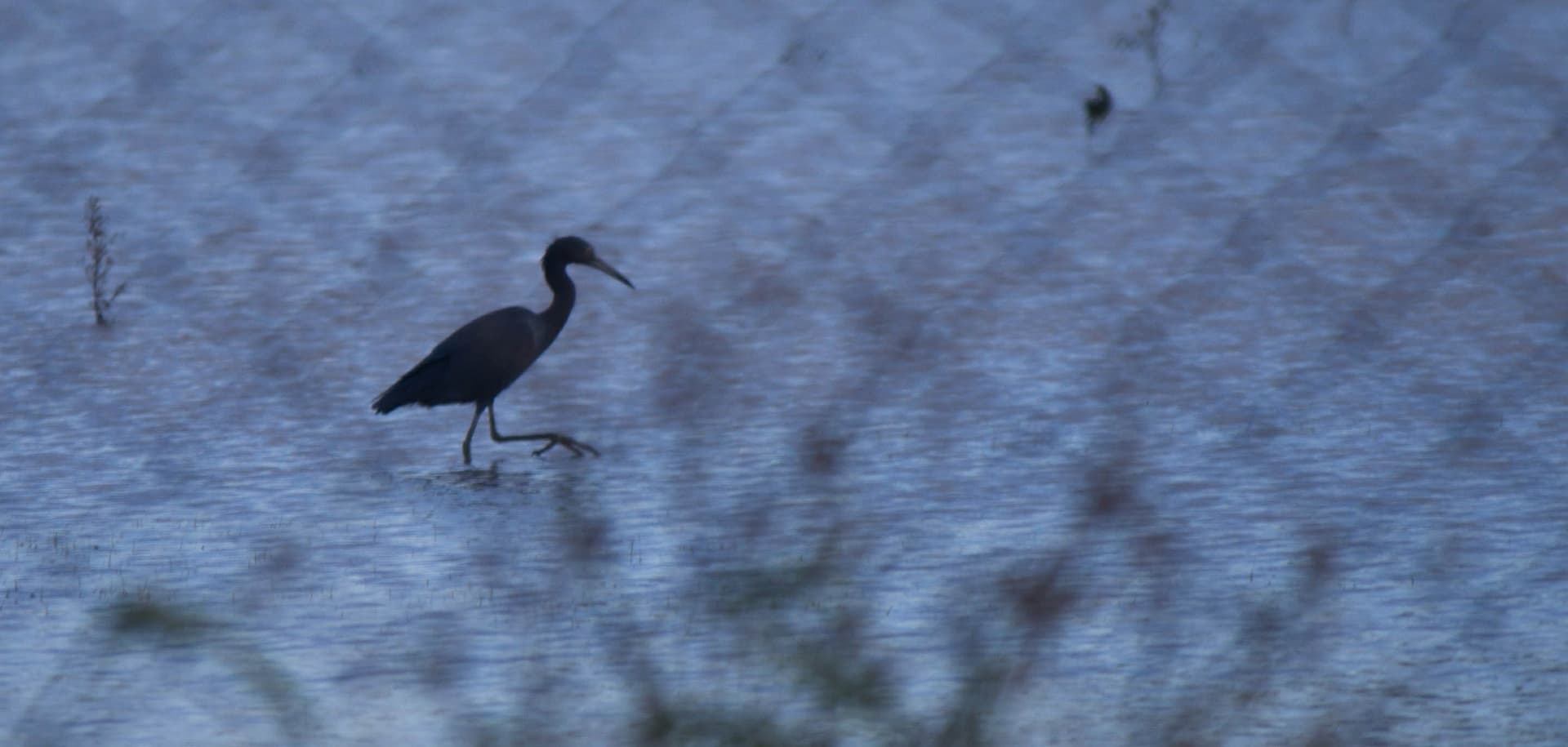
Little Blue Heron
Egretta caerulea
The Little Blue Heron is a medium-sized heron with one of the most distinctive plumage sequences of any bird in T&T: juveniles are entirely white and can be confused with Snowy Egrets, while adults are a deep slate-blue with a contrasting wine-purple head and neck.
The Little Blue Heron is a medium-sized heron with one of the most distinctive plumage sequences of any bird in T&T: juveniles are entirely white and can be confused with Snowy Egrets, while adults are a deep slate-blue with a contrasting wine-purple head and neck. The transition between these two very different plumages occurs gradually through a patchy white-and-blue intermediate stage that makes immature birds uniquely identifiable. Found in both coastal and freshwater wetlands on both islands, it is a common and frequently seen wading bird at Caroni, Nariva, and coastal lagoons.
Identification
The Little Blue Heron measures 56 to 76 cm. Adult plumage is entirely dark slate-blue with a rich wine-purple to maroon head and neck, contrasting with the blue body. The bill is pale blue-grey with a dark tip. The legs are grey-green. Juveniles are entirely white with greenish-yellow legs and a pale bill with a dark tip, superficially resembling Snowy Egrets. In the first spring, birds show a distinctive pied or calico pattern of white and blue-grey patches as they transition to adult plumage, unique among herons. This transition plumage is diagnostic at any time of year.
Ecology
Little Blue Herons forage by wading slowly through shallow water, stalking fish, frogs, crayfish, and aquatic insects. Juveniles in white plumage often associate with Snowy Egrets and benefit from the Snowy's more active foraging, which flushes prey that the white juvenile Little Blue Heron then captures. Adults are more solitary foragers. They nest colonially in mixed heronries. The transition to adult plumage is thought to offer survival advantages to first-year birds: white juveniles may be tolerated in feeding associations with Snowy Egrets more readily than the darker adults.
Status in T&T
The Little Blue Heron is found on both Trinidad and Tobago in coastal mangroves, freshwater swamps, tidal flats, and flooded agricultural land. It is a common resident and also receives migrants from North America during the northern winter. The species is fully protected under the Conservation of Wild Life Act and is not a game species. Wetland conservation, particularly of the Caroni and Nariva swamp systems, is important for maintaining its T&T population.
Threats
- Coastal and freshwater wetland loss
- Pesticide contamination of prey species
- Colonial nesting site disturbance