Bird
Bird
Limpkin
Aramus guarauna
The Limpkin is a large, distinctive wading bird of freshwater swamps and marshes and the sole member of its family, occupying an evolutionary position between cranes and rails.
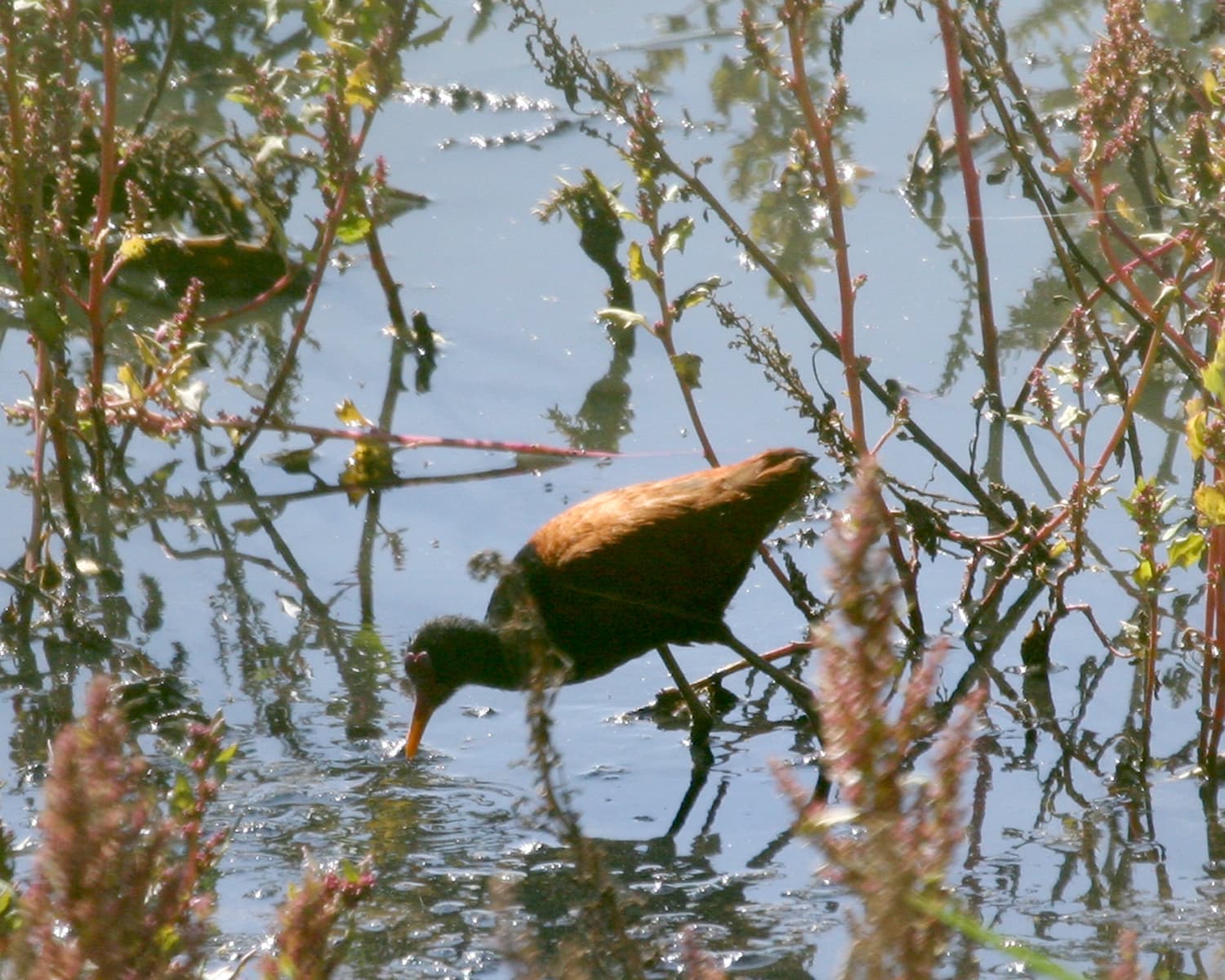
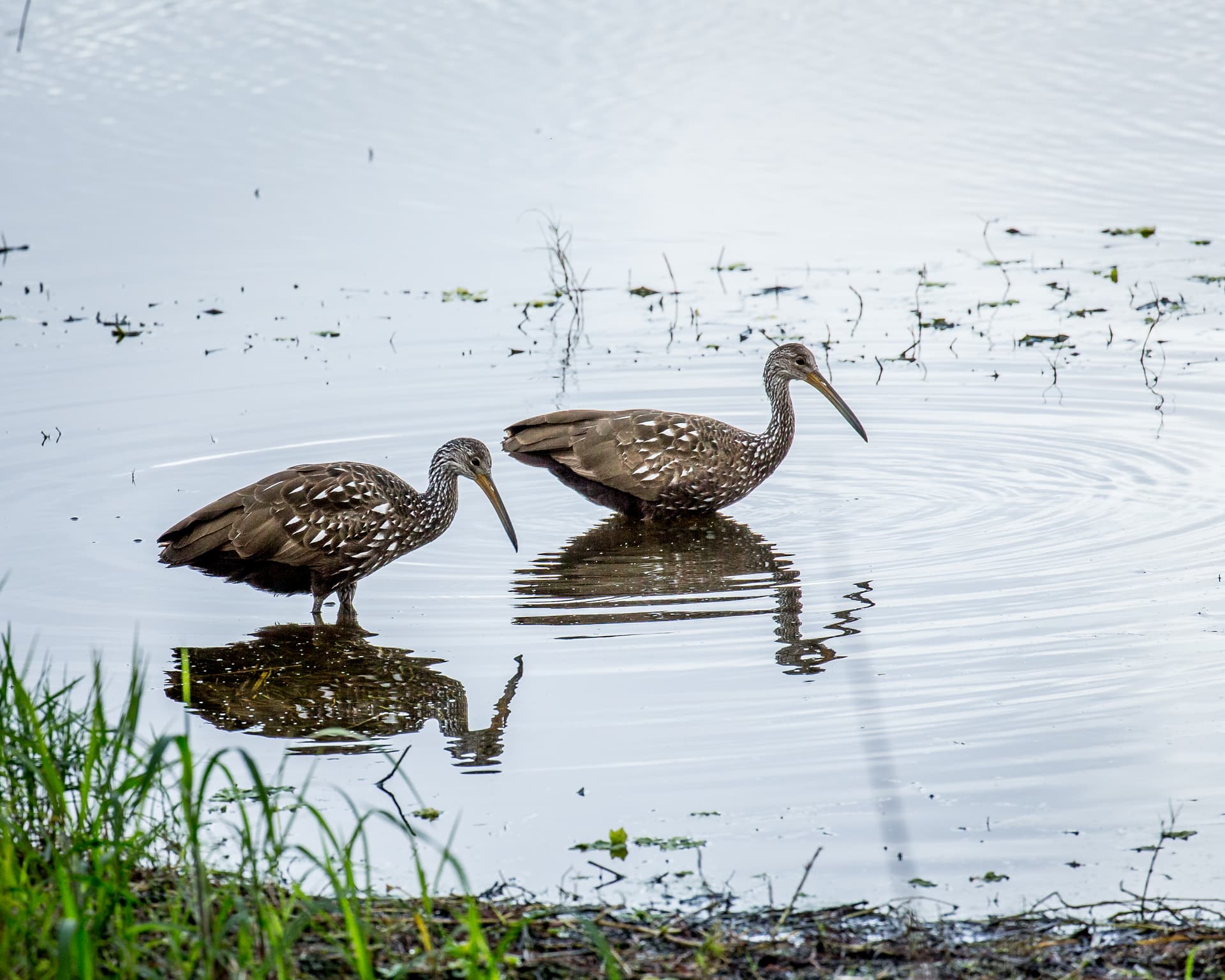
The Limpkin is a large, distinctive wading bird of freshwater swamps and marshes and the sole member of its family, occupying an evolutionary position between cranes and rails. In Trinidad and Tobago it is found in freshwater wetlands where apple snails (its primary food) are abundant, and it has a piercing, wailing call heard most intensely at dawn and dusk that has been used in film and television to represent jungle or tropical wilderness. The sight of a limpkin probing the mud methodically with its specially shaped bill is one of the characteristic scenes of T&T's freshwater habitats.
Identification
The Limpkin measures 64 to 73 cm, large and heron-like but with a distinctly drooped bill tip and a spotted, streaked plumage pattern unlike any heron. The body is dark brown throughout, heavily streaked and spotted with white on the neck, breast, and back. The bill is long, yellowish-brown, and slightly decurved with a subtle lateral twist near the tip that allows it to extract snails from their shells without cutting the columellar muscle first. The legs are long and grey-green. In flight the neck is held outstretched and the wings show a distinctive floppy, shallow downstroke that gives rise to the species name.
Ecology
Limpkins are highly specialised feeders, subsisting almost entirely on freshwater apple snails of the genus Pomacea. The asymmetrically twisted bill tip and elongated bill are direct adaptations for extracting snails whole from the shell. They wade in shallow freshwater, probing with the bill and feeling for snails by touch. Where apple snails are abundant, limpkin densities can be high and the birds are vocal and conspicuous; where snails are absent the limpkin disappears. The species is also known to take mussels, frogs, lizards, worms, and aquatic insects as supplementary prey.
Status in T&T
The Limpkin is found in freshwater wetlands on Trinidad, particularly in the Caroni and Nariva swamp systems and along freshwater river margins. It is scarce on Tobago. The species is fully protected under the Conservation of Wild Life Act and is not a game species. The health of limpkin populations is directly tied to apple snail abundance and thus to the quality of freshwater wetland habitats; pollution, sedimentation, and drainage of freshwater swamps threaten both the snails and the limpkins that depend on them.
Threats
- Freshwater wetland drainage and pollution
- Apple snail population collapse from pesticides
- Wetland sedimentation reducing foraging habitat