Reptile
Reptile
Leatherback Sea Turtle
Dermochelys coriacea
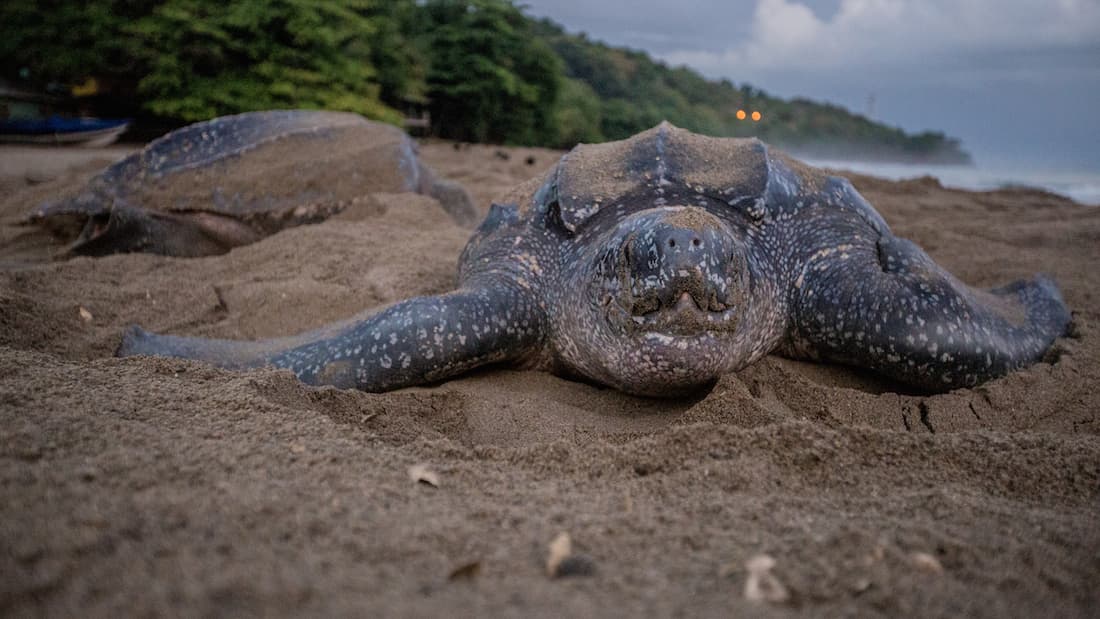
Photo: USFWS Southeast Region (Public Domain)
The Leatherback Sea Turtle is the largest reptile on Earth and one of the most ancient; its lineage stretches back over 100 million years.
The Leatherback Sea Turtle is the largest reptile on Earth and one of the most ancient; its lineage stretches back over 100 million years. Trinidad's north and northeast coasts host one of the most important leatherback nesting aggregations in the world, making the island a globally critical refuge for this Vulnerable species. Community-led patrols and eco-tourism programmes here have become a model for sea turtle conservation across the Caribbean.
Identification
Unlike all other sea turtles, the Leatherback lacks a hard, scute-covered shell. Instead its back is covered by a mosaic of tiny bone fragments embedded in firm, rubbery skin, giving rise to its name. Adults can exceed 2 metres in carapace length and weigh up to 900 kg, making them the heaviest reptiles alive today. Their large, paddle-like front flippers, which can span up to 2.7 metres, power long-distance migrations of thousands of kilometres between tropical nesting beaches and cold-water feeding grounds as far north as Canada and Norway.
Nesting in Trinidad
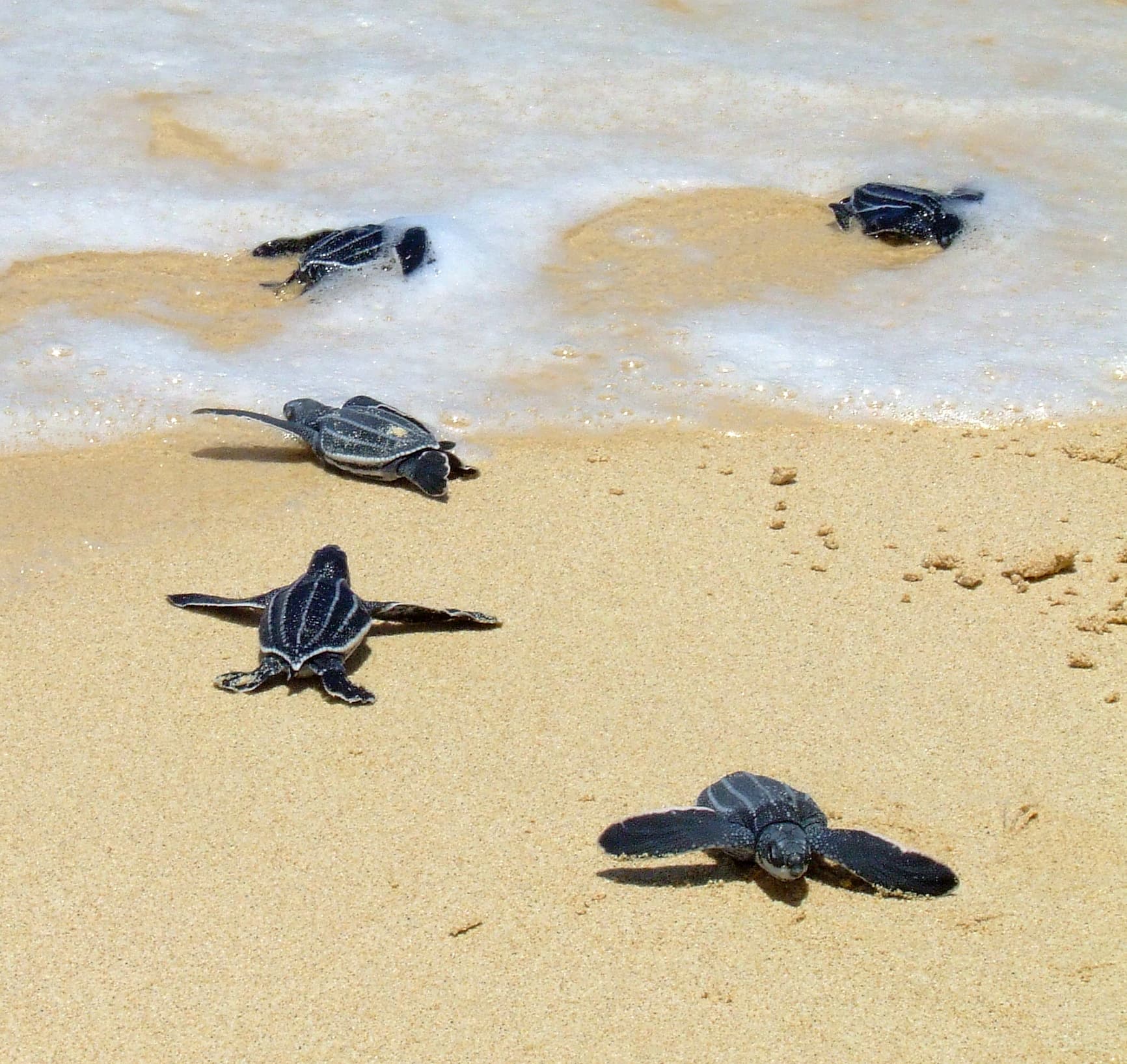
Trinidad's nesting beaches are among the most significant on the planet. Grand Riviere on the north coast regularly records some of the highest nesting densities of any beach worldwide, with hundreds of females coming ashore on a single night at the height of the season. Matura Beach on the northeast coast is protected under the Environmentally Sensitive Area (ESA) designation and is patrolled nightly by Nature Seekers, a community organisation founded in 1990. Other confirmed nesting beaches include Fishing Pond, Paria, and Damier. The nesting season runs from March to August, peaking in May and June. A female lays multiple clutches per season, typically 4–7, each containing approximately 60–100 fertilised eggs, with an incubation period of around 60–70 days.
Conservation
Despite their numbers in Trinidad, Leatherbacks face severe pressures both on the beach and at sea. Artificial lighting from coastal development disorients hatchlings and deters nesting females. Poaching of eggs and nesting adults, once widespread, has been significantly reduced through community patrol programmes, but remains a threat. At sea, leatherbacks regularly ingest floating plastic bags mistaken for their primary prey, jellyfish, which can block the digestive tract and cause fatal internal injuries. Entanglement in longline and drift-net fisheries and vessel strikes are additional mortality sources. Conservation efforts include nightly beach patrols, hatchery management, community eco-tourism at Grand Riviere run by the Grand Riviere Tourism Action Committee, and national protection under the Conservation of Wildlife Act and the EMA's Environmentally Sensitive Species regulations.
Threats
- Beach lighting disorienting hatchlings and deterring nesting females
- Nest poaching
- Plastic ingestion
- Entanglement in longline and drift-net fisheries
- Vessel strike
- Coastal development degrading nesting beaches
- Climate change skewing hatchling sex ratios
Conservation status
This species has a dedicated entry in the Biodiversity Atlas with full legal and conservation context.
See Leatherback Sea Turtle in Biodiversity →