Reptile
Reptile
Green Sea Turtle
Chelonia mydas
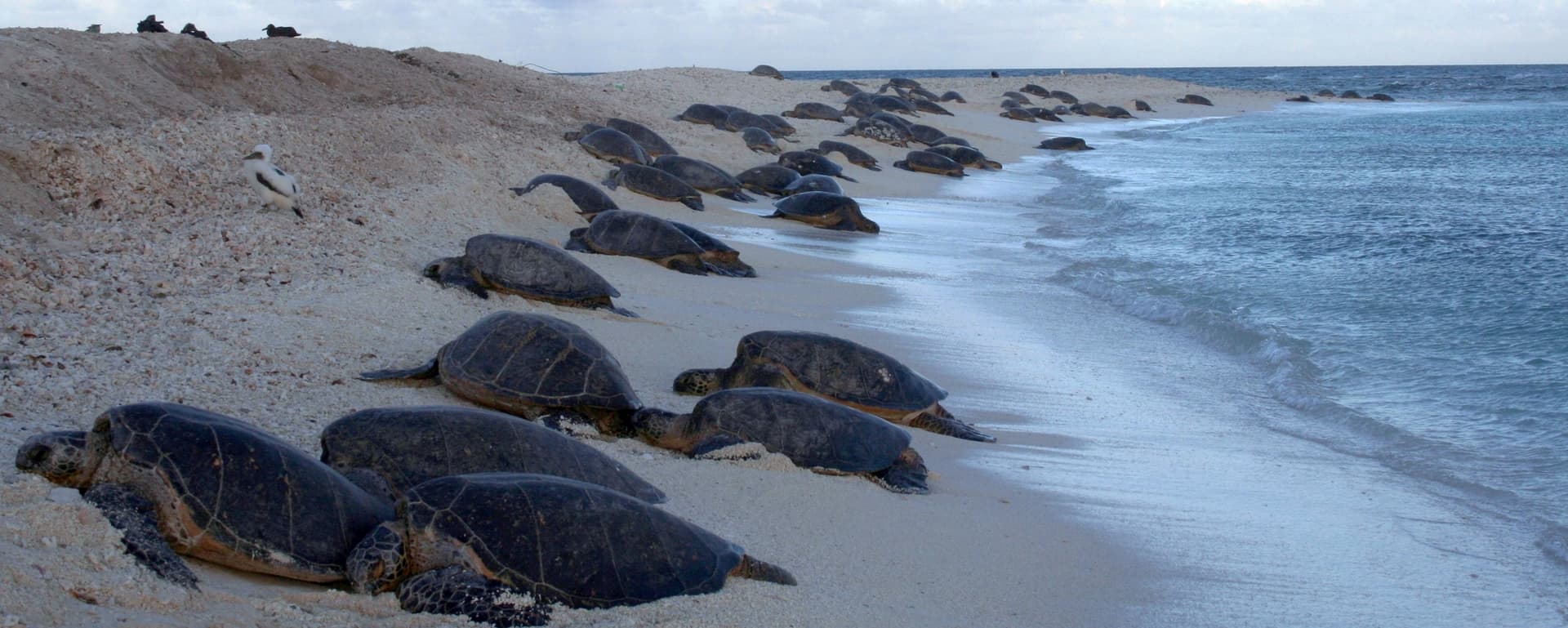
Photo: USFWS · French Frigate Shoals, Hawaii (Public Domain)
The Green Sea Turtle is one of the most ecologically important marine reptiles in the Caribbean, acting as the primary grazer of seagrass beds that sustain some of the most productive coastal ecosystems in the region.
The Green Sea Turtle is one of the most ecologically important marine reptiles in the Caribbean, acting as the primary grazer of seagrass beds that sustain some of the most productive coastal ecosystems in the region. Found in the coastal and offshore waters of Trinidad and Tobago, with nesting documented on beaches on both islands, the green turtle is fully protected but remains under pressure from hunting, entanglement, and habitat loss.
Identification
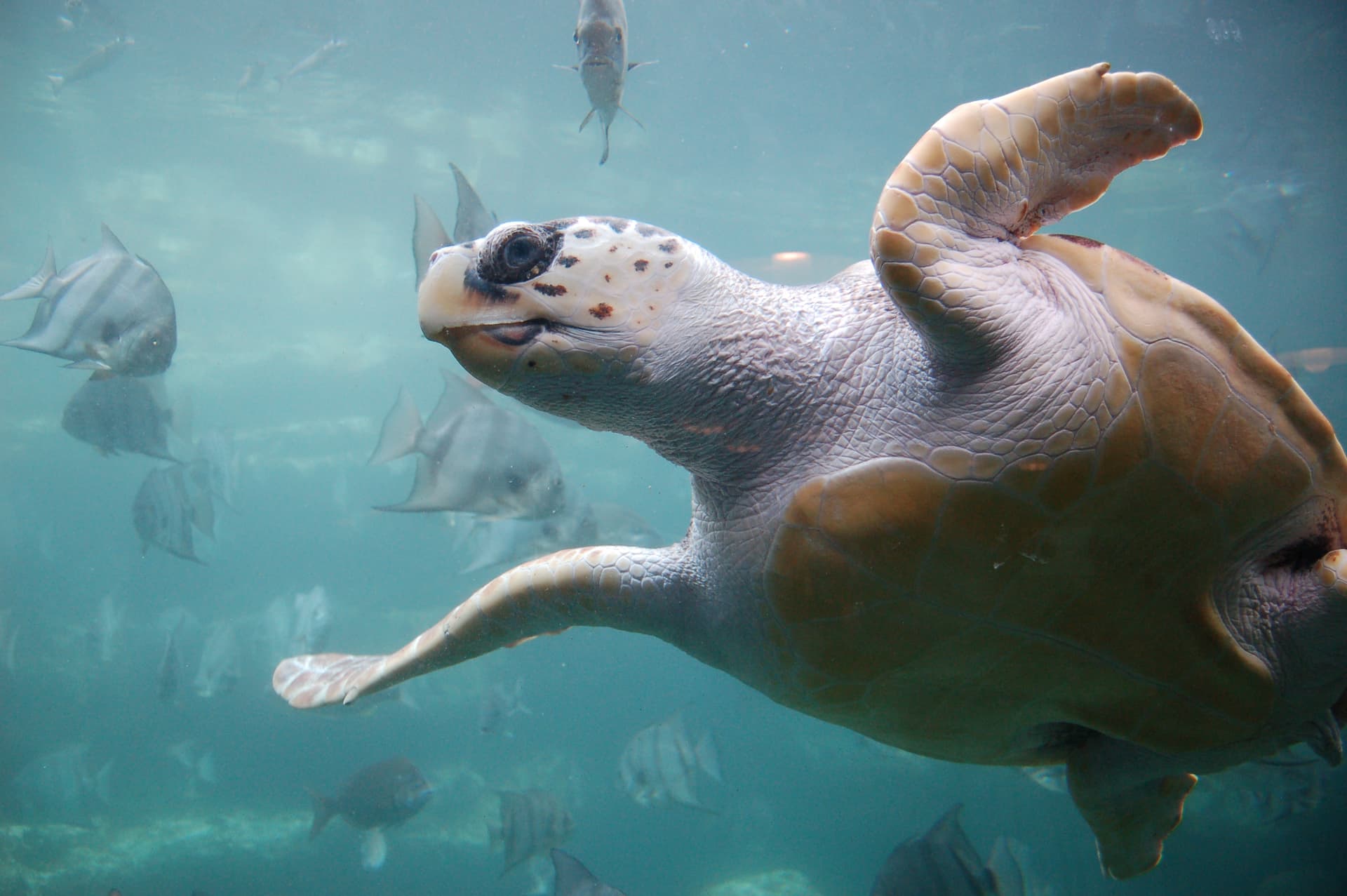
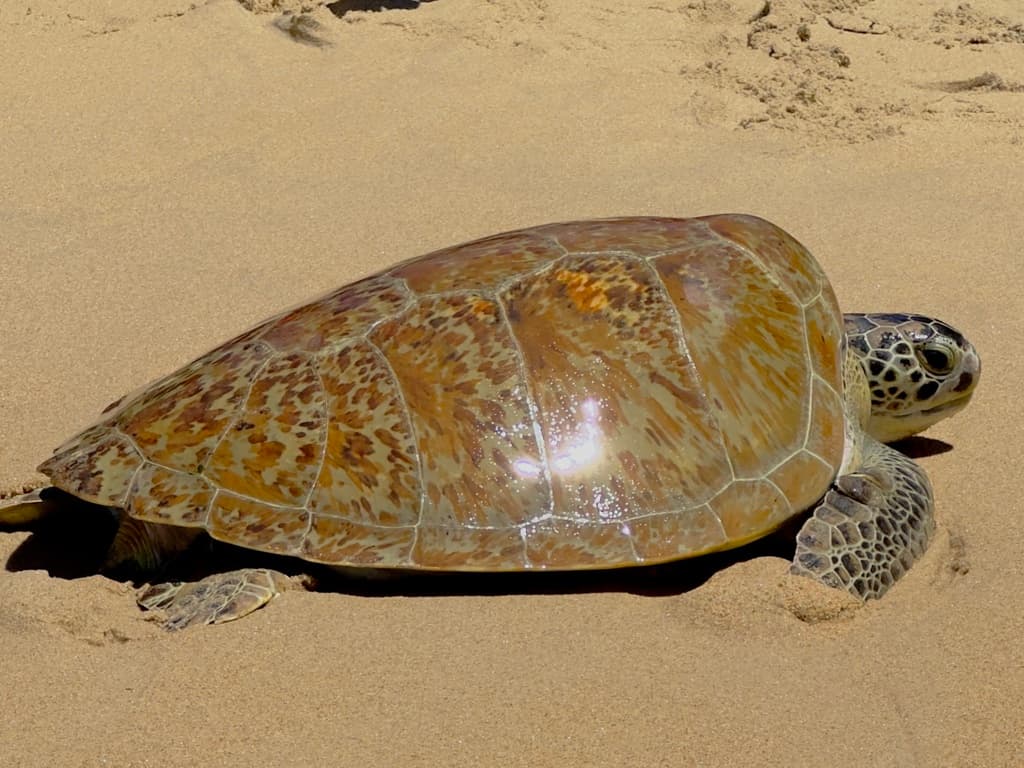
Named not for the colour of its shell, which is typically brown or olive, but for the greenish hue of its fat tissue, the Green Sea Turtle is a large reptile with adults typically measuring 100–120 cm in carapace length and weighing between 100 and 230 kg. Its smooth, streamlined carapace and powerful front flippers make it a strong swimmer capable of crossing entire ocean basins. Adult green turtles are primarily herbivorous, grazing on seagrass and algae in shallow coastal habitats, while juveniles are more omnivorous, feeding on jellyfish, invertebrates, and other small prey before transitioning to a plant-based diet.
Ecology
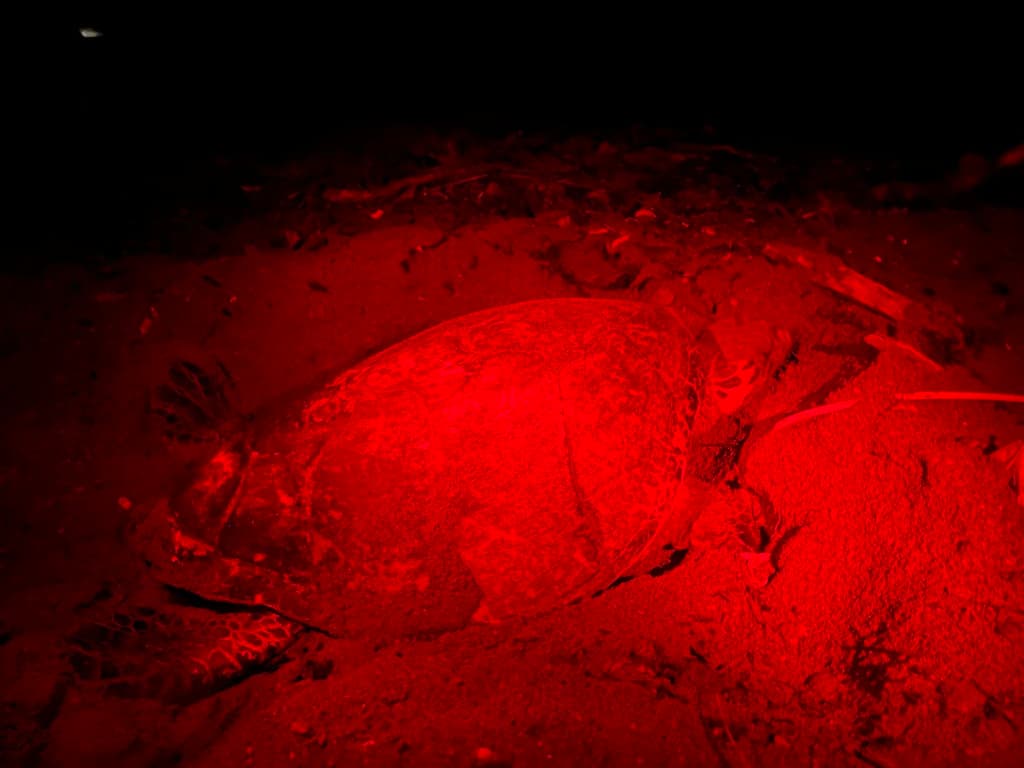
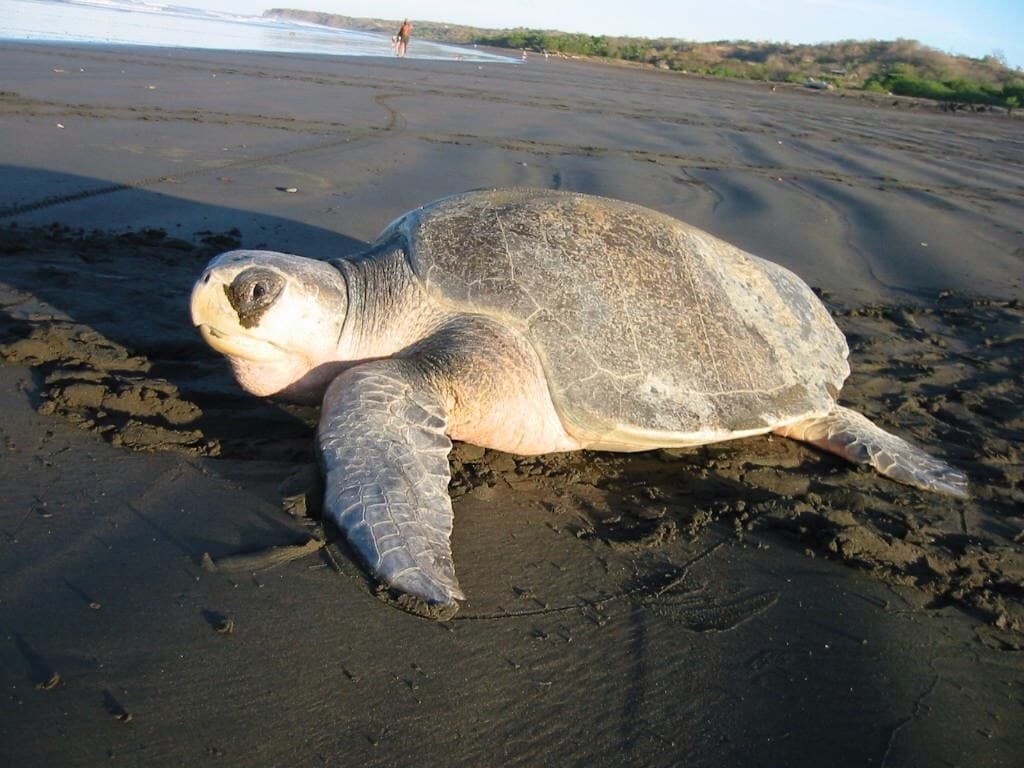
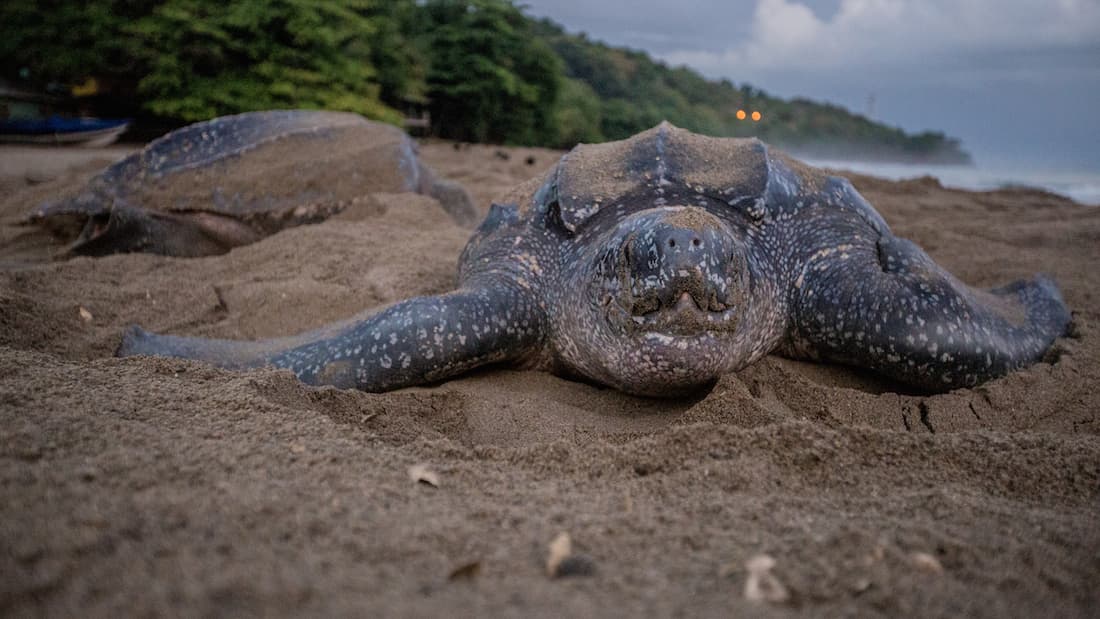
As grazers, adult green turtles maintain the health and productivity of seagrass beds by cropping the blades and preventing senescence. Healthy seagrass habitats in turn support manatees, juvenile fish, and a vast range of coastal invertebrates. In Trinidad and Tobago, green turtles forage in seagrass beds across the Gulf of Paria, the Columbus Channel, and the waters around Tobago. Nesting occurs on a number of beaches on both islands, including Fishing Pond, Matura, and selected Tobago beaches. Females return faithfully to the beaches where they hatched, navigating by the earth's magnetic field to find their natal shore after years at sea.
Conservation
The Green Sea Turtle is listed as Endangered on the IUCN Red List and on CITES Appendix I. In Trinidad and Tobago, it is fully protected under the Conservation of Wildlife Act (COWA) and is not a game species. Key threats include hunting for meat and eggs, entanglement in fishing gear, vessel strike, ingestion of plastic debris, and the ongoing degradation of seagrass feeding habitats through pollution, sedimentation, and coastal development.
Threats
- Hunting (meat and eggs)
- Entanglement in fishing gear
- Habitat loss (seagrass degradation)
- Vessel strike
- Plastic ingestion
- Coastal development
- Climate change affecting nesting sites
Conservation status
This species has a dedicated entry in the Biodiversity Atlas with full legal and conservation context.
See Green Sea Turtle in Biodiversity →