Reptile
Reptile
Yellow-footed Tortoise
Chelonoidis denticulatus
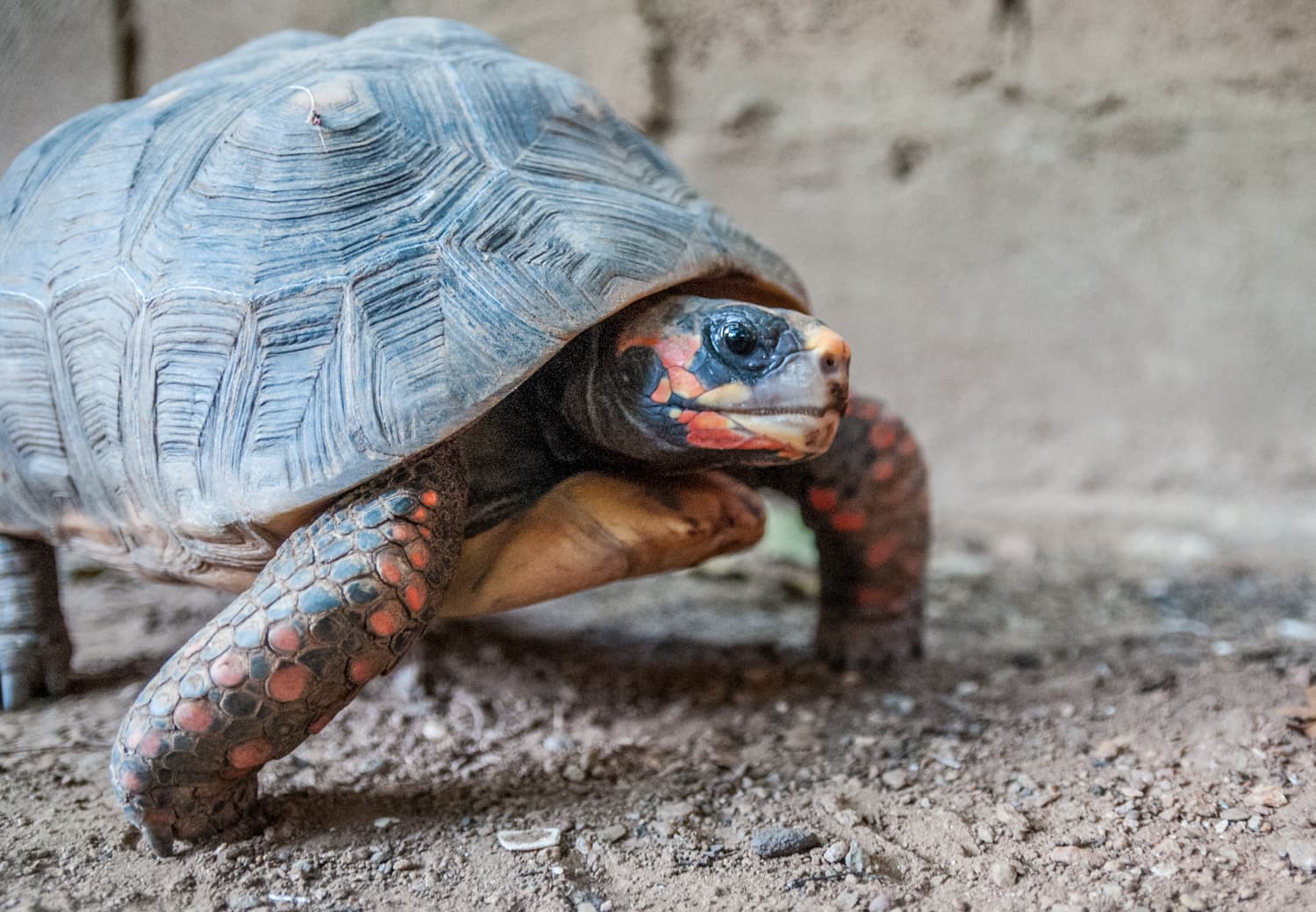
The Yellow-footed Tortoise, known locally in Trinidad as the morrocoy, is the largest tortoise on the South American mainland and one of the largest land tortoises in the world.
The Yellow-footed Tortoise, known locally in Trinidad as the morrocoy, is the largest tortoise on the South American mainland and one of the largest land tortoises in the world. A slow-moving forest dweller with bright yellow-orange scales on its limbs and head, it is a long-lived reptile of tropical rainforest and savanna.
Appearance
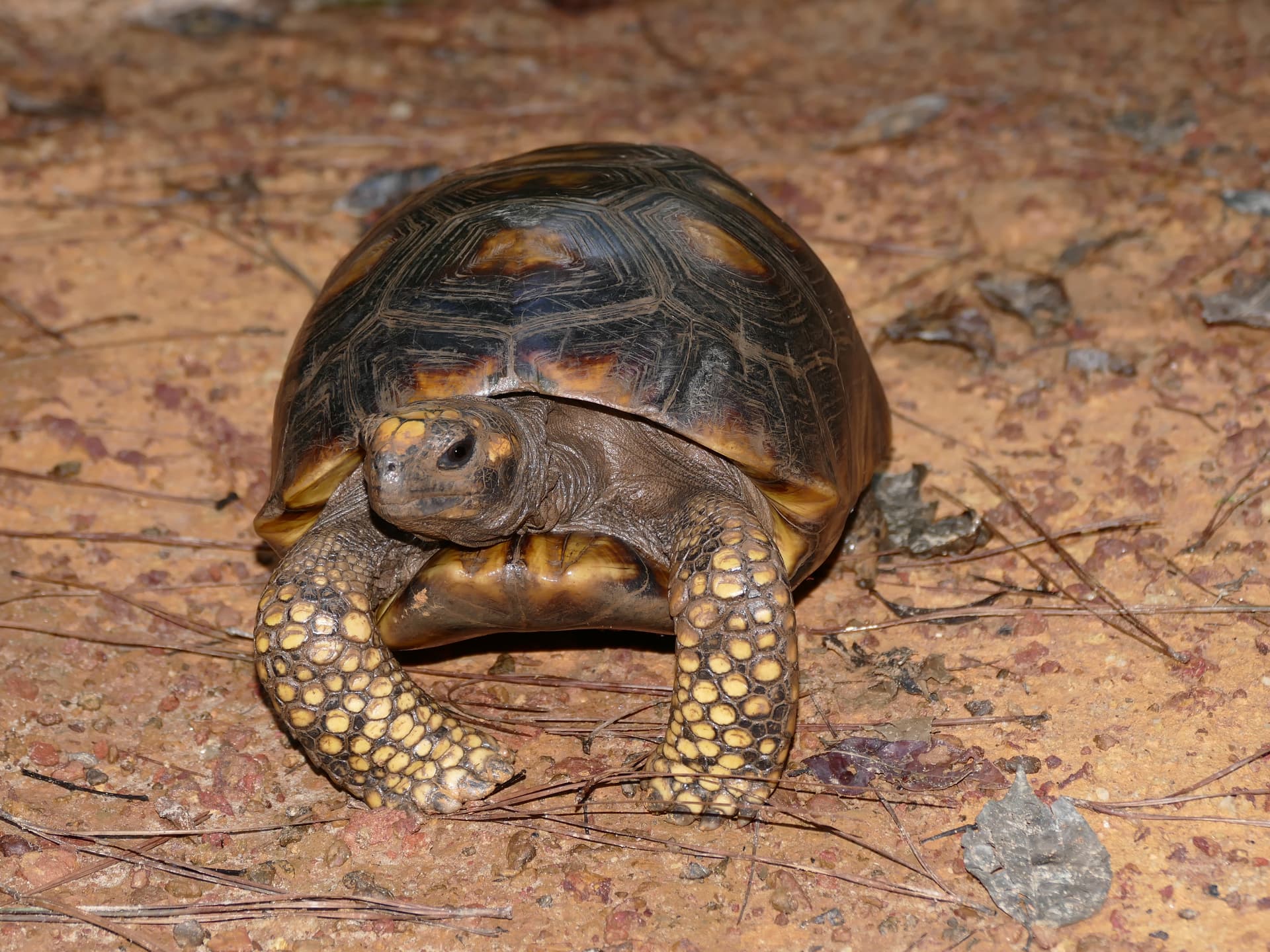
This is a big tortoise, with a domed, elongated brown to black carapace that often shows yellowish centres to the scutes. Its name comes from the conspicuous yellow to orange scales on the legs and head. Large individuals can reach carapace lengths well over 40 cm, and exceptional animals are larger still, making it easy to distinguish from its smaller relative the Red-footed Tortoise.
Behaviour
The Yellow-footed Tortoise is a slow, deliberate forager that spends much of its time on the floor of humid forest, often sheltering under leaf litter, logs or vegetation during the heat of the day. It is generally solitary and quiet.
Males engage in head-bobbing displays and may compete by trying to overturn rivals during the breeding season. Like other tortoises it is long-lived, growing slowly and reaching maturity only after many years.
Diet and breeding
It is mainly herbivorous, eating fallen fruit, flowers, leaves, grasses and fungi, and will also take carrion, slow invertebrates and other animal matter when available, making it an opportunistic omnivore. As a fruit eater it helps disperse seeds through the forest. Females lay clutches of hard-shelled eggs in nests dug or scraped into the ground or leaf litter, and the young hatch fully independent with no parental care.
In Trinidad and Tobago
In Trinidad the Yellow-footed Tortoise, or morrocoy, occurs in forested and wooded country, where it is valued in local culture but also vulnerable to collection. Globally the species is listed as Vulnerable, driven by hunting for food and the pet trade together with habitat loss, and it is listed on CITES Appendix II to regulate international trade. Slow growth and late maturity make its populations slow to recover from over-harvesting.