Bird
Bird
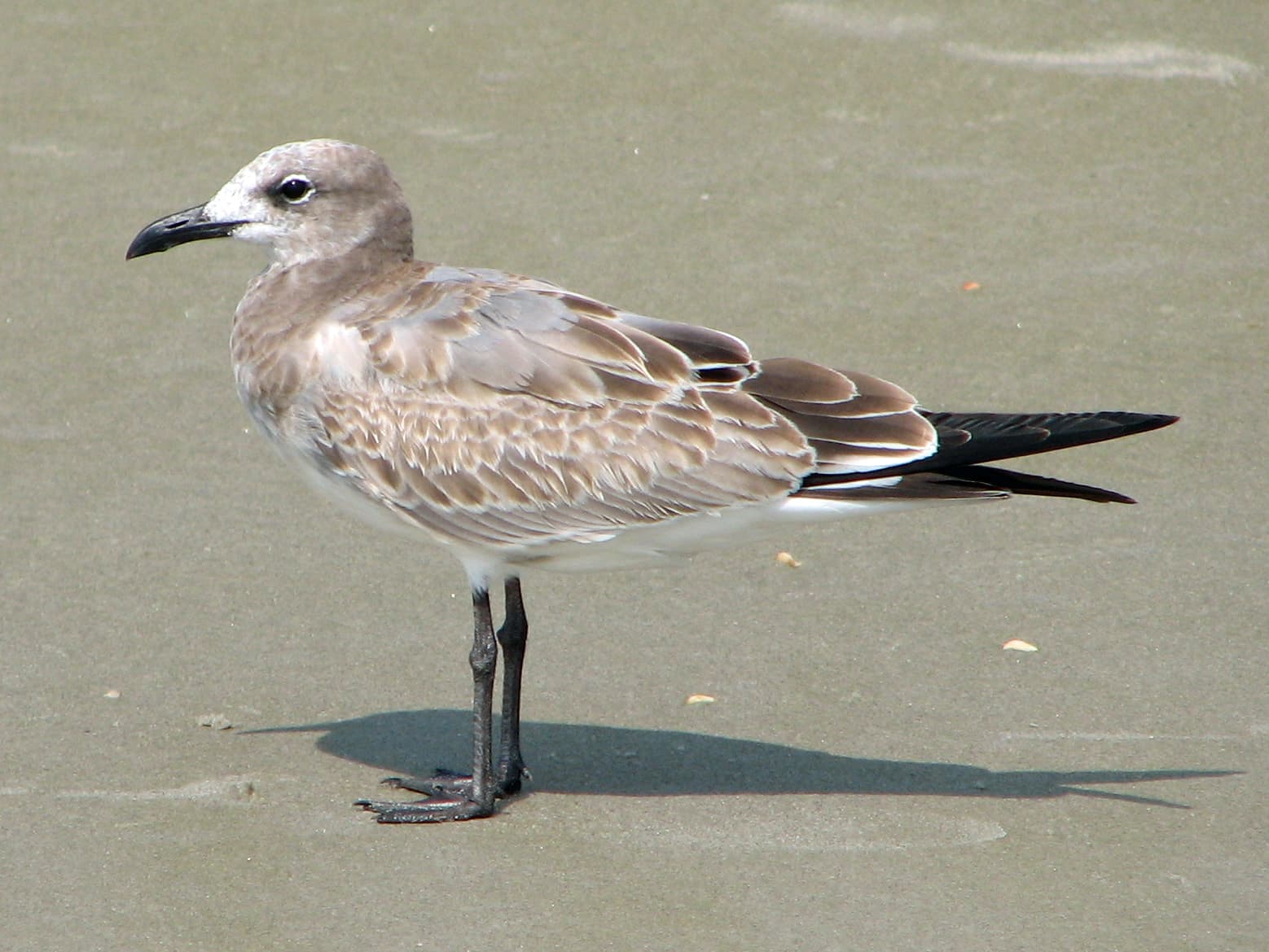
Laughing Gull
Leucophaeus atricilla
The Laughing Gull is the most familiar gull of Trinidad and Tobago's coastline, a noisy, opportunistic scavenger frequently seen following fishing boats, gathering at fish markets and beaches, and giving its raucous, cackling call from which it takes its common name.
The Laughing Gull is the most familiar gull of Trinidad and Tobago's coastline, a noisy, opportunistic scavenger frequently seen following fishing boats, gathering at fish markets and beaches, and giving its raucous, cackling call from which it takes its common name.
Identification
A medium-sized gull around 40 to 43 cm long. Breeding adults have a full black hood, dark grey back and wings, and a red bill; non-breeding adults lose the hood, showing a smudged grey patch around the eye instead. Juveniles and immatures are mottled brown, taking two to three years to reach full adult plumage. The loud, laughing "ha-ha-ha-haah" call is distinctive and frequently heard around harbours, beaches, and fish landing sites.
Ecology
An opportunistic omnivore and scavenger, the Laughing Gull feeds on fish, crustaceans, insects, and discarded food scraps, often gathering in numbers around fishing boats, fish markets, landfills, and beaches, and readily following boats for offal thrown overboard. It nests colonially on the ground on undisturbed coastal islands and beaches, and outside the breeding season disperses widely along the coast and into harbours and urban waterfronts.
Status in T&T
The most common and widespread gull in T&T, present year-round along coasts of both islands, particularly around fishing harbours, beaches, and coastal wetlands. It is not threatened and has adapted well to human food sources. It is protected under the Conservation of Wildlife Act and is not a game species.
Threats
- No significant threats; thrives on human food sources and fishing activity