Bird
Bird
Brown Pelican
Pelecanus occidentalis
The Brown Pelican is one of the most recognisable seabirds along the coasts of Trinidad and Tobago, a large dark waterbird with an enormous bill and an expandable throat pouch.
The Brown Pelican is one of the most recognisable seabirds along the coasts of Trinidad and Tobago, a large dark waterbird with an enormous bill and an expandable throat pouch. It is the smallest of the world's eight pelican species, yet it is unmistakable as it glides low over the water in single file or plunge-dives bill-first for fish. A common resident of the Gulf of Paria and the rocky coasts of Tobago, it is protected under national wildlife law and listed as Least Concern globally.
Identification
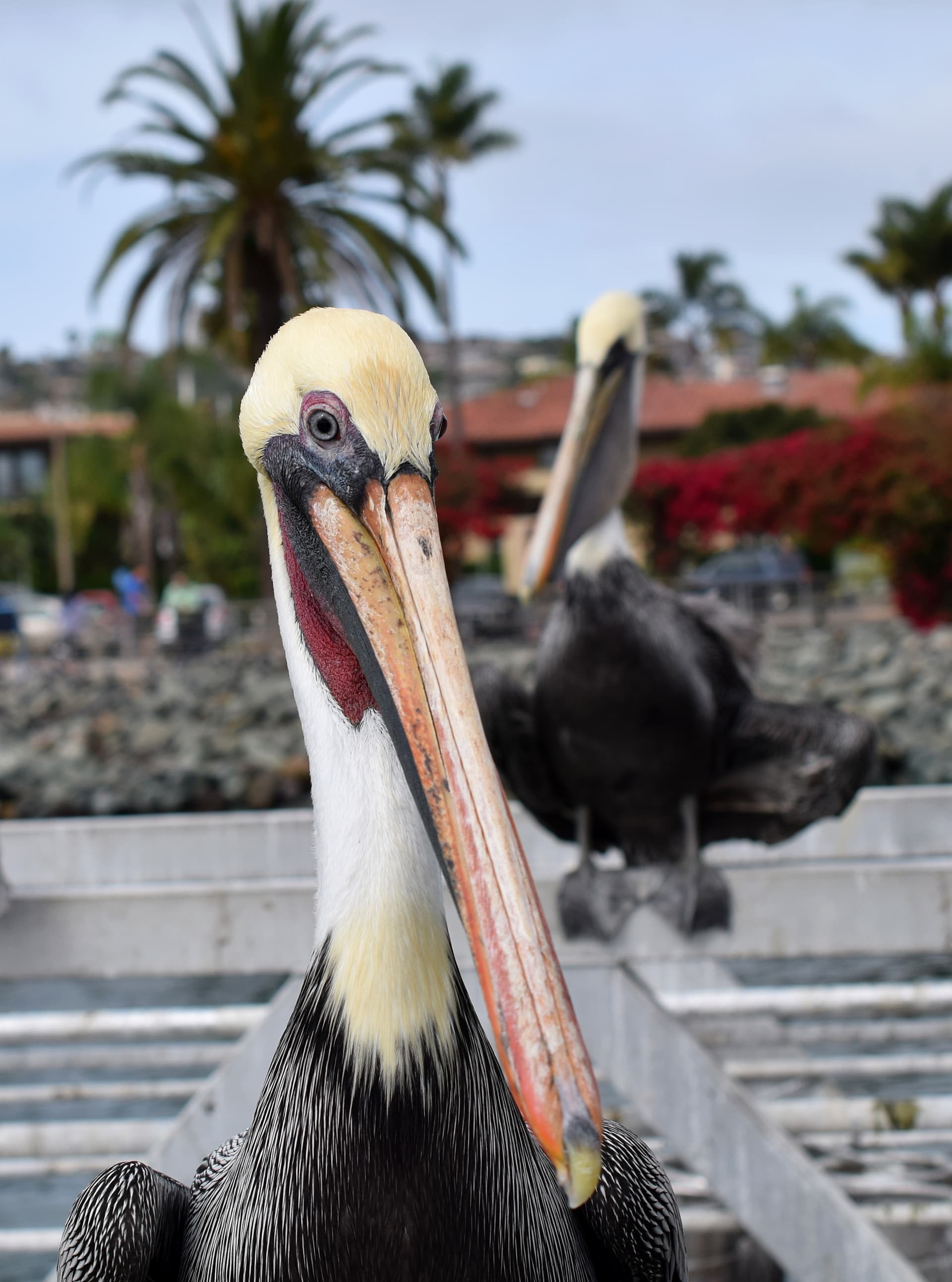
A very large seabird measuring roughly 100 to 152 cm in length with a wingspan of about 203 to 228 cm and a long bill of 28 to 35 cm. Adults are grey-brown overall with a silvery-grey back, and in breeding condition show a white head washed yellow on the crown and a dark maroon-brown hind-neck.
Non-breeding adults have a plain white head and neck, while juveniles are uniformly greyish-brown with paler underparts and acquire full adult plumage only after about three years. The huge bill and stretchy throat pouch separate it from any other bird in T&T waters.
Ecology
The Brown Pelican feeds almost entirely on fish, caught by a spectacular plunge-dive: it spots prey from the air, folds its wings and crashes bill-first into the sea, scooping fish and water into its gular (throat) pouch before draining the water and swallowing. It is one of only two pelican species that hunt by diving.
It is highly gregarious, living in flocks year-round, and possesses salt glands that allow it to drink seawater. It nests colonially in mangroves, on islets and on rocky shores, laying two to three eggs incubated by both parents for about 28 to 30 days.
Status in T&T
The Brown Pelican is a common coastal resident in Trinidad and Tobago, frequently seen in the Gulf of Paria (including around Pelican Island) and along the rocky shores and bays of Tobago. The Caribbean nominate subspecies, Pelecanus occidentalis occidentalis, ranges through the West Indies and northern South America to T&T.
It is protected under the Conservation of Wild Life Act and is not a listed game species. Oil spills in the Gulf of Paria remain a recurring threat, and rescued, oiled pelicans are periodically rehabilitated locally.