Mammal
Mammal
Greater Fruit Bat
Artibeus lituratus
The Greater Fruit Bat is one of the largest and most conspicuous fruit bats in Trinidad, a powerful flier often seen at dusk crossing over gardens, forest edges, and urban green spaces in search of ripening fruit.
The Greater Fruit Bat is one of the largest and most conspicuous fruit bats in Trinidad, a powerful flier often seen at dusk crossing over gardens, forest edges, and urban green spaces in search of ripening fruit. As a major disperser of large-seeded trees, it plays an outsized role in maintaining forest diversity and regenerating cleared or disturbed land.
Identification
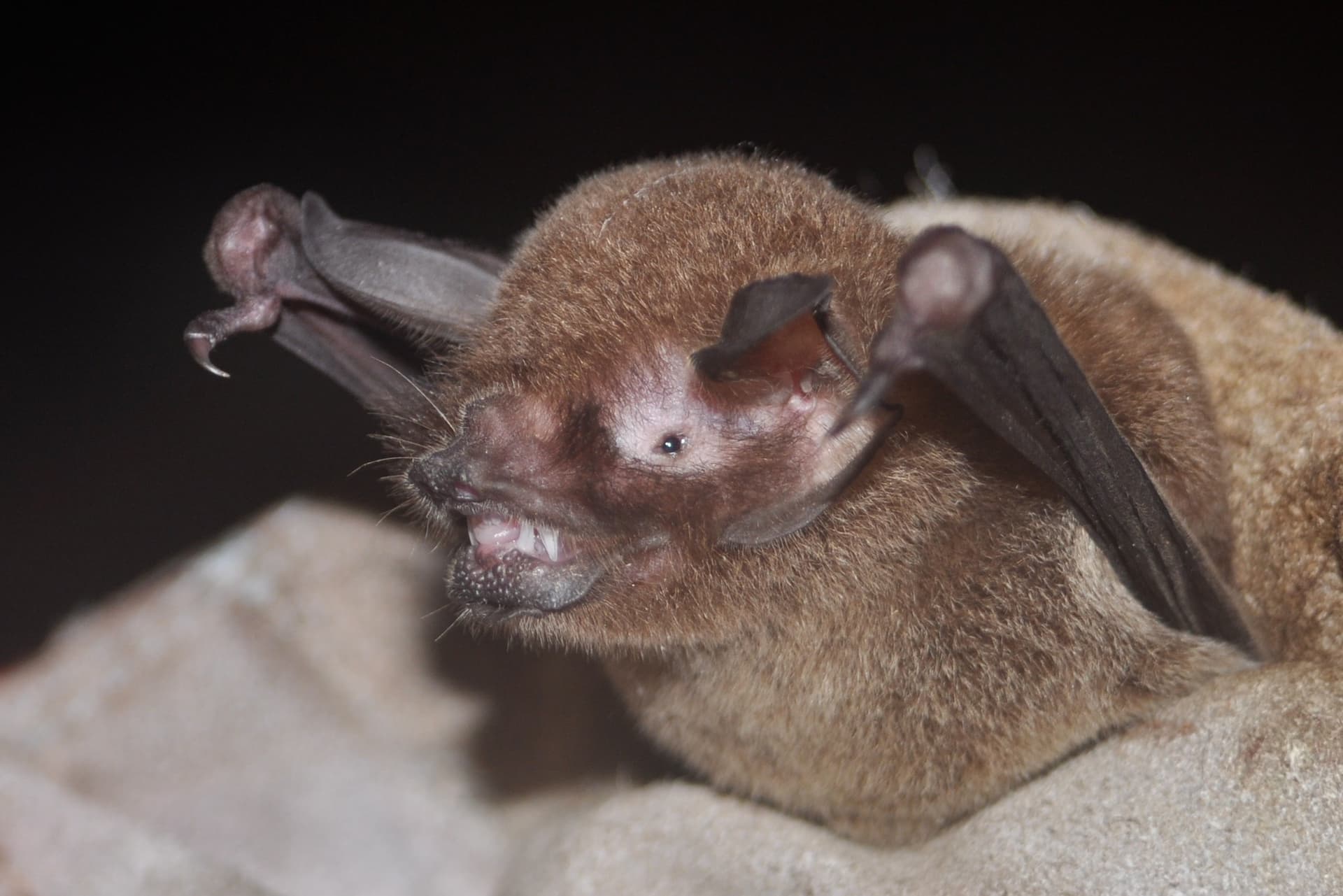
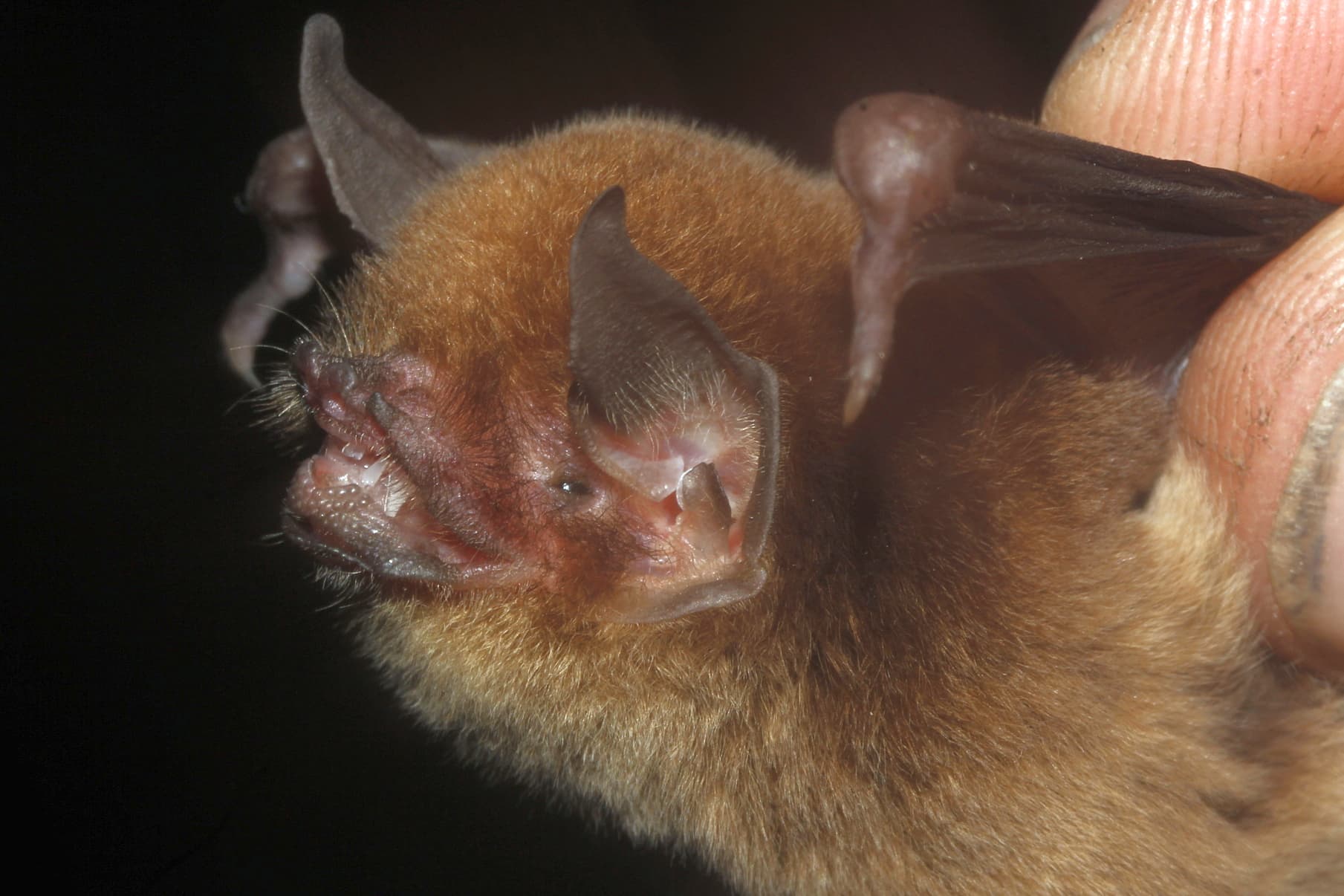
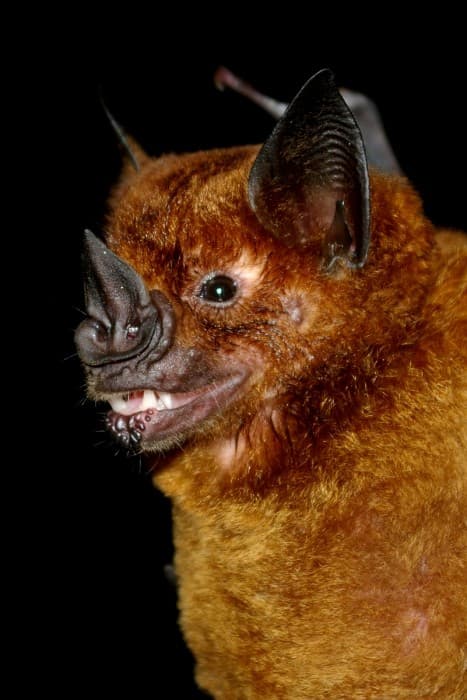
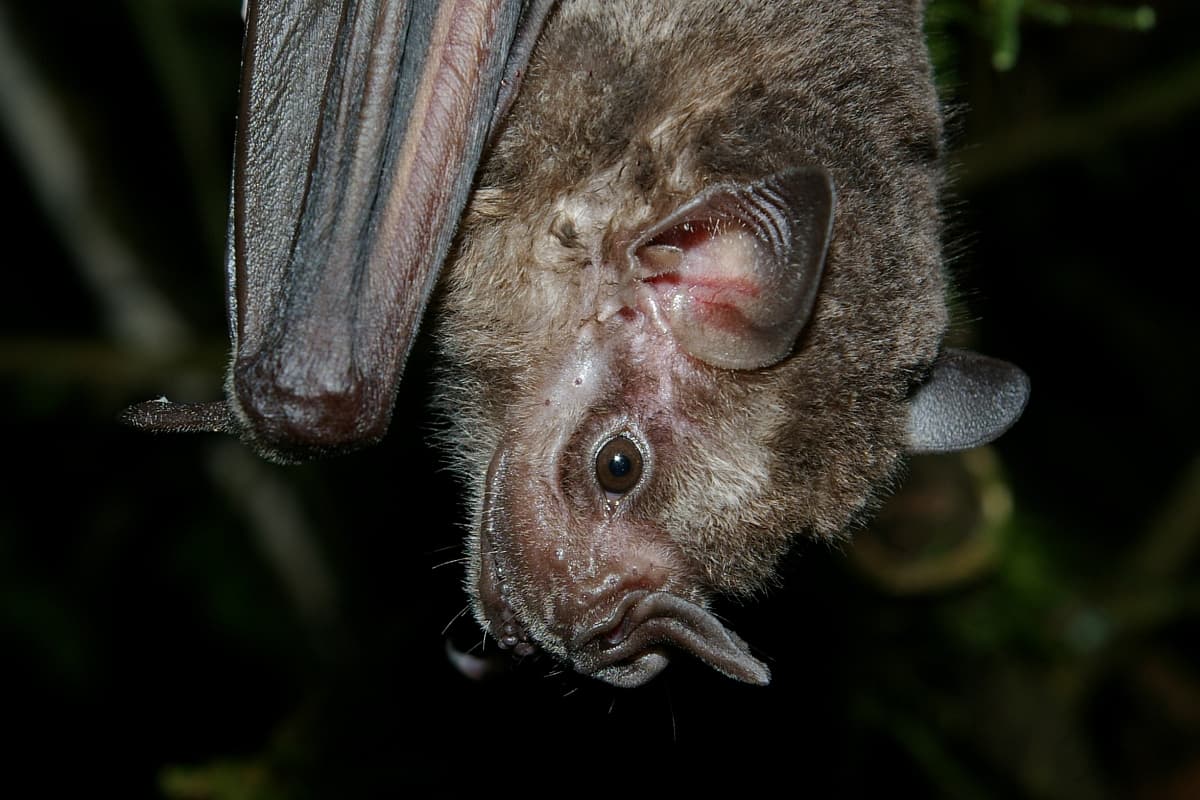
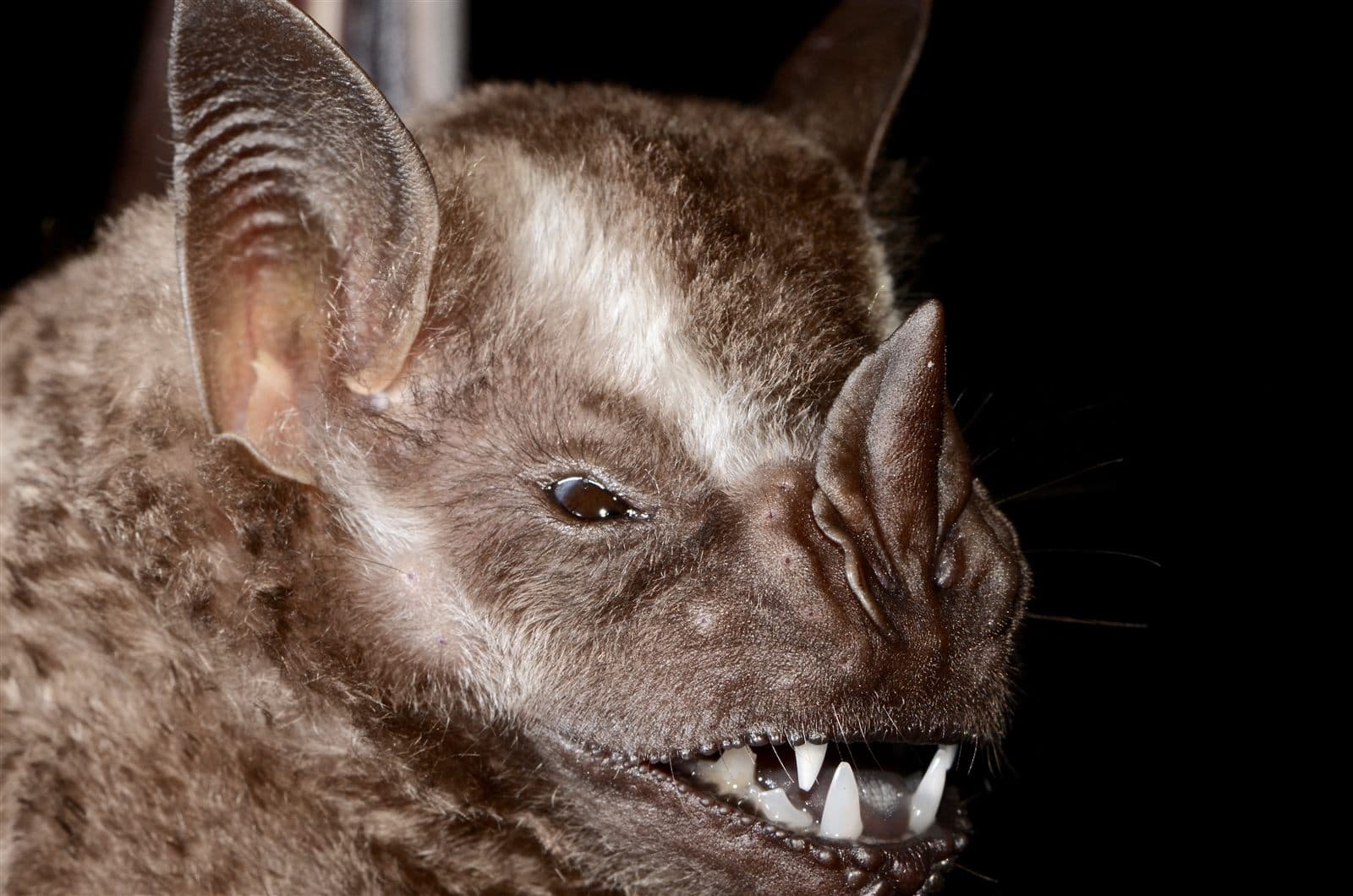
A large, robust bat with a forearm length of around 75 to 80 mm, brownish-grey fur, and faint pale facial stripes above and below the eyes typical of the genus. It lacks a visible tail, and the broad, powerful wings give it a strong, direct flight distinct from the fluttering pattern of smaller bats. Adults are among the heaviest bats regularly encountered in Trinidad, with a wingspan that can approach half a metre.
Ecology
Almost exclusively frugivorous, the Greater Fruit Bat favours large-seeded fruit from trees such as figs and members of the Cecropia and Ficus genera, which it carries considerable distances to feeding roosts before consuming, dispersing seeds well beyond the parent tree in the process. It also occasionally takes flowers, pollen, and leaves. Roosting in small groups or singly under palm fronds, in tree foliage, or in building eaves, it is one of the more urban-tolerant bats in Trinidad, regularly found foraging in villages, towns, and fruit gardens.
Status in T&T
Common and widespread across Trinidad in forest, forest edge, and urban and agricultural landscapes with fruiting trees. It is not threatened and is ecologically valuable as a long-distance seed disperser, helping forest regeneration and connectivity between fragmented patches. It is protected as native wildlife under the Conservation of Wildlife Act, and, like other fruit bats, is sometimes unfairly persecuted around fruit orchards despite the ecological benefits it provides.
Threats
- Persecution around fruit orchards despite ecological benefit
- Roost disturbance in urban settings
- Loss of large fruiting trees to development