Bird
Bird
Gray Kingbird
Tyrannus dominicensis
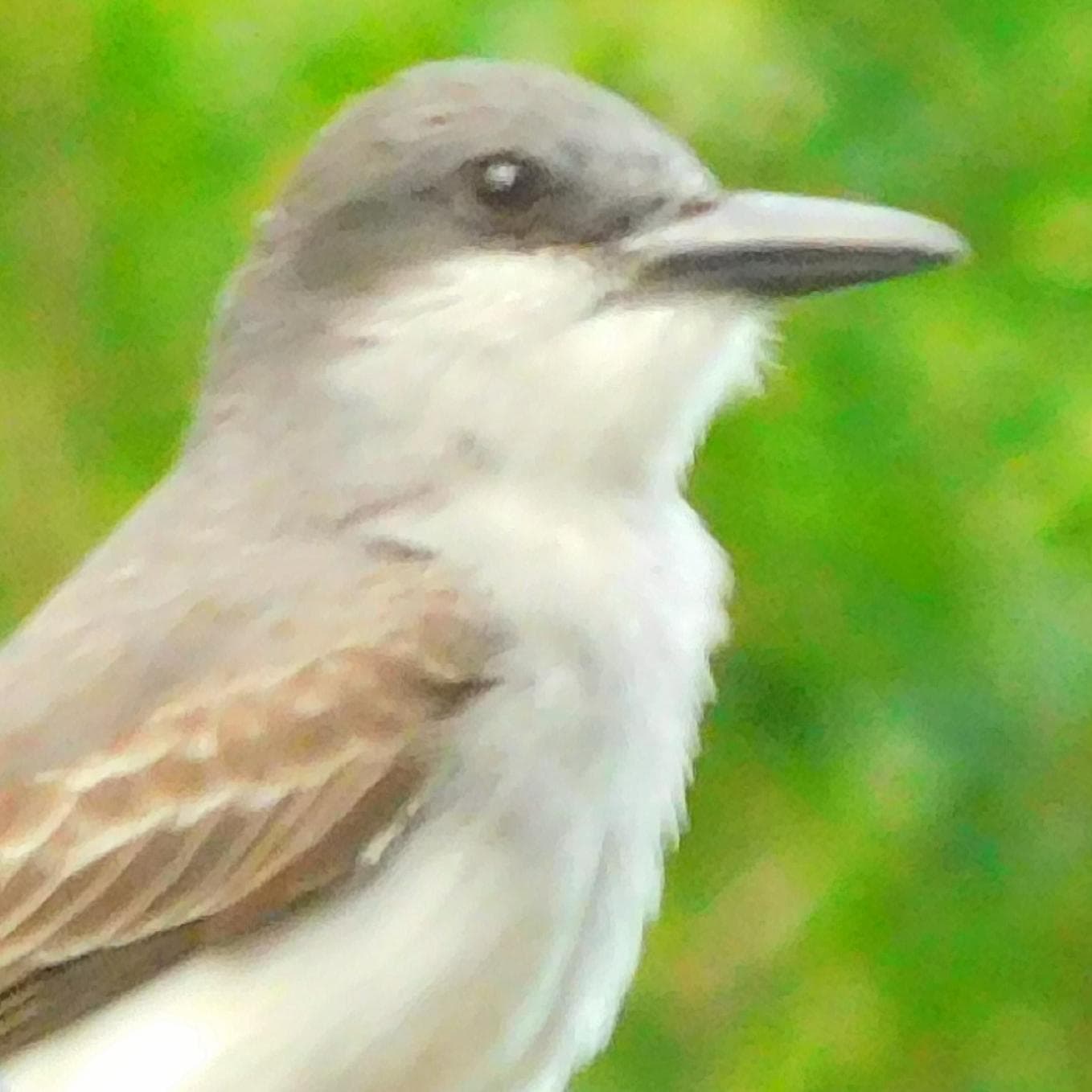
The Gray Kingbird is a large, pale flycatcher of coastal and open habitats across Trinidad and Tobago, closely resembling the more widespread Tropical Kingbird but distinguished by its paler colouring, heavier bill, and preference for coastal scrub and mangrove edges.
The Gray Kingbird is a large, pale flycatcher of coastal and open habitats across Trinidad and Tobago, closely resembling the more widespread Tropical Kingbird but distinguished by its paler colouring, heavier bill, and preference for coastal scrub and mangrove edges.
Identification
A large flycatcher around 22 to 23 cm long, pale grey above with a darker, blackish mask through the eye, whitish underparts, and a notched tail. The bill is notably heavy and black, and a partially concealed reddish-orange crown patch is occasionally visible when the bird is agitated. Overall paler and greyer than the similarly sized Tropical Kingbird, with which it can occur alongside in open coastal habitat.
Ecology
The Gray Kingbird hunts flying insects from an exposed perch, sallying out to catch prey on the wing before returning to the same or a nearby perch, and also takes small fruit. It favours coastal scrub, mangrove edges, and open cultivated land near the sea, generally more coastal in distribution than the Tropical Kingbird. It builds an open cup nest in a shrub or low tree, often near the coast, and is strongly territorial, aggressively chasing off larger birds including hawks that approach the nest.
Status in T&T
Found in coastal scrub, mangrove edges, and open land near the coast on both Trinidad and Tobago. It is not threatened. It is protected under the Conservation of Wildlife Act and is not a game species.
Threats
- Coastal scrub and mangrove clearance