Reptile
Reptile
Golden Tegu
Tupinambis teguixin
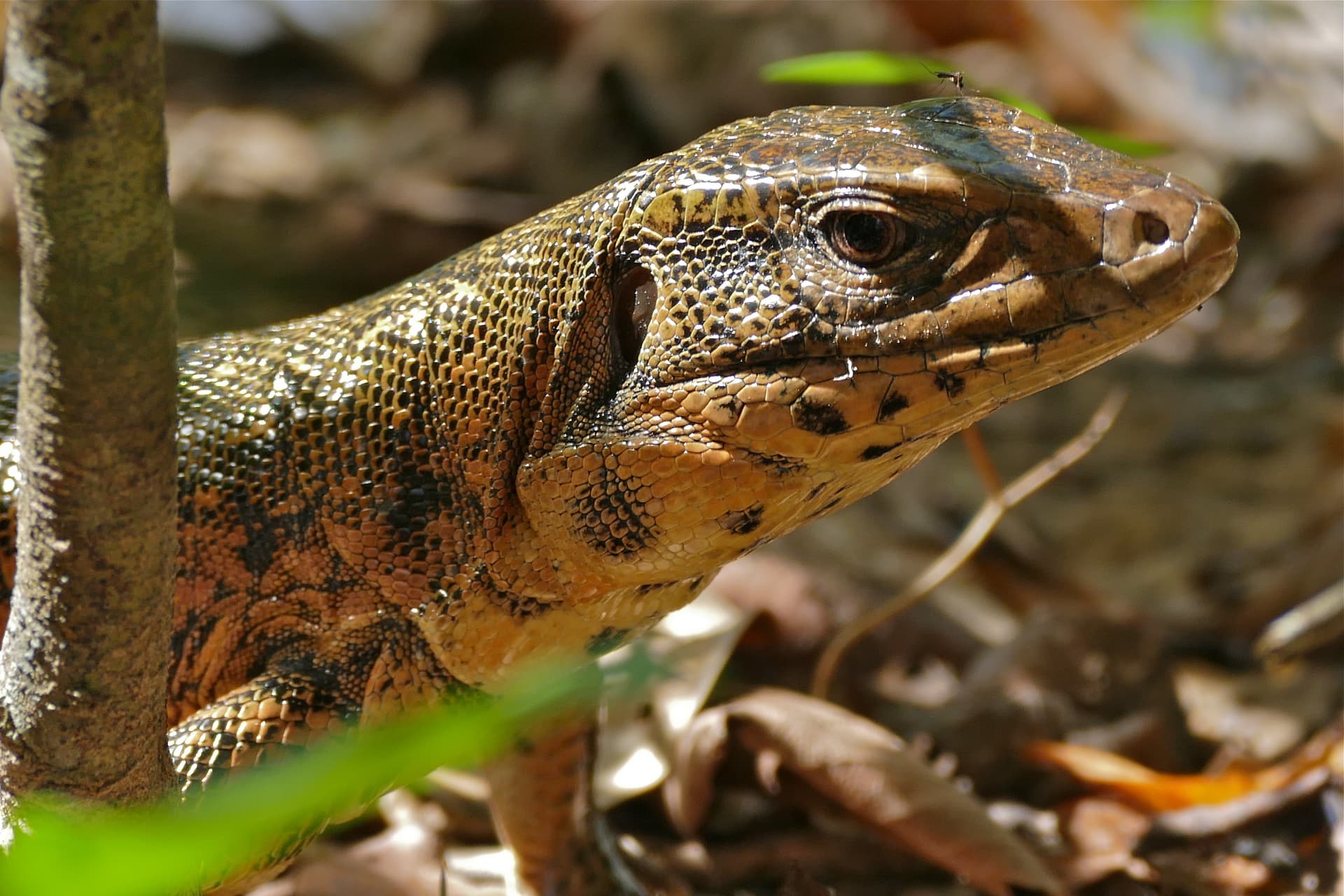
The golden tegu, known in Trinidad as the matte or salipenter, is a large, powerfully built ground lizard banded in black and gold.
The golden tegu, known in Trinidad as the matte or salipenter, is a large, powerfully built ground lizard banded in black and gold. It is one of the biggest lizards on the island and a bold, intelligent forager often seen patrolling forest edges, gardens, and riverbanks.
Appearance
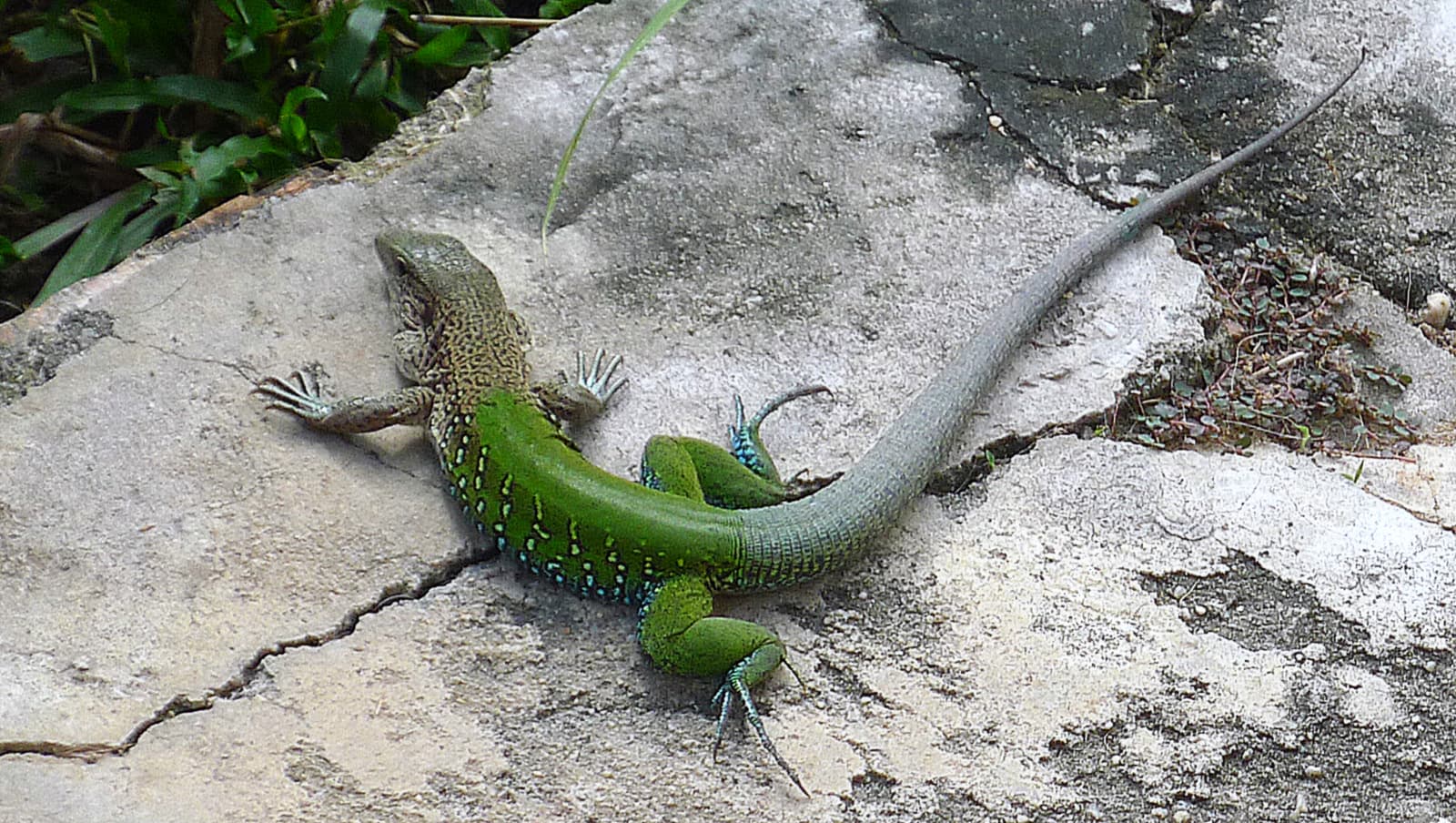
The golden tegu is a robust teiid lizard reaching about 1 m in total length, with large adults occasionally longer. It has a cylindrical body, a triangular head with strong jaws, and a long muscular tail. The body is patterned with alternating black and golden-yellow bands or rows of pale spots, and the skin is covered in small bead-like scales arranged in regular rings around the body.
Behaviour
Tegus are diurnal, terrestrial, and largely solitary, using deep burrows to shelter at night and during the hottest part of the day. They are active, alert foragers that flick their forked tongues constantly to detect prey by scent, digging through leaf litter and soil for hidden food. Strong and fast, a cornered tegu will defend itself vigorously by biting, lashing with its tail, and clawing. In Trinidad it is traditionally trapped by exploiting its odd habit of approaching and rolling in animal dung.
Diet and breeding
The golden tegu is an opportunistic omnivore, eating insects, snails and other invertebrates, small mammals, birds, frogs, smaller lizards and snakes, fish, fruit, and carrion. It is a notorious nest robber, raiding the eggs of birds, turtles, and caimans. Females lay clutches of eggs, sometimes in active termite mounds whose warmth and humidity aid incubation, and the young hatch as miniature versions of the adults. Tegus can live around 10 to 20 years.
In Trinidad and Tobago
In Trinidad the matte is common and widespread in forests, savannas, gardens, and the edges of towns, frequently near water, and it plays a useful role controlling insects and rodents. The species ranges widely across northern South America and is not considered globally threatened. It is not specifically protected as wildlife in Trinidad and Tobago, where it remains a familiar and adaptable part of the local fauna.