Reptile
Reptile
Tigre
Spilotes pullatus pullatus
The Tigre is one of the largest non-venomous snakes in Trinidad and Tobago and one of the most dramatically patterned, a bold jet-black and bright-yellow colubrid that reaches up to 2.4 m in length.
The Tigre is one of the largest non-venomous snakes in Trinidad and Tobago and one of the most dramatically patterned, a bold jet-black and bright-yellow colubrid that reaches up to 2.4 m in length. Diurnal, fast-moving, and highly conspicuous, it is among the species most likely to be encountered by people in forests and at forest margins. Despite being completely harmless, its striking appearance and aggressive defensive display when cornered lead to its frequent misidentification as a venomous species and subsequent killing.
Description
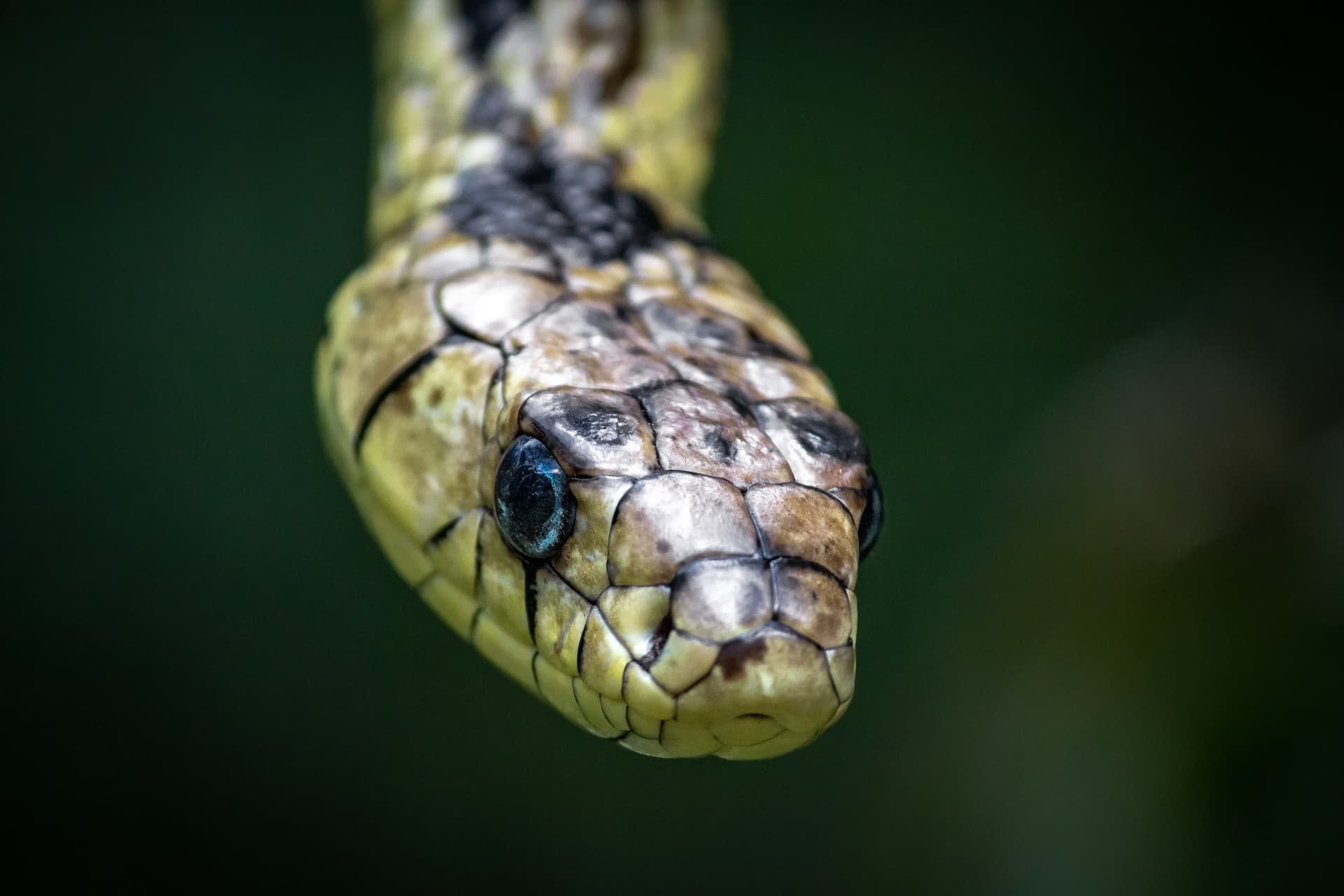
The Tigre is a large, slender-bodied snake with a distinctive colouration: an irregular bold pattern of jet-black and bright yellow in bands, spots, or irregular blotches across the dorsum and flanks, with a yellow or orange belly. The head is large and distinct from the narrow neck, with large, prominent eyes. Adults regularly reach 2 m and may exceed 2.4 m, making it one of the longest snakes in T&T though far more slender-bodied than the macajuel or anaconda. It is an agile and powerful animal.
Ecology
The Tigre is diurnal, active during the day, and moves both through the trees and along the ground. It is equally at home on the forest floor, in the understorey, and in the canopy, and is fast-moving when alarmed. It feeds on birds and their eggs, small mammals, lizards, and frogs. When threatened it may inflate the neck region, spread the body to expose the contrasting yellow and black scale colours more dramatically, rattle its tail against dry vegetation, and strike repeatedly; this display can be alarming to an observer but the bite, while capable of drawing blood, is not medically significant. The combination of large size, dramatic patterning, and aggressive display makes it the most likely of the harmless species to be killed by people who cannot identify it.
Conservation
The Tigre is found on both Trinidad and Tobago and in a range extending from Trinidad north through the Lesser Antilles and into Central America. It is fully protected in Trinidad and Tobago under the Conservation of Wildlife Act. Despite legal protection and ecological value as a bird-egg and rodent predator, it continues to be killed at high rates wherever it encounters humans.
Threats
- Persecution: frequently killed due to its large size and aggressive display
- Misidentification as a venomous species
- Habitat loss and forest fragmentation