Reptile
Reptile
Giant Ameiva
Ameiva ameiva
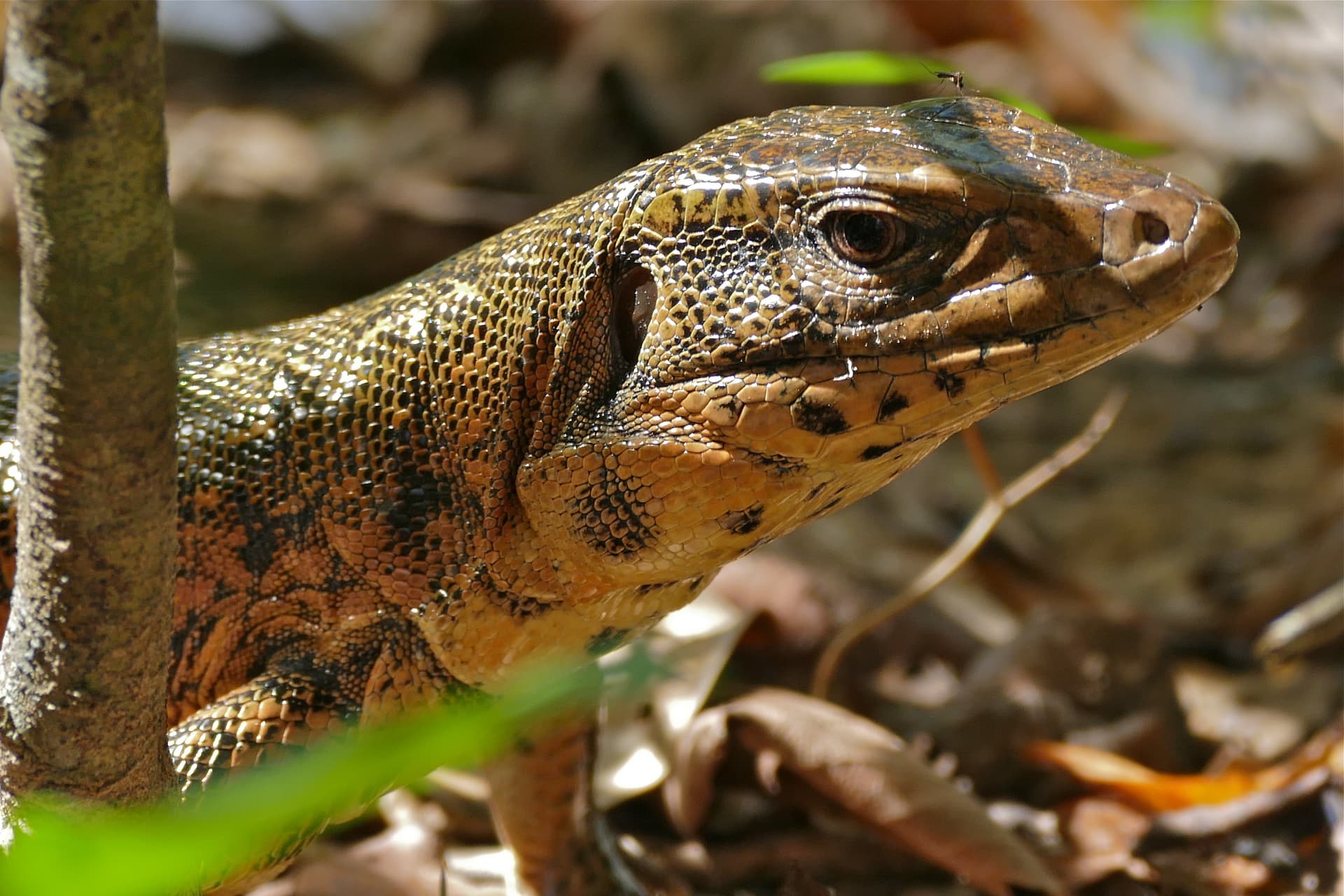
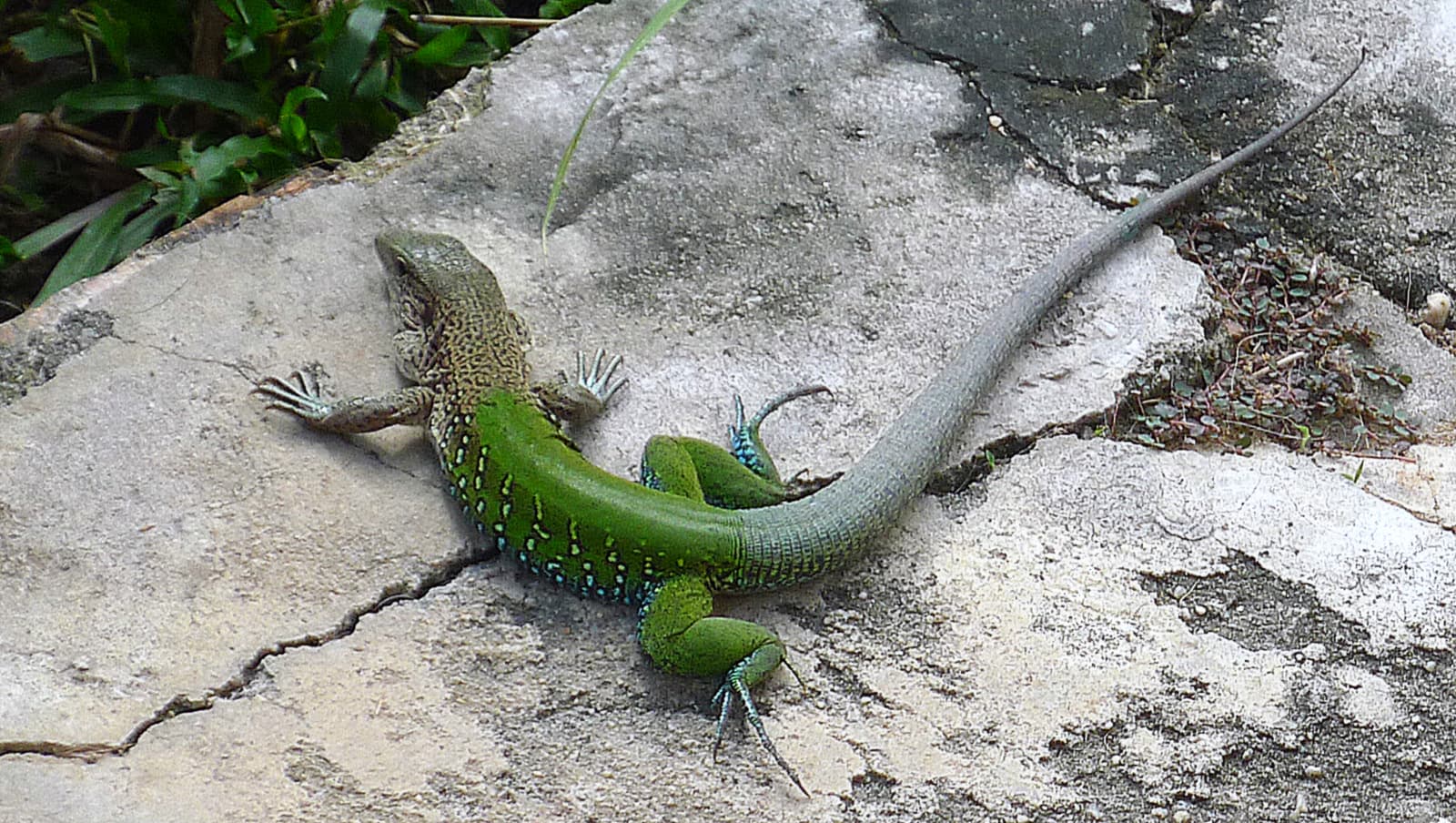
The Giant Ameiva, known locally as the zandolie or ground lizard, is a large, fast-moving lizard often seen darting across sunlit paths, gardens, and forest edges in Trinidad and Tobago.
The Giant Ameiva, known locally as the zandolie or ground lizard, is a large, fast-moving lizard often seen darting across sunlit paths, gardens, and forest edges in Trinidad and Tobago. Streamlined and powerfully built in the hind legs, it is one of the islands' most conspicuous daytime reptiles.
Appearance
This is a large, streamlined teiid lizard, with big individuals reaching around 45 to 50 cm in total length including the long tail. It has a pointed head, a slightly forked tongue, and short but very muscular hind legs built for speed. Adults show sexual dimorphism: backs are greenish, the flanks are often boldly patterned and colourful, and males are larger and more strongly built than females.
Behaviour
The zandolie is strictly diurnal and thrives in warm, sunny, open areas, basking and then foraging actively across the ground. Its muscular hind legs let it sprint rapidly to escape predators, vanishing into vegetation or a burrow. It is an active digger and forager, and possesses rows of femoral pores on the underside of the hind legs that release secretions used in territorial and mating signalling.
Diet and breeding
It is a wide-ranging predator, eating mainly insects such as grasshoppers, beetles, cockroaches, termites, and larvae, but also taking spiders, snails, frogs, smaller lizards, and some plant material. Females lay clutches of eggs in burrows or loose soil, and the species can be locally abundant where suitable open, sunny habitat exists. Its speed and active hunting style make it an important controller of insect populations.
In Trinidad and Tobago
The Giant Ameiva is common and widespread on both Trinidad and Tobago, favouring forest clearings, road verges, gardens, and other open sunny ground. It adapts well to human-modified landscapes and is a familiar sight around homes and cultivated land. The species is classified as Least Concern and is not considered threatened.