Amphibian
Amphibian
Flying Frog
Boana crepitans
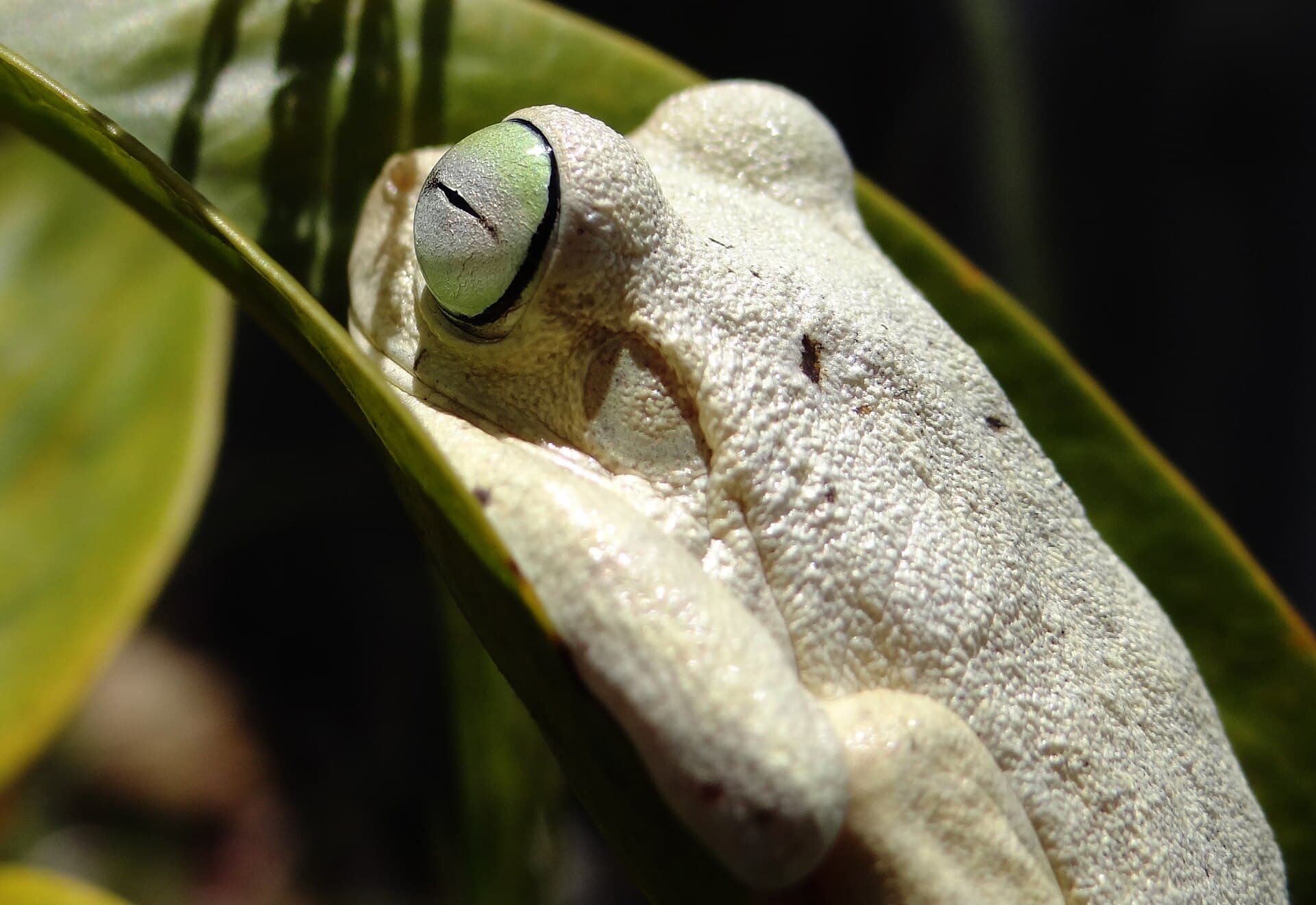
The Flying Frog, so named locally for its long leaps between leaves and branches rather than true flight, is a common tree frog of ponds and wetlands whose loud, cricket-like call is a familiar sound of the rainy season across both islands.
The Flying Frog, so named locally for its long leaps between leaves and branches rather than true flight, is a common tree frog of ponds and wetlands whose loud, cricket-like call is a familiar sound of the rainy season across both islands.
Identification
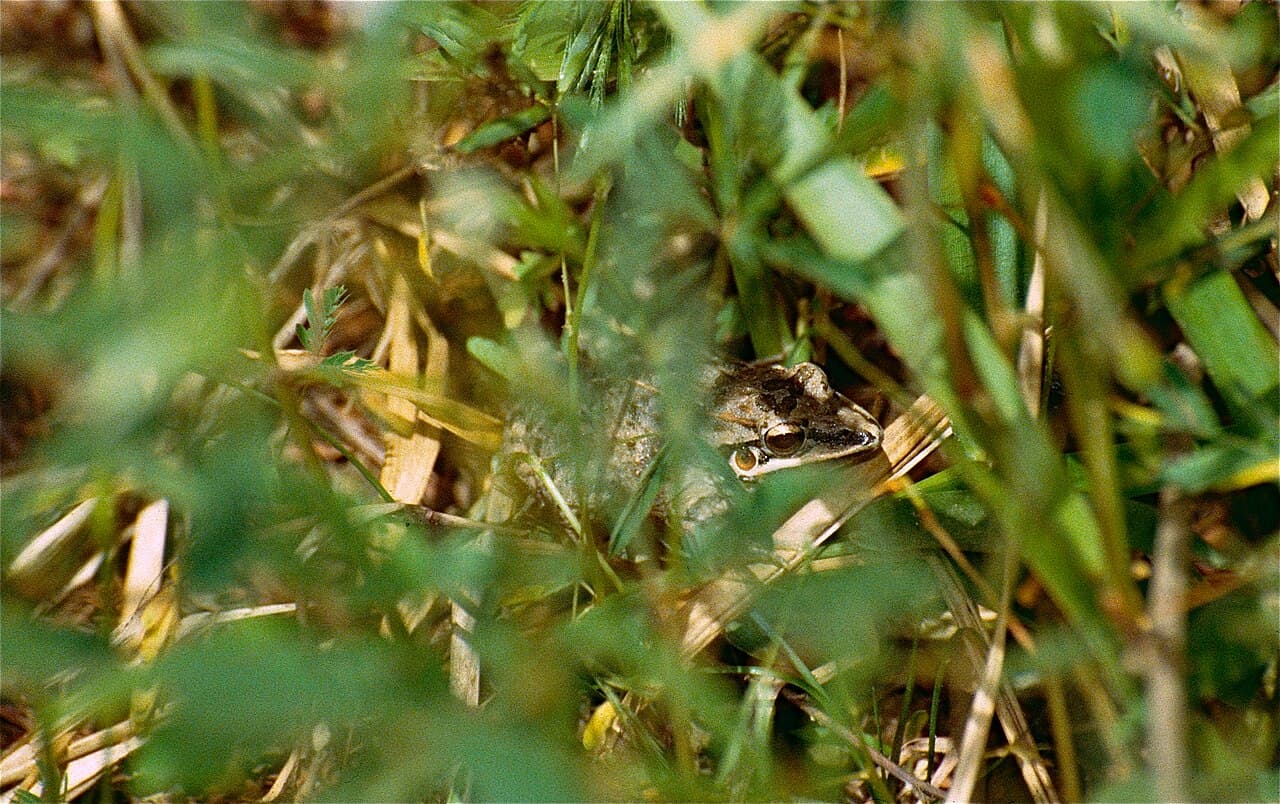
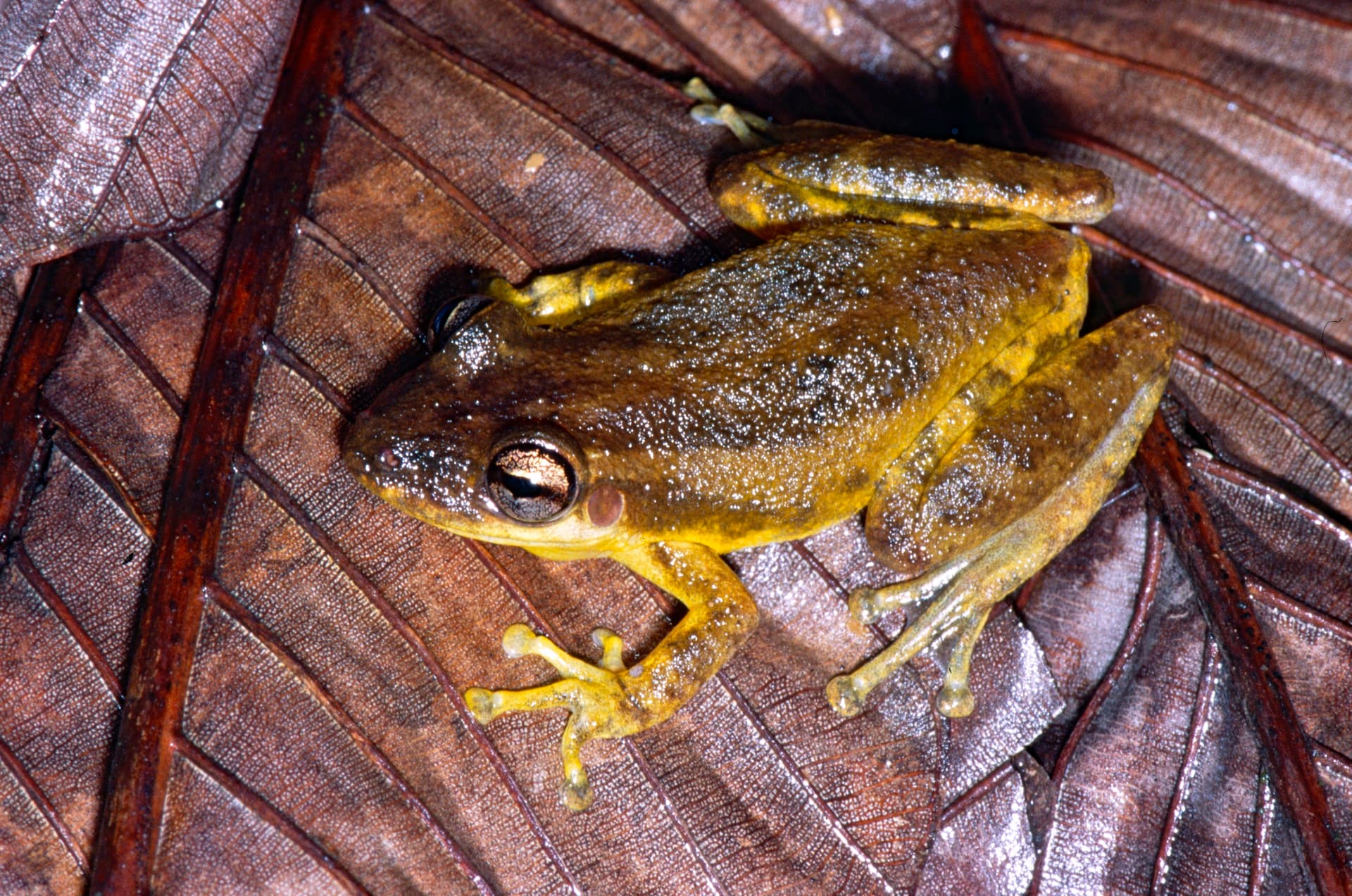
A slender, long-legged tree frog with enlarged, adhesive toe discs for climbing smooth leaves and stems, coloured grey to brown above with darker mottling and bars that provide effective camouflage against tree bark and dead leaves. Adults reach around 5 to 7 cm, with long, powerful hind legs adapted for the extended leaps that give the species its common name.
Ecology
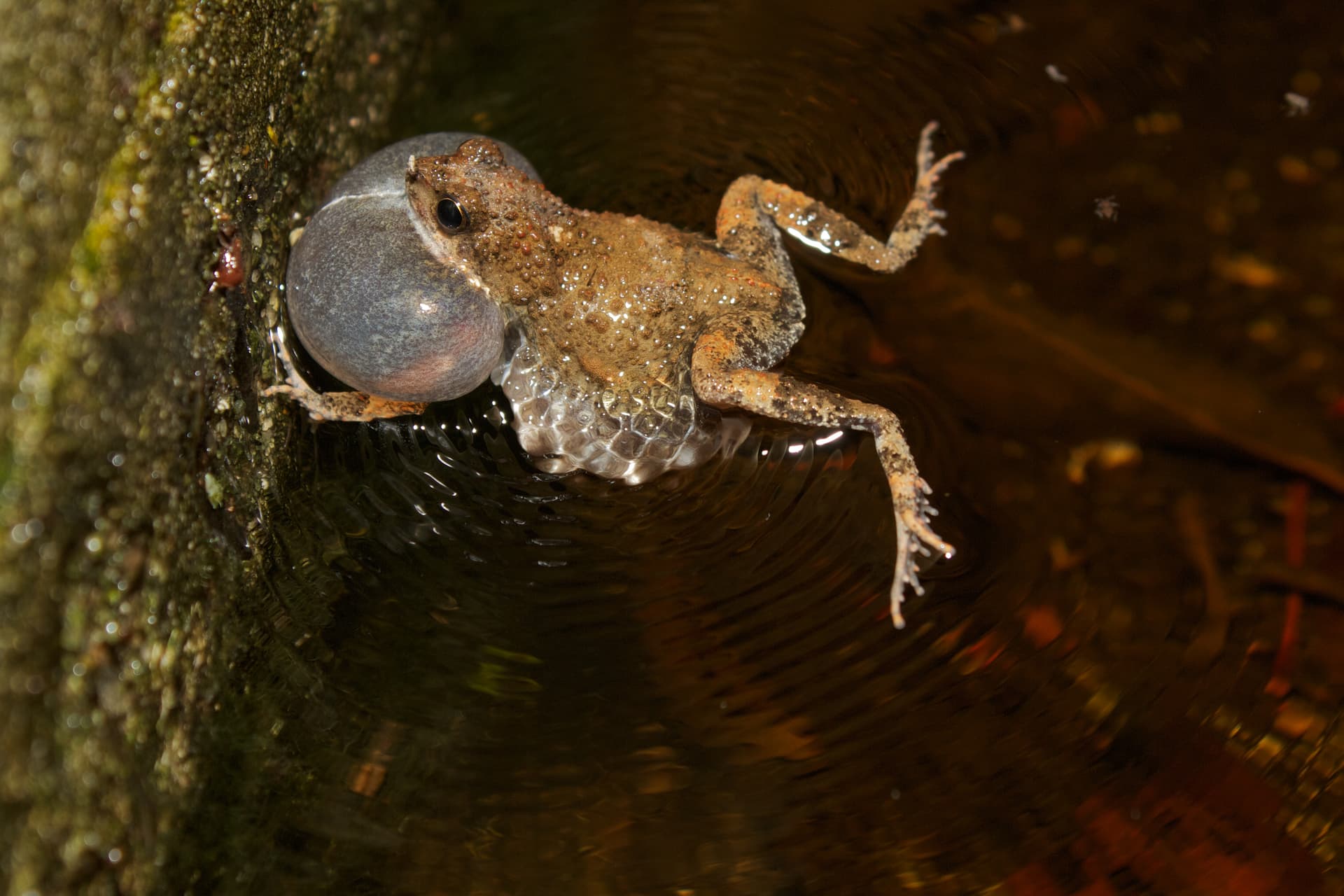
Nocturnal and highly vocal, males calling loudly (a rasping, cricket-like or "crepitans" trill) from vegetation around ponds and flooded areas, especially in the hours after rain, when large choruses can form rapidly. Breeds explosively at temporary and permanent still water, with pairs in amplexus depositing eggs directly onto the water surface or attached to submerged vegetation; tadpoles develop quickly to exploit ephemeral pools before they dry.
In Trinidad and Tobago
Common and widespread on both islands around ponds, ditches, flooded pasture, and garden water features, tolerating a considerable degree of habitat disturbance as long as suitable breeding water is available seasonally.