Bird
Bird
Copper-rumped Hummingbird
Amazilia tobaci
The Copper-rumped Hummingbird is the most abundant and familiar hummingbird of Trinidad and Tobago, a small, intensely territorial jewel that is a daily presence in gardens, forest edges, and flowering plantations across both islands.
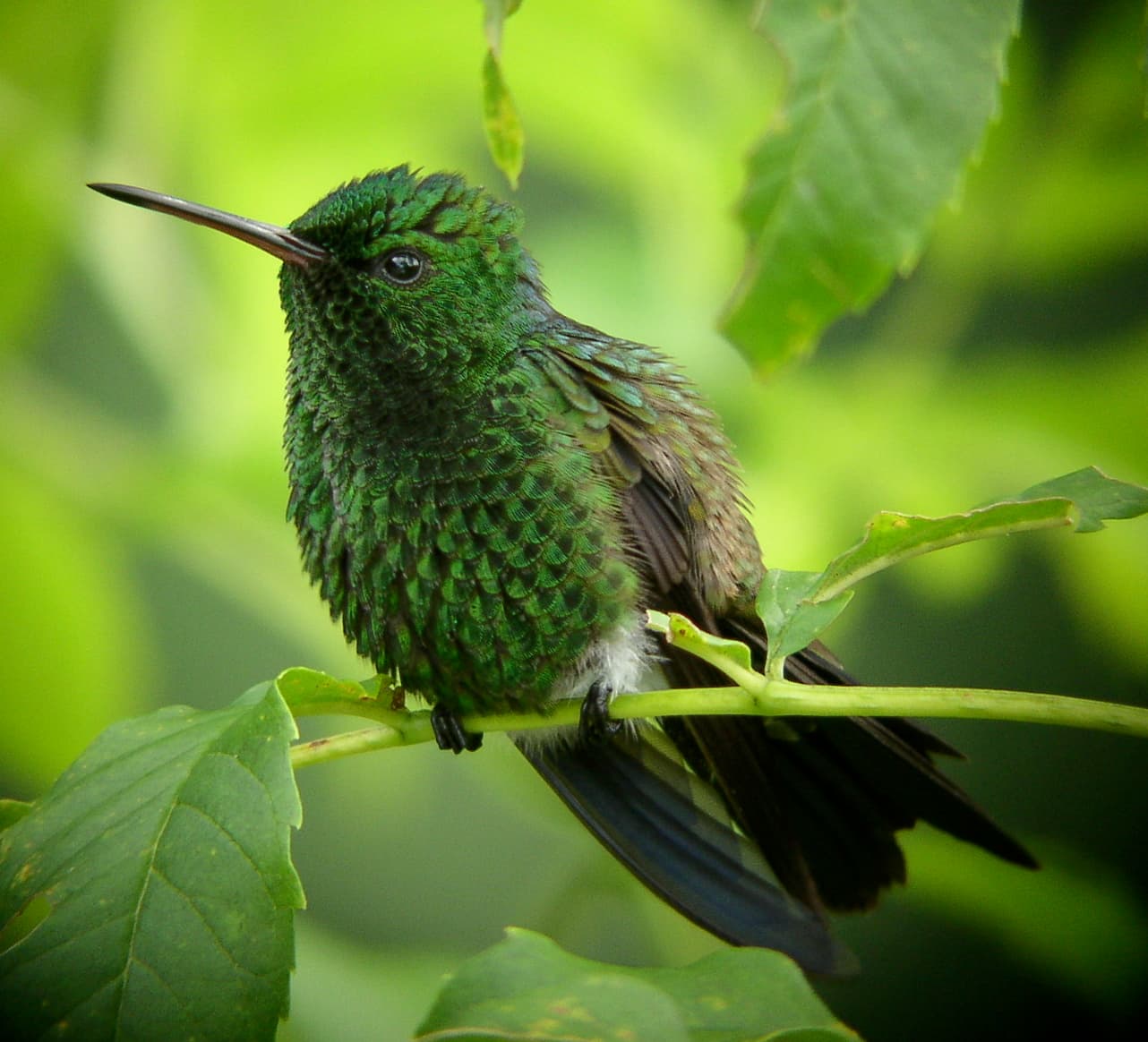
The Copper-rumped Hummingbird is the most abundant and familiar hummingbird of Trinidad and Tobago, a small, intensely territorial jewel that is a daily presence in gardens, forest edges, and flowering plantations across both islands. Its combination of glittering green plumage and a distinctive bronzy-copper rump makes it unmistakable in good light, and its aggressive defence of nectar sources against birds many times its size is a signature of T&T's garden wildlife.
Identification
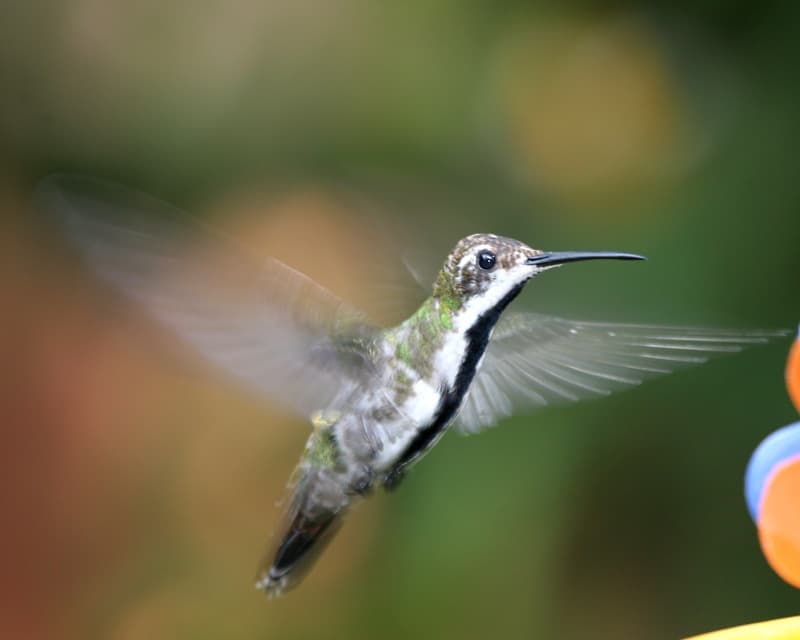
The Copper-rumped Hummingbird measures 8 to 9 cm and weighs approximately 4 to 5 g. The upperparts are bright, shining green with a conspicuous copper-bronze rump visible in flight and when perched. The underparts are white to pale grey with green speckles on the flanks. The straight, slender bill is black. Males and females are similar in plumage. The species is easily distinguished from other T&T hummingbirds by the distinctive rump colour and its tendency to perch prominently on exposed twigs or wires while aggressively chasing competitors away from nectar sources.
Ecology and Behaviour
This hummingbird feeds primarily on nectar from a wide range of flowering plants, including garden ornamentals such as Heliconia, Ixora, and Hibiscus, as well as native flowering trees and epiphytes. It hovers at flowers with rapid wingbeats of approximately 40 beats per second and feeds while hovering or, for larger flowers, while perched at the base. It also catches small insects and spiders for protein, especially during the breeding season when chicks require higher protein intake. Intensely territorial birds defend a core group of flowering plants year-round, regularly displacing larger species. The species name tobaci reflects a type specimen collected from Tobago.
Breeding
Breeding occurs year-round in T&T, with peaks in the dry season. The female alone constructs a tiny cup nest of plant fibres and spider silk, typically sited on a thin branch 1 to 4 m above ground, and raises two chicks over approximately three weeks in the nest. The nest expands as chicks grow, with the spider silk providing elasticity. Males play no role in nest building, incubation, or chick rearing.
Threats
- Garden pesticide use reducing insect prey
- Reduction of nectar plants in urban gardens
- Window strike