Mammal
Mammal
Greater White-lined Bat
Saccopteryx bilineata
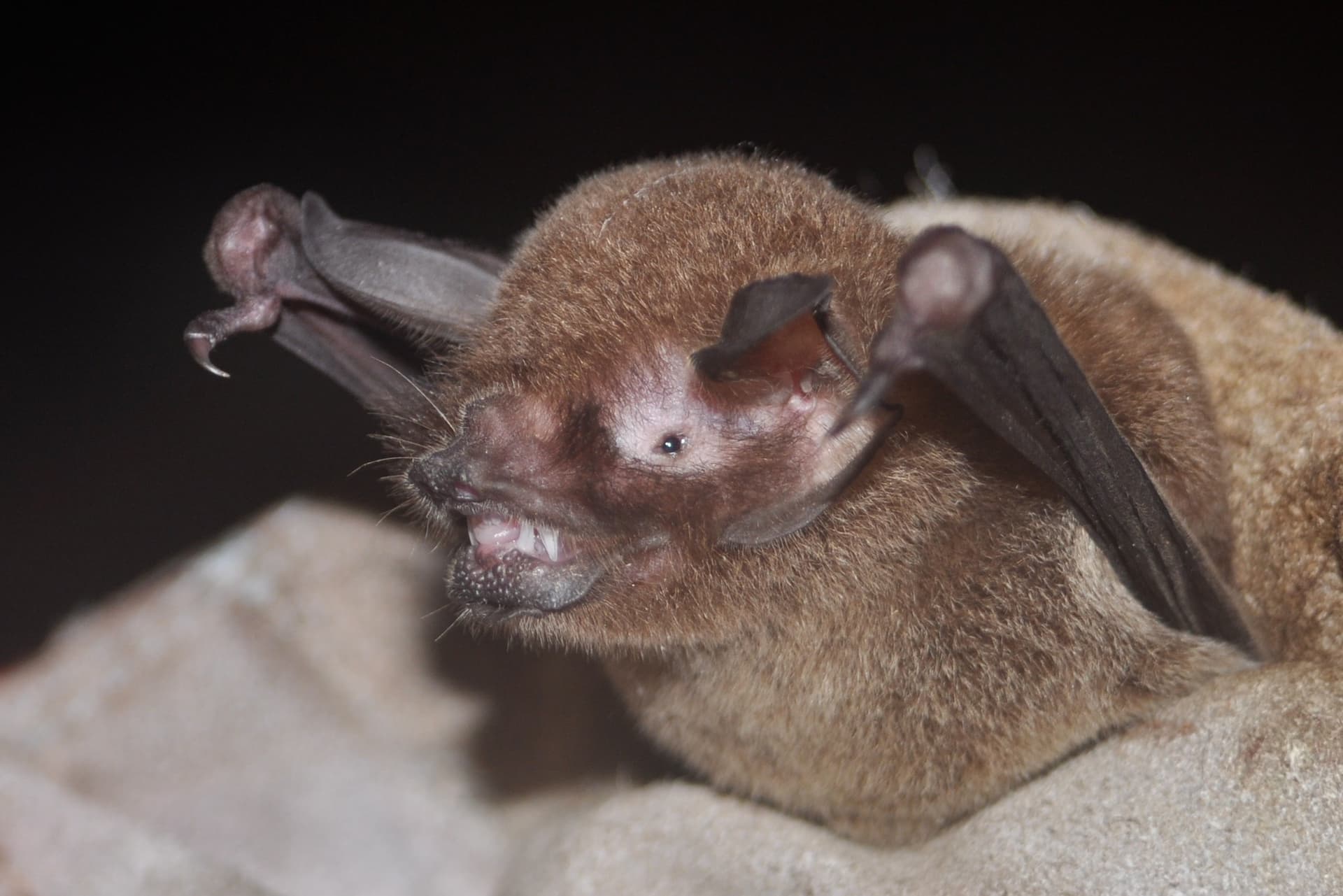
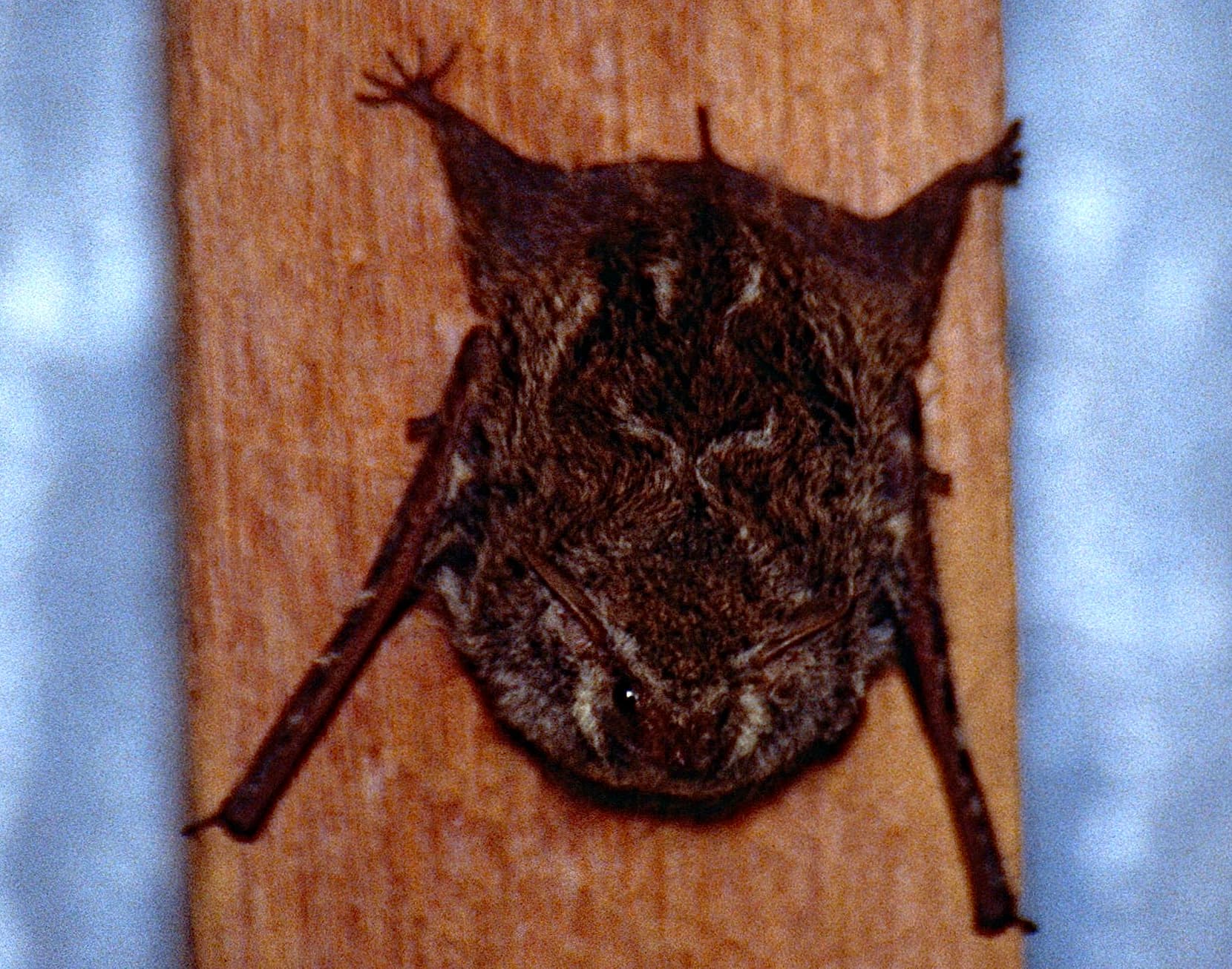
The Greater White-lined Bat is a small, dark bat marked with two crisp white lines down its back, easily observed roosting in daylight on exposed tree trunks and buttresses in Trinidad's forests.
The Greater White-lined Bat is a small, dark bat marked with two crisp white lines down its back, easily observed roosting in daylight on exposed tree trunks and buttresses in Trinidad's forests. Its elaborate wing-flapping courtship displays make it one of the more behaviourally studied bats in the region.
Identification
A small bat with a forearm length of around 40 to 46 mm, dark brown to blackish fur, and two distinct wavy white stripes running down the back from shoulder to rump, giving the species its name. Males carry glandular wing sacs near the wrist used to store and disperse scent during display.
Ecology
Roosts by day in small harem groups on the shaded, vertical surfaces of large tree trunks, buttress roots, and occasionally building walls, typically choosing sites low to the ground with some overhead cover. Males perform conspicuous hovering flight displays, wing-fanning scent from their wing sacs toward females and rival males to defend roost sites and mates. By night it forages for small flying insects over forest edge and clearings.
Status in T&T
Found in forest and forest edge across Trinidad, roosting on tree trunks in both undisturbed and secondary forest. Not threatened, though it depends on large trees with suitable trunk surfaces for roosting. It is protected as native wildlife under the Conservation of Wildlife Act.
Threats
- Loss of large trees with suitable roosting trunks