Bird
Bird
Cattle Egret
Bubulcus ibis
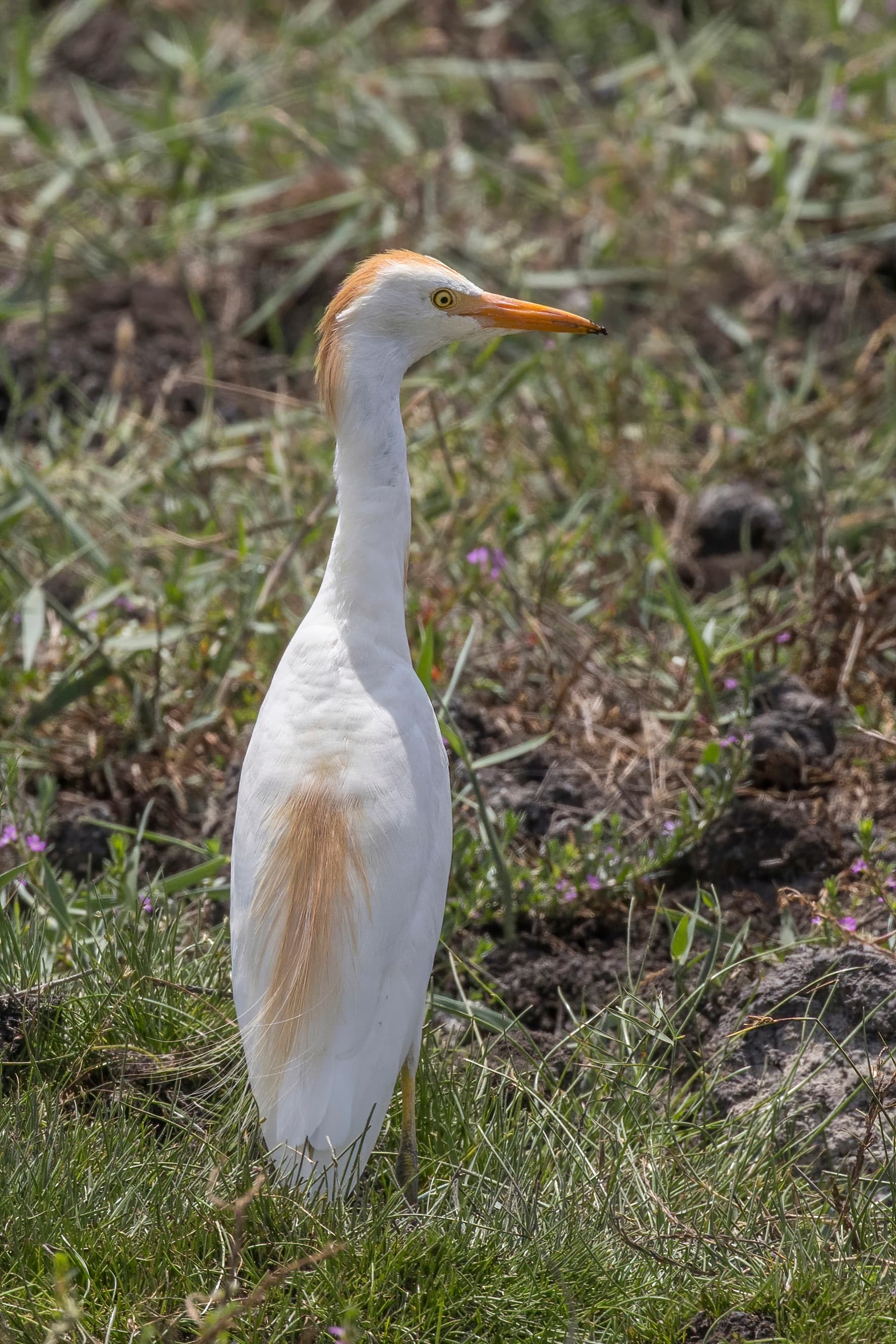
Photo: Wikimedia Commons contributor · Caribbean (CC BY-SA 4.0)
The Cattle Egret is one of the most successful birds in the world and one of the most familiar sights in Trinidad and Tobago's agricultural landscape: a small, stocky white egret that follows cattle, horses, and farm machinery through pastures and fields, snapping up the insects and small animals disturbed by their movement.
The Cattle Egret is one of the most successful birds in the world and one of the most familiar sights in Trinidad and Tobago's agricultural landscape: a small, stocky white egret that follows cattle, horses, and farm machinery through pastures and fields, snapping up the insects and small animals disturbed by their movement. Originally native to Africa and Asia, the Cattle Egret colonised South America naturally in the early 20th century and spread explosively across the Americas, reaching T&T and becoming ubiquitous within a few decades.
Identification
The Cattle Egret is a compact, short-necked egret measuring 46 to 56 cm. Outside the breeding season the plumage is entirely white with a yellow bill and dull yellow legs. In breeding condition, adults develop orange-buff plumes on the crown, breast, and back, and the bill and legs temporarily flush orange-red. The species is smaller and stockier than other egrets, with a shorter neck and a more rounded head, which helps distinguish it when not associated with livestock. In flight, the neck is held in a characteristic S-curve and the wingbeats are fast and steady.
Ecology
The Cattle Egret is one of a very small number of birds that have mastered a commensal relationship with large grazing animals. By following livestock, horses, and even tractors, it captures the grasshoppers, beetles, lizards, frogs, and small snakes that are flushed from the grass, achieving feeding rates far higher than birds hunting independently. They also roost and nest colonially in trees, often mixed with other herons, and are one of the most abundant breeding birds at T&T's wetland heron colonies. The species adapted quickly to agricultural landscapes across the Americas, demonstrating extraordinary ecological flexibility.
Status in T&T
The Cattle Egret is abundant throughout Trinidad and Tobago in any open or agricultural habitat: pasture, ricefields, roadsides, and wetland edges. It is fully protected under the Conservation of Wild Life Act and is not a game species. Its abundance and adaptability mean it is one of the least threatened birds in T&T. Large roosts of hundreds of birds are conspicuous at wetland tree stands at dusk.
Threats
- Pesticide use reducing insect prey in agricultural land
- Wetland drainage reducing nesting colony sites