Fish
Fish
Caribbean Reef Shark
Carcharhinus perezi
The Caribbean Reef Shark is the most commonly sighted large shark on Caribbean coral reefs, an apex predator whose presence helps maintain balanced reef fish communities around Tobago, though its populations have declined sharply across the region.
The Caribbean Reef Shark is the most commonly sighted large shark on Caribbean coral reefs, an apex predator whose presence helps maintain balanced reef fish communities around Tobago, though its populations have declined sharply across the region.
Identification
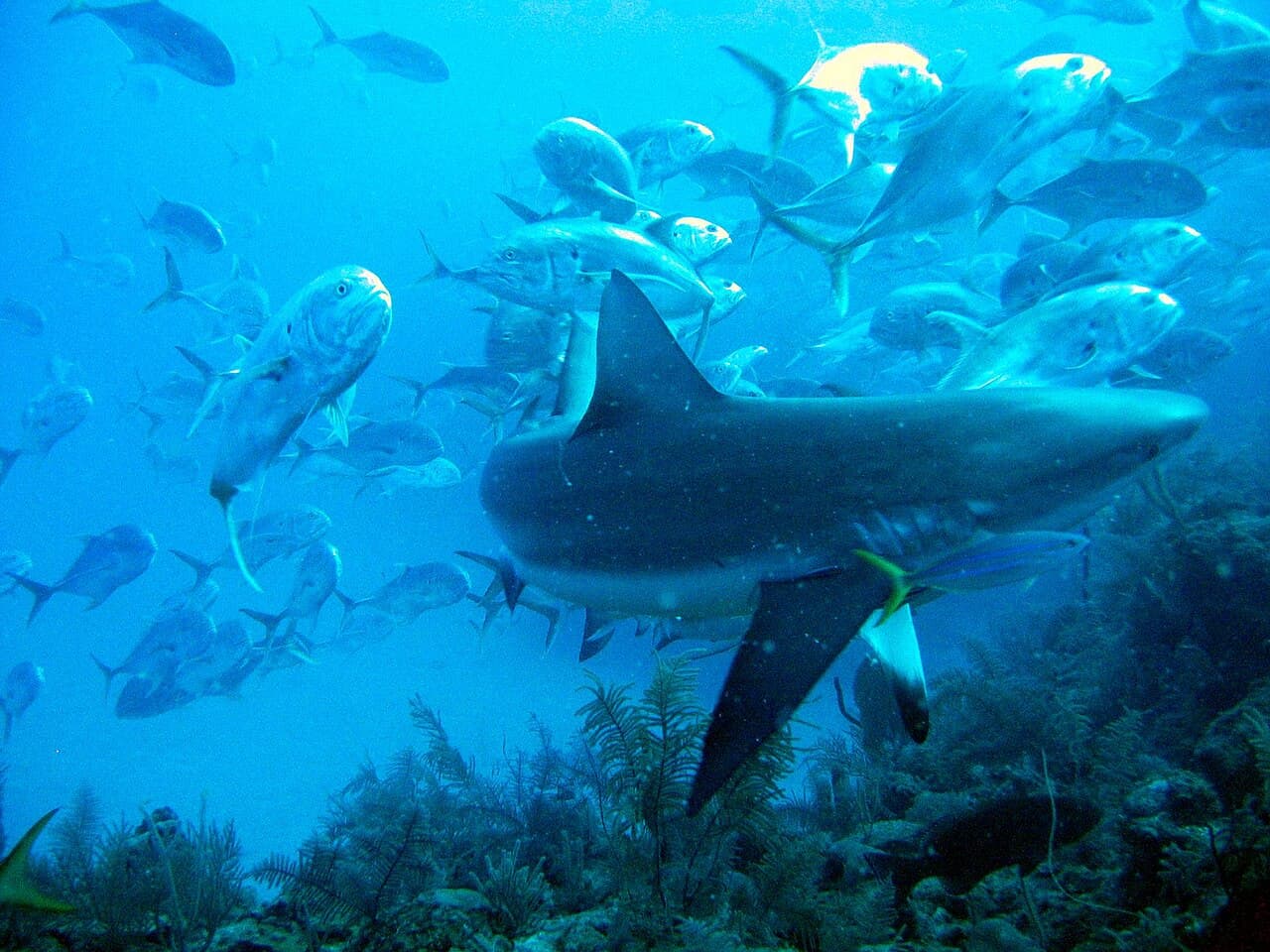
A grey-brown requiem shark with a robust, stocky body, broadly rounded snout, and a distinctively large first dorsal fin. Adults typically reach 2 to 2.5 m, with dusky-tipped fins and a countershaded pale belly typical of open-water and reef-associated sharks.
Ecology
A reef apex predator feeding on reef fish, cephalopods, and other prey, playing an important top-down ecological role in maintaining healthy, balanced coral reef fish communities by limiting the abundance of mid-level predators and grazers. It is often seen patrolling reef walls and drop-offs by day, sometimes resting motionless in caves, and is known to be site-faithful, returning repeatedly to the same reef areas over years.
In Trinidad and Tobago
Found on Tobago's coral reefs, where sightings are highly valued by the dive tourism industry as a signature Caribbean reef shark encounter. Globally assessed as Endangered due to widespread overfishing and shark finning pressure across the Caribbean, a decline that has made healthy sighting populations, like those around Tobago, increasingly significant regionally.
Threats
- Overfishing and shark finning regionally
- Bycatch
- Coral reef degradation