Fish
Fish
Nassau Grouper
Epinephelus striatus
The Nassau Grouper is a large, once-abundant reef fish now Critically Endangered across the Caribbean, including Tobago's reefs, primarily due to the targeted overfishing of its predictable spawning aggregations.
The Nassau Grouper is a large, once-abundant reef fish now Critically Endangered across the Caribbean, including Tobago's reefs, primarily due to the targeted overfishing of its predictable spawning aggregations.
Identification
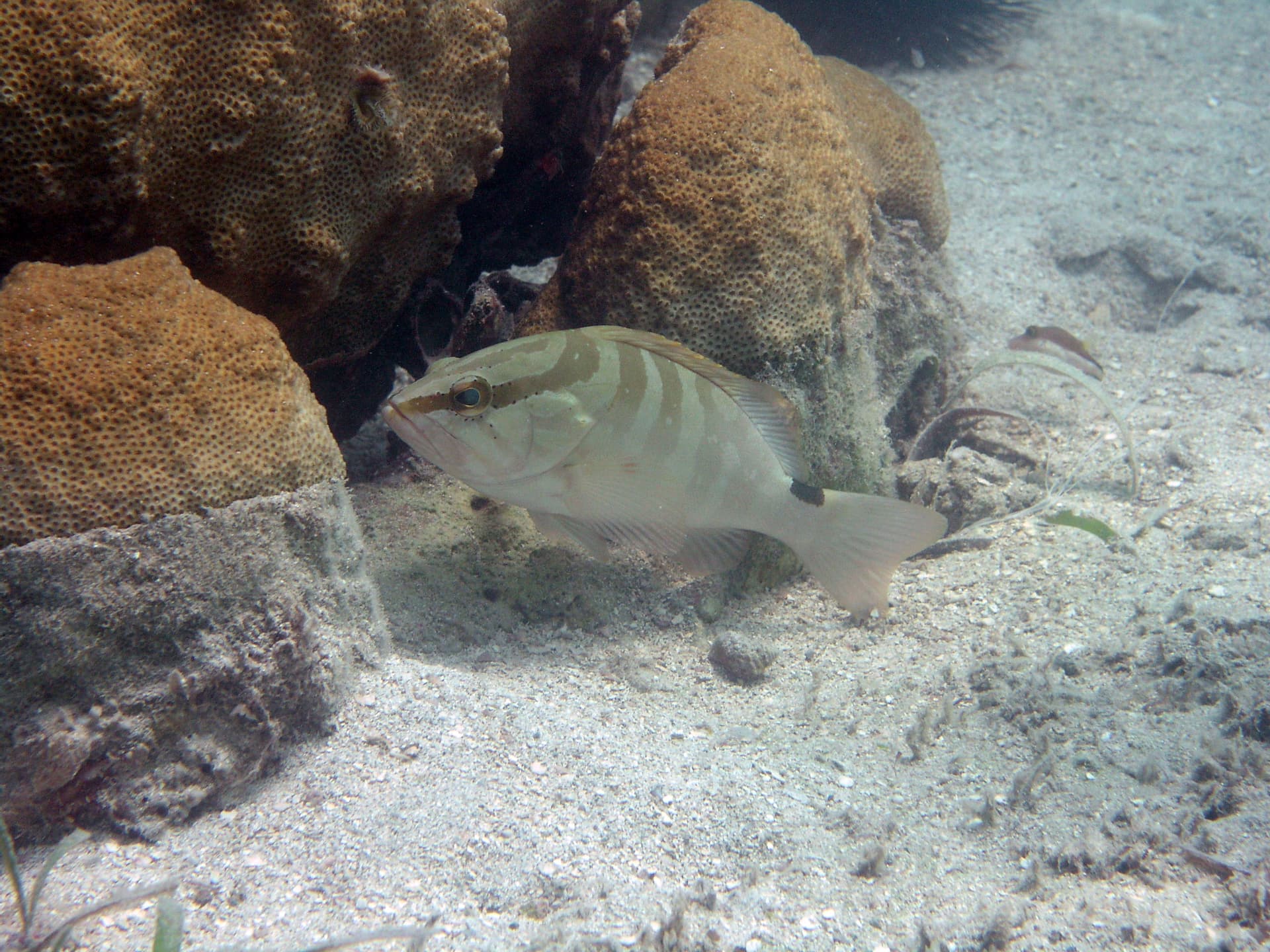
A large, heavy-bodied grouper reaching up to around 1.2 m, though most individuals encountered today are considerably smaller due to fishing pressure. Colouration is variable, typically pale tan to brownish with darker vertical bars and blotches, capable of rapid colour change, and a distinctive black saddle patch is often visible near the base of the tail.
Ecology
A reef-associated ambush predator, hunting fish and crustaceans from cover among coral and rocky reef structure. Its defining ecological vulnerability is a highly predictable spawning aggregation behaviour, gathering in large numbers at specific reef sites and times tied to the lunar cycle, which historically made it extremely easy for fishers to target and severely deplete entire regional populations in a single season.
Status in T&T
Historically present on reefs around Tobago, though, as throughout the wider Caribbean, populations have collapsed due to spawning aggregation overfishing and are now Critically Endangered on the IUCN Red List. Regional conservation efforts focus on protecting known spawning aggregation sites and enforcing seasonal fishing closures.
Threats
- Overfishing of spawning aggregations
- Reef habitat degradation
- Slow recovery due to late sexual maturity