Fish
Fish
Nurse Shark
Ginglymostoma cirratum
The Nurse Shark is a docile, bottom-dwelling shark commonly encountered resting in caves and under ledges around Tobago's reefs by day, becoming an active nocturnal hunter after dark.
The Nurse Shark is a docile, bottom-dwelling shark commonly encountered resting in caves and under ledges around Tobago's reefs by day, becoming an active nocturnal hunter after dark. Its calm temperament makes it one of the most approachable large sharks for divers.
Identification
A heavy-bodied, brownish-grey shark with a broad, flattened head, small eyes, and two long, fleshy barbels near the nostrils used to detect prey by touch and smell along the sea floor. Adults commonly reach 2 to 3 m, with a distinctly rounded first dorsal fin set well back on the body, unlike the more forward-set fins of typical requiem sharks.
Ecology
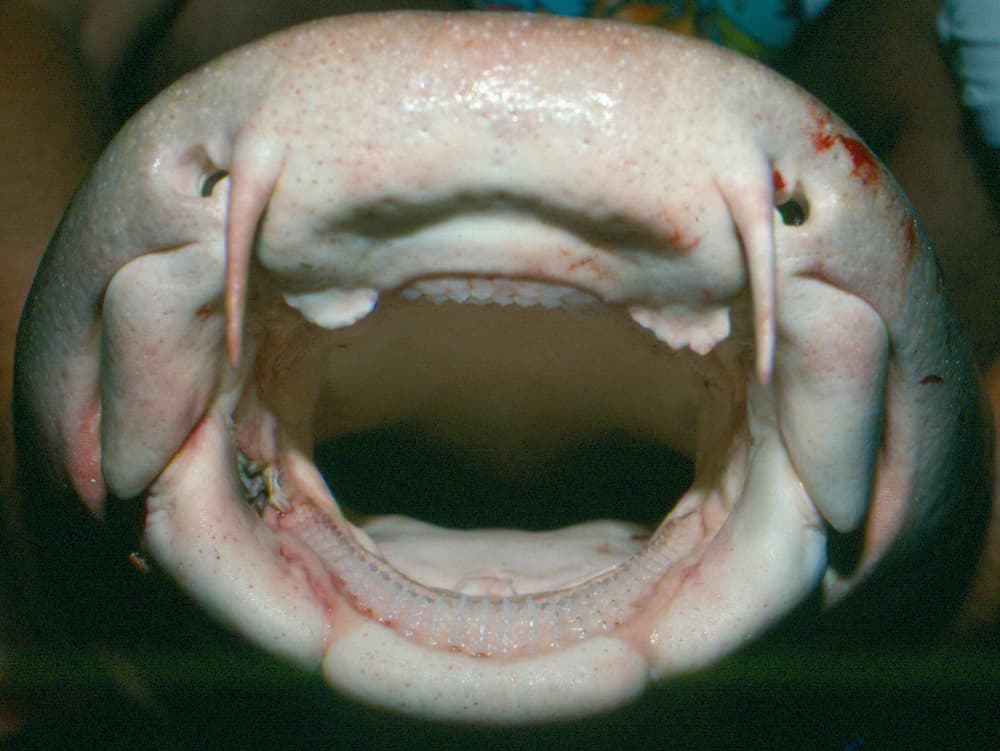
Largely nocturnal, resting motionless in caves, under ledges, or on sandy bottom by day, often in loose groups or piled in contact with one another, a behaviour unusual among sharks. At night it becomes an active forager, hunting fish, crustaceans, and molluscs, which it sucks into its mouth with a powerful, vacuum-like feeding action generated by rapidly expanding its buccal cavity, allowing it to extract prey from crevices without needing to bite.
In Trinidad and Tobago
Regularly encountered by divers around Tobago's reefs, where daytime resting aggregations under ledges make it one of the more reliably seen sharks in local waters, contributing to dive tourism. Generally docile toward divers if unprovoked, though like any large shark it should not be harassed or touched.
Threats
- Bycatch in coastal fisheries
- Coral reef habitat degradation