Bird
Bird
Barn Owl
Tyto alba
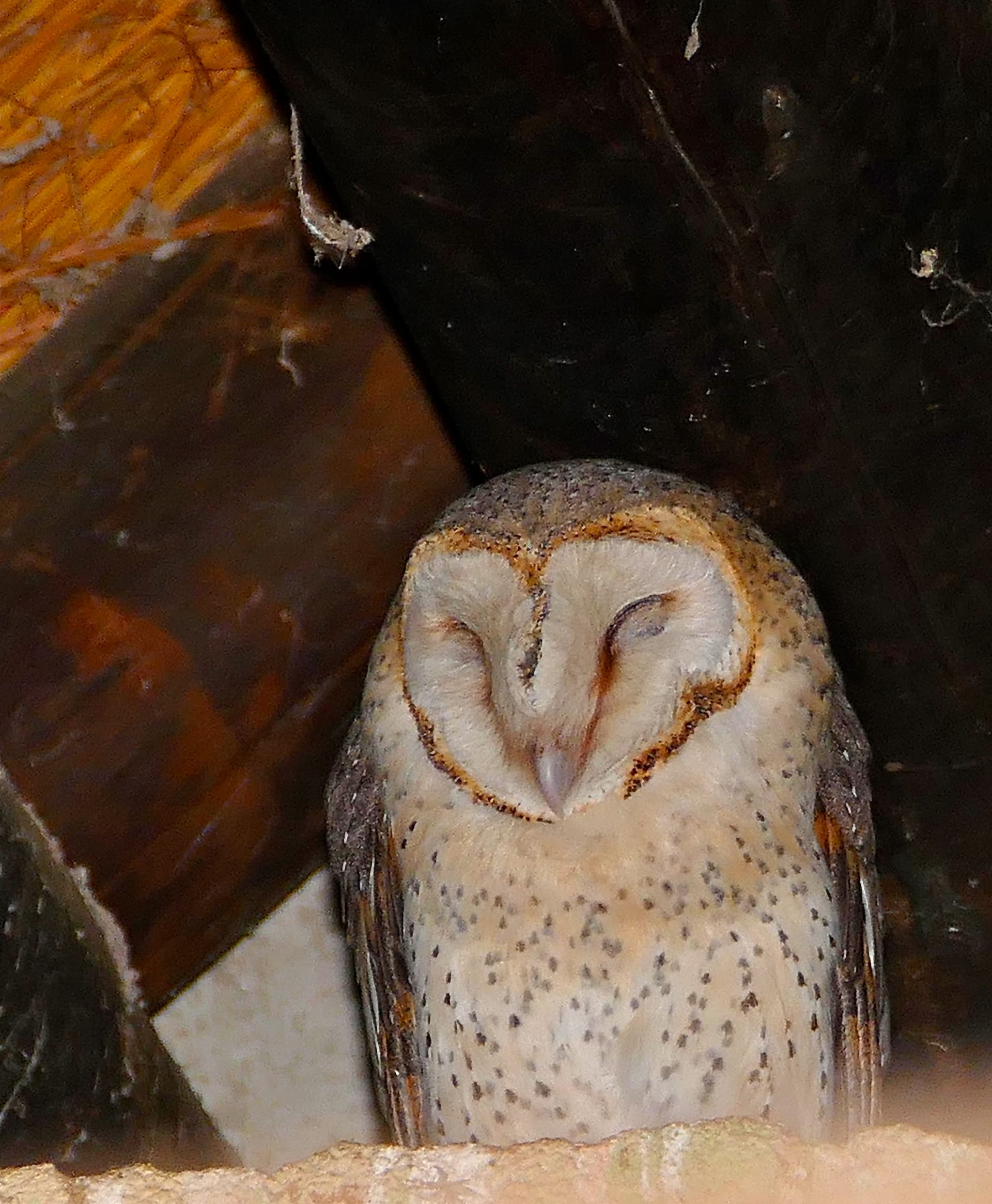
The Barn Owl is a pale, long-legged owl best known for its distinctive heart-shaped facial disc and ghostly, silent flight.
The Barn Owl is a pale, long-legged owl best known for its distinctive heart-shaped facial disc and ghostly, silent flight. A resident breeder on both Trinidad and Tobago, it hunts rodents under cover of darkness and is one of nature's most effective forms of pest control. Its eerie screeching call, rather than a hoot, often betrays its presence around farmland, open country, and human structures.
Identification
The Barn Owl is a medium-sized owl roughly 33 to 39 cm in length, with a pale buff and grey upperside finely speckled with black and white, and a near-white underside.
Its most recognisable feature is the white, heart-shaped facial disc that frames dark eyes and channels sound toward its asymmetrically placed ears. In flight it appears very pale and almost ghostly, with long legs, rounded wings, and an unhurried, buoyant wingbeat. It is mostly silent on the wing but gives a harsh, drawn-out screech rather than a hoot.
Ecology
Barn Owls are strictly nocturnal hunters, quartering low over open ground in search of small mammals, especially rats and mice, which form the bulk of their diet. Their exceptional low-light vision and acute, directional hearing let them locate and seize prey in near-total darkness.
They are monogamous and breed once a year, nesting in cavities, hollow trees, caves, and old buildings, with the female typically laying four to seven eggs. By consuming large numbers of rodents, a single owl provides substantial natural pest control across farmland and rural settlements.
Status in T&T
The Barn Owl is a resident breeder on both Trinidad and Tobago, represented by the subspecies Tyto alba hellmayri found across northern South America and the southern Caribbean. It frequents open and semi-open habitats including agricultural land, savannas, and the edges of human settlements, where it readily uses barns and other structures for roosting and nesting.
Globally the species is listed as Least Concern by the IUCN, reflecting its enormous range. In Trinidad and Tobago it is uncommon but widespread, and its value as a natural controller of rodent populations makes it a beneficial species worth protecting.