Bird
Bird
White-tailed Nightjar
Caprimulgus cayennensis
The White-tailed Nightjar is a slender, ground-roosting nightjar of open savanna and grassland across Trinidad and Tobago, most often detected at dusk by its distinctive whistled call or the flash of white outer tail feathers as it flushes underfoot.
The White-tailed Nightjar is a slender, ground-roosting nightjar of open savanna and grassland across Trinidad and Tobago, most often detected at dusk by its distinctive whistled call or the flash of white outer tail feathers as it flushes underfoot.
Identification
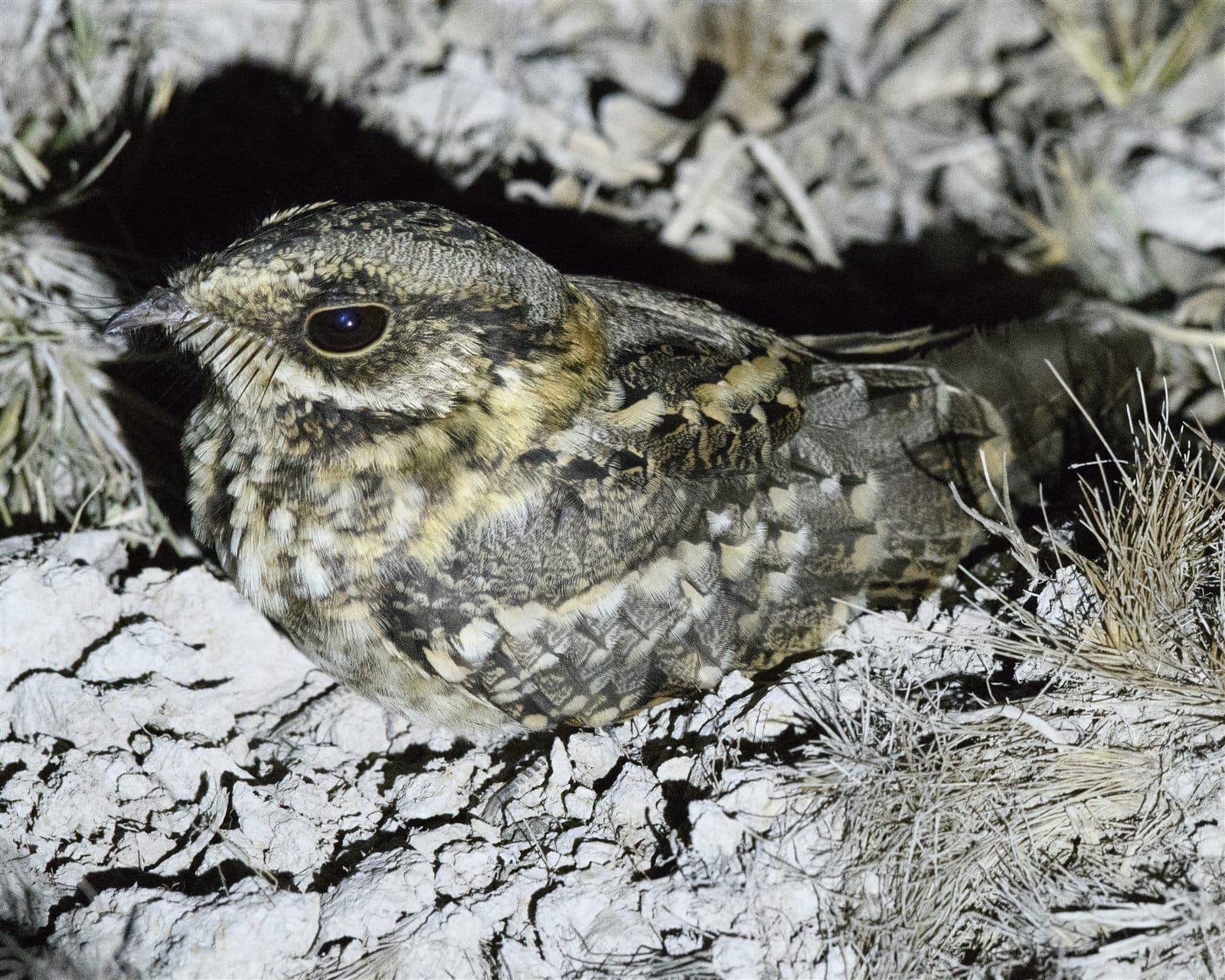
A small nightjar around 19 to 22 cm long, with cryptic mottled brown, grey, and buff plumage that blends closely with dry grass and bare soil. Males show extensive white in the outer tail feathers, conspicuous in flight and display, while females have buff rather than white tail markings. A pale buff collar crosses the hindneck. Like other nightjars it rests flat on the ground by day, relying on camouflage rather than flight to avoid detection.
Ecology
Active at dusk and through the night, the White-tailed Nightjar hunts flying insects, particularly moths and beetles, sallying from the ground or a low perch in open savanna, grassland, and scrub. Males perform aerial display flights at dusk, showing off the white tail patches while calling. No nest is built; a pair of eggs is laid directly on bare ground, often in short grass or among fallen leaves, relying entirely on the parents' camouflage and stillness for protection.
Status in T&T
Common in open savanna, grassland, and scrub habitat on both Trinidad and Tobago, including the Aripo Savannas and similar open country. It is not threatened and tolerates moderately disturbed open land. It is protected under the Conservation of Wildlife Act and is not a game species.
Threats
- Loss of open savanna habitat to development
- Ground-nest predation by domestic and feral animals