Trees
Trees
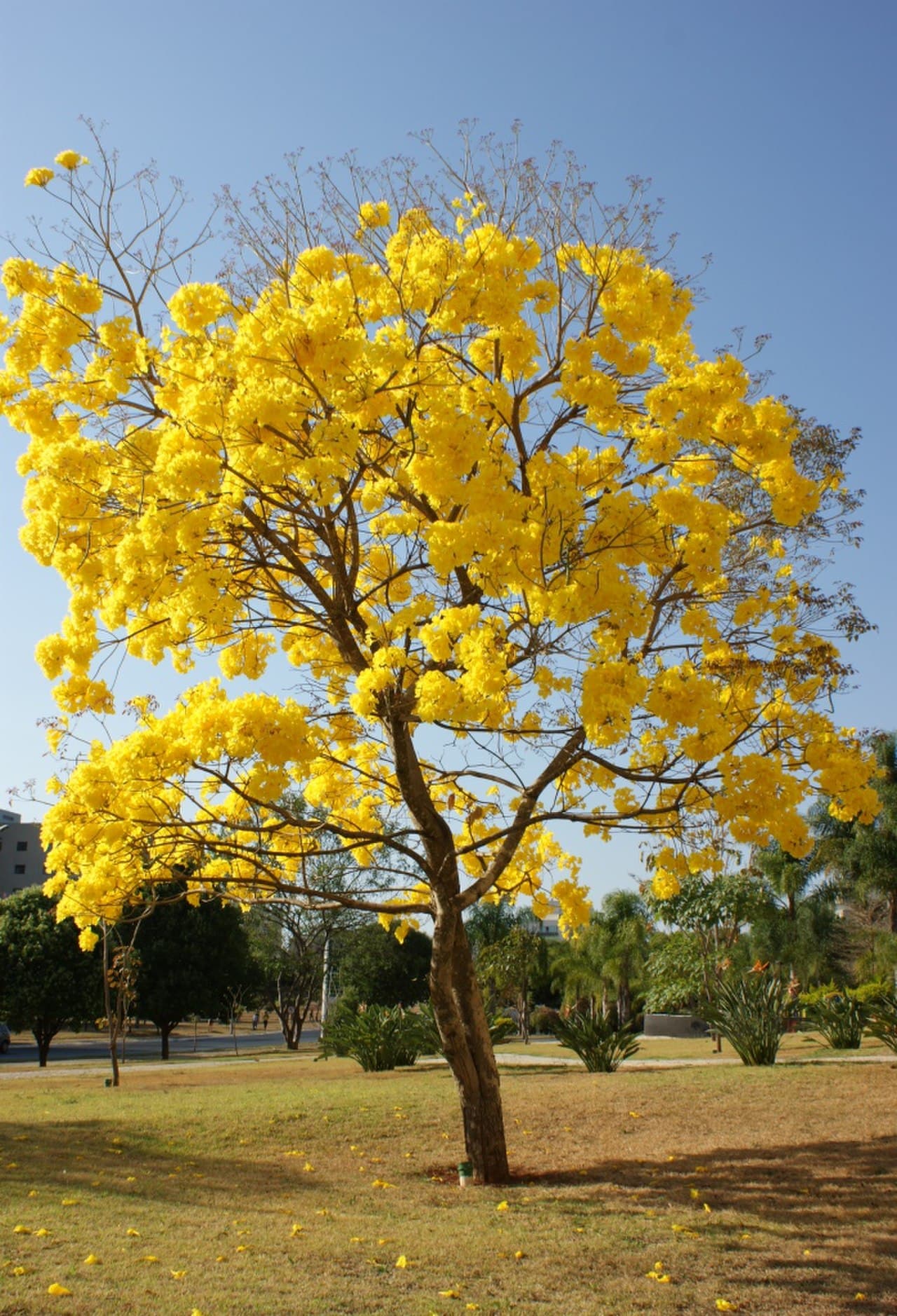
Yellow Poui
Handroanthus serratifolius
Photo: João Medeiros · Brasília, Brazil (CC BY 2.0)
The Yellow Poui is one of the most spectacular flowering trees of Trinidad and Tobago, erupting into masses of brilliant yellow blooms during the dry season while its branches are still bare of leaves.
The Yellow Poui is one of the most spectacular flowering trees of Trinidad and Tobago, erupting into masses of brilliant yellow blooms during the dry season while its branches are still bare of leaves. A towering canopy giant of the Bignoniaceae family, it is the northernmost expression of a species range that extends across South America, and its timber is among the hardest and most durable in the tropical world.
Description
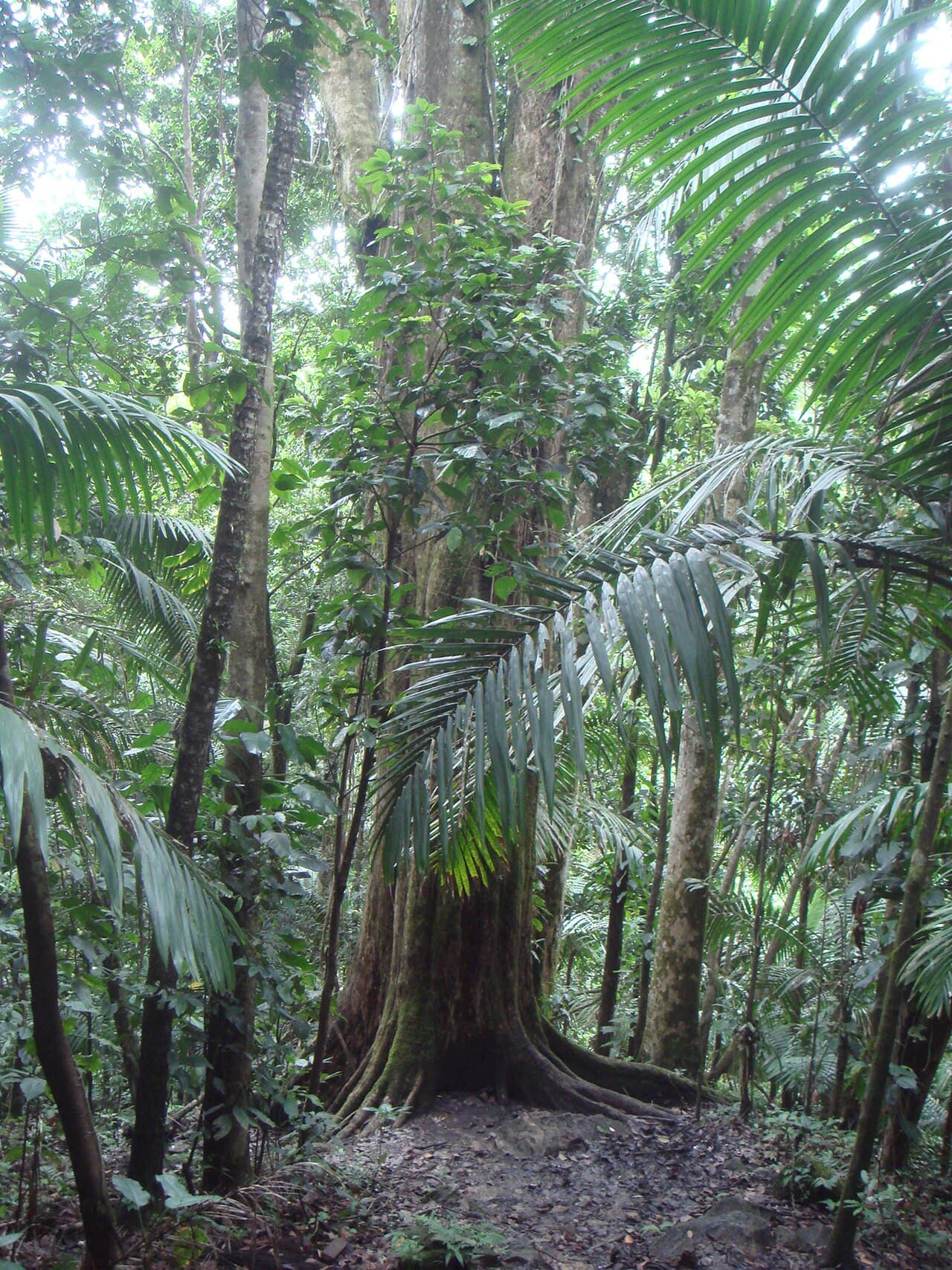
A large semi-deciduous tree reaching 37 to 46 metres in height with a straight, cylindrical trunk typically 90 cm in diameter; exceptional specimens reach 180 cm across. The trunk is often buttressed at the base and can remain branchless for the first 18 metres. The most distinctive feature is the mass flowering display: each dry season the tree sheds its leaves and covers its bare crown in dense clusters of bright yellow tubular flowers. Fruits are elongated capsules that split open to release winged seeds. The bark contains lapachol, quercetin, and other flavonoids long used in traditional medicine.
Habitat and Ecology
Yellow Poui grows as a canopy tree in climax evergreen and semi-evergreen forests, occasionally occurring at forest-savanna margins. It favours well-drained ridges and slopes and avoids seasonally flooded ground. In T&T it represents the northern limit of the species' natural range, which spans Brazil, Bolivia, Peru, Ecuador, Colombia, Venezuela, and the Guianas. The tree's dry-season flowering, when the canopy is otherwise bare, makes it a conspicuous landmark in the landscape and an important nectar source for pollinators during a period when few other large trees bloom. Winged seeds are dispersed by wind from splitting capsules.
Timber and Cultural Significance
Yellow Poui produces ipe timber, widely regarded as one of the most durable woods in the world, prized for extreme hardness, density, and resistance to decay, fire, and pests. It has historically been used for railway sleepers, bridge construction, heavy flooring, tool handles, and decking. In Brazil the tree is celebrated as ipe-amarelo and is that country's national flower; in Trinidad and Tobago it is widely admired as a flowering tree in parks, gardens, and along roadsides, and is a familiar marker of the dry season.
Legal Protection
Globally, Handroanthus serratifolius is listed in CITES Appendix II (annotation #6, added at CoP18 in 2019), covering logs, sawn wood, veneer sheets, and plywood. This requires export permits from range states and is intended to curb the heavy international timber trade that has driven the species to Endangered status on the IUCN Red List. No confirmed specific listing under Trinidad and Tobago's Forests Act Schedule or the Environmentally Sensitive Species Rules 2001 was found; the Forests Act requires permits for felling timber in Forest Reserves, which affords indirect protection to Yellow Poui stands within those areas.
Threats
- Illegal logging for ipe timber
- Commercial over-exploitation
- Habitat loss