Trees
Trees
Silk Cotton (Kapok)
Ceiba pentandra
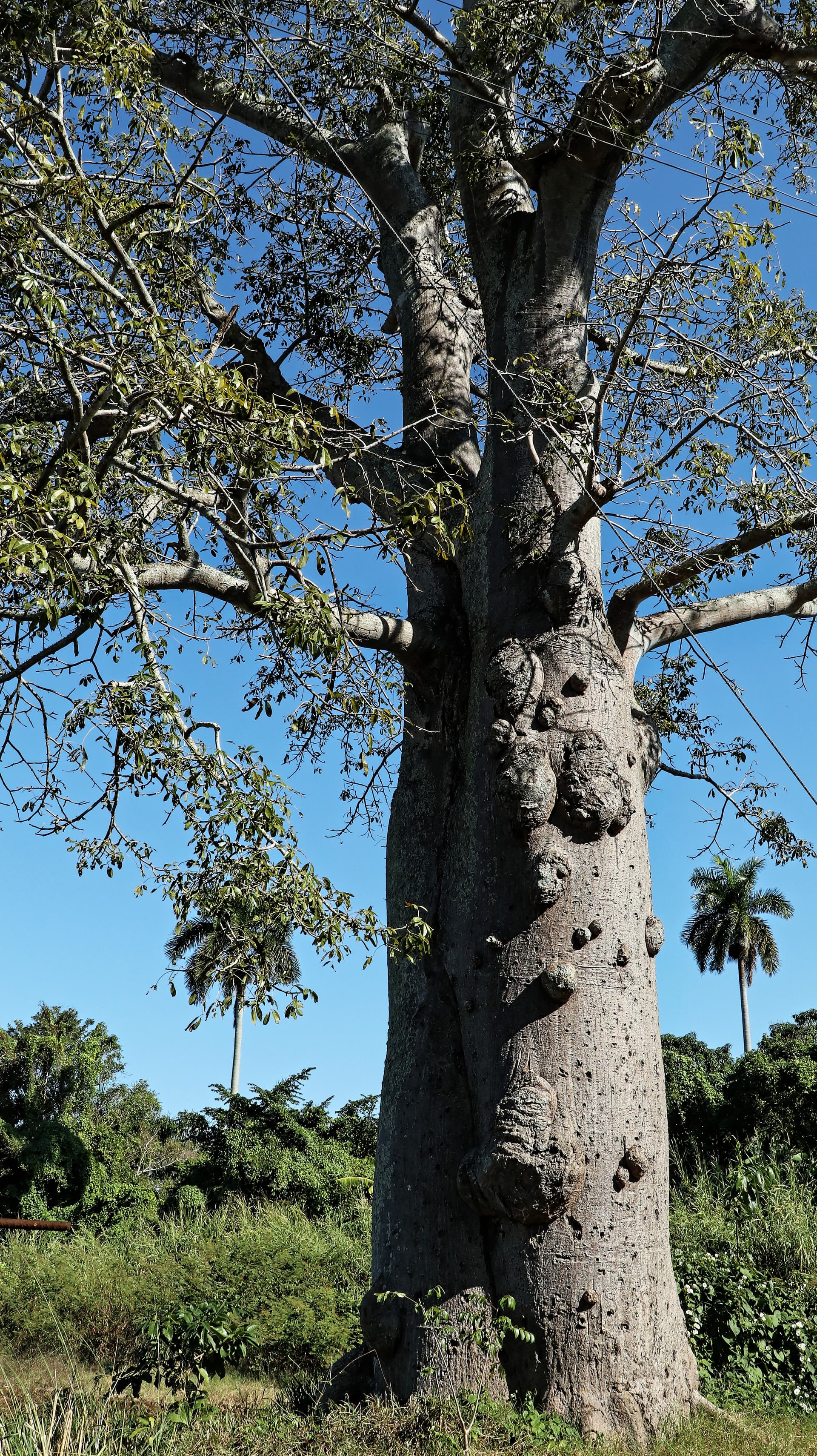
Photo: Burkhard Mücke · Cuba (CC BY-SA 4.0)
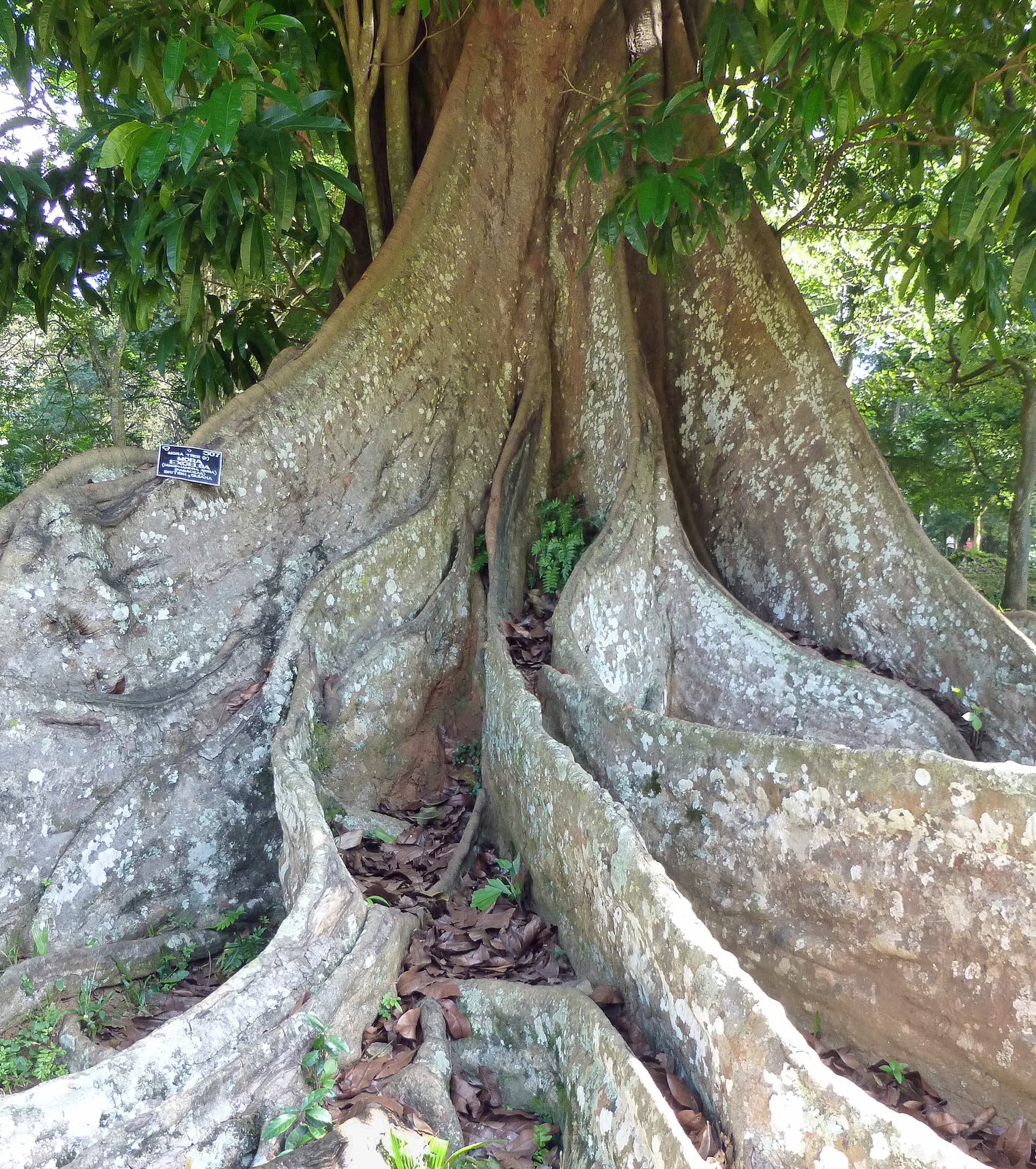
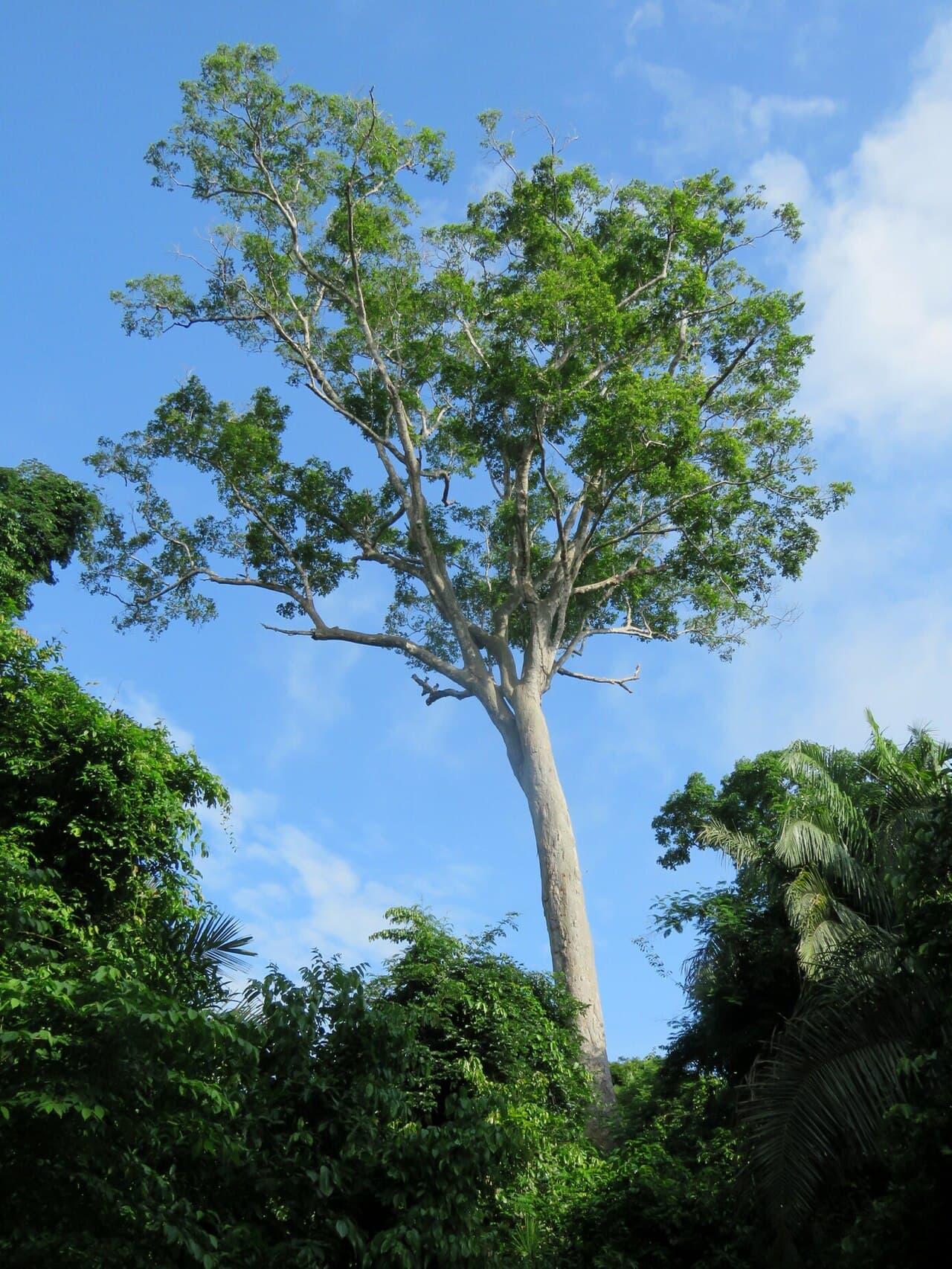
The Silk Cotton is one of the most imposing trees in the Trinidad and Tobago landscape: an emergent giant that can exceed 60 metres in height, with a trunk armoured by conical spines and supported by massive plank buttresses radiating up to 20 metres from the base.
The Silk Cotton is one of the most imposing trees in the Trinidad and Tobago landscape: an emergent giant that can exceed 60 metres in height, with a trunk armoured by conical spines and supported by massive plank buttresses radiating up to 20 metres from the base. Deeply woven into Afro-Caribbean spiritual tradition, it is regarded as a dwelling place of spirits and carries a powerful cultural presence that has protected many old-growth individuals from felling across the Caribbean.
Description
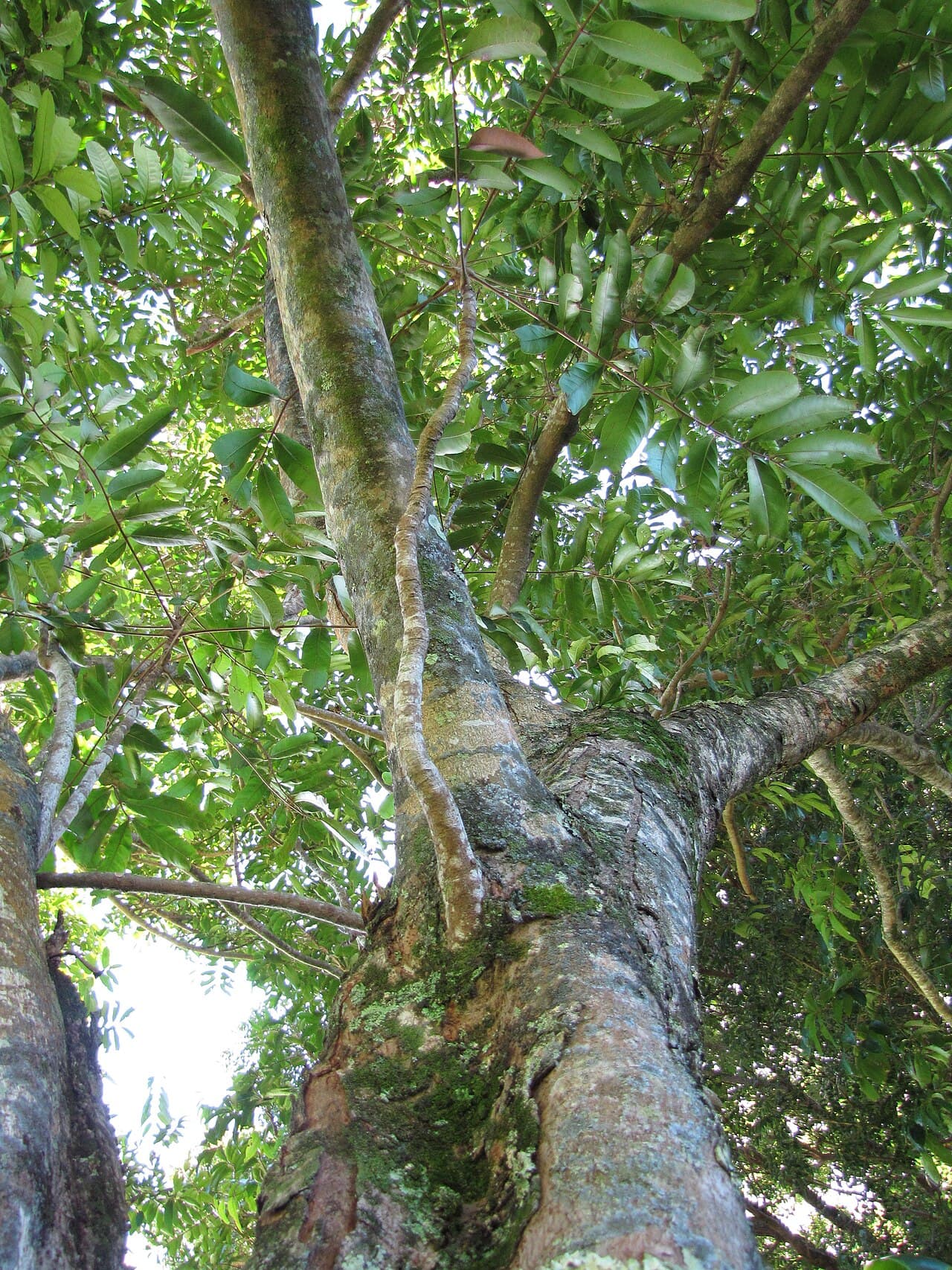
A massive deciduous emergent tree reaching a documented maximum of 60.4 metres, with exceptional unverified reports to 77 metres. The trunk is straight and cylindrical, typically 1 to 3 metres in diameter above the buttress roots; the largest individuals exceed 5.8 metres across. Younger trunks and lower sections are armed with large, stout conical spines. Plank buttresses can extend 12 to 15 metres up the trunk and radiate outward up to 20 metres from the base. The crown is broadly spreading with a pagoda-like form; four to six major branches can each reach 1.8 metres in thickness and support a crown spread of up to 60 metres. Leaves are palmate with five to nine leaflets, deciduous; the tree flowers while leafless. Flowers are large, creamy white to pale pink, borne in clusters, and open at night. Fruits are woody pods roughly 15 cm long that split to release the fluffy, buoyant kapok fibre in which the seeds are embedded.
Habitat and Ecology
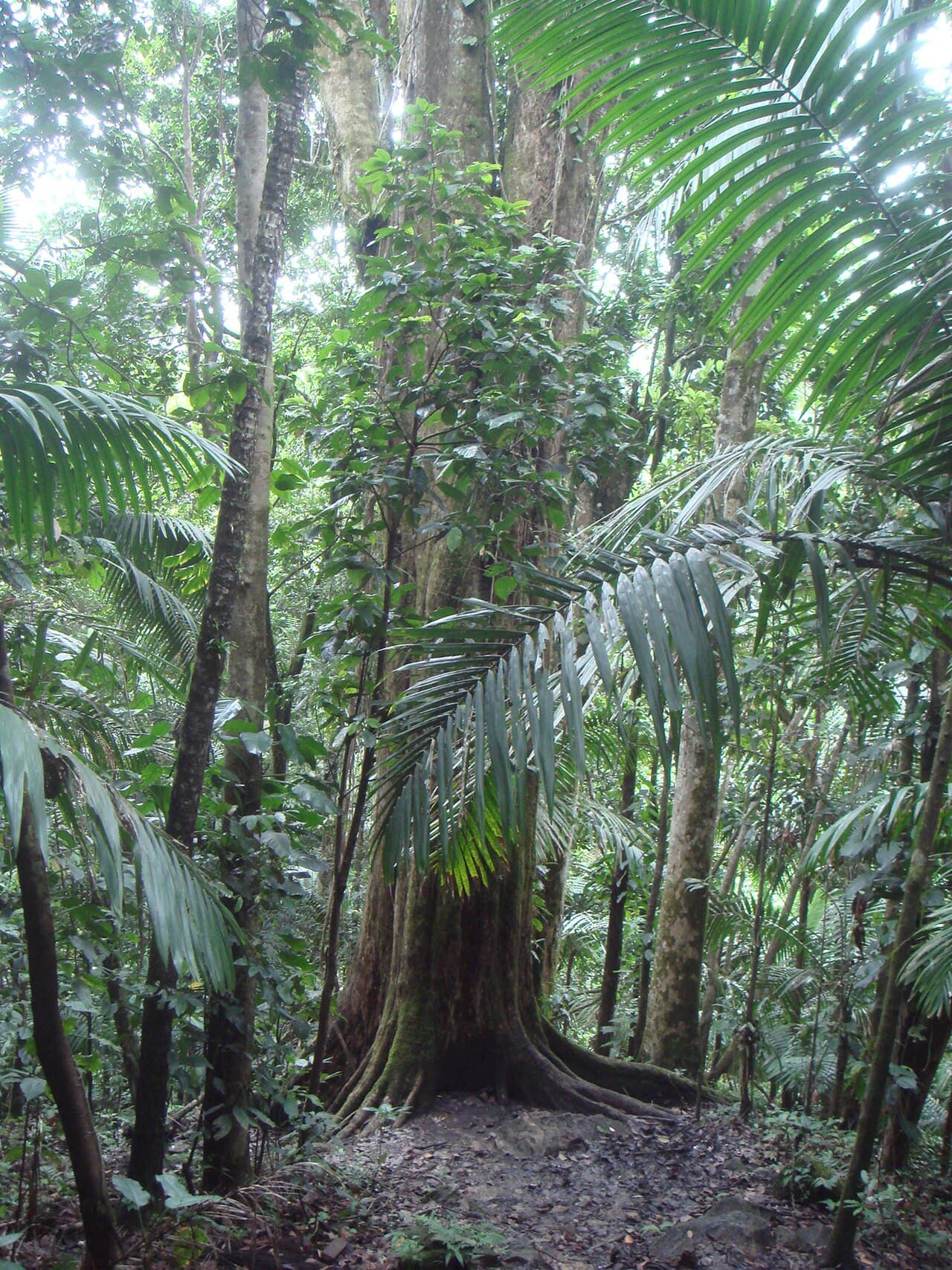
Silk Cotton grows as an emergent in moist evergreen and deciduous forests, gallery forests, seasonal forests, and forest subject to periodic inundation, from lowland areas up to around 800 metres elevation. It tolerates a wide range of soil types and rainfall regimes. Flowering occurs during the leafless dry-season period, and the night-blooming flowers are pollinated primarily by bats, with moths and bees also visiting; the high nectar and pollen output during a lean season makes it a keystone resource for nocturnal pollinators. Seeds are dispersed by wind, carried aloft by the lightweight, water-resistant kapok fibre. Old-growth individuals develop large hollow cavities in their trunks and buttresses that serve as nesting and roosting sites for bats, birds, and other forest wildlife. Its structural dominance as an emergent makes it a critical component of forest architecture.
Cultural and Spiritual Significance
Few trees in the Caribbean carry the spiritual weight of the Silk Cotton. In Trinidad and Tobago oral tradition, the tree is a dwelling place of jumbies (spirits of the dead) and is associated with the legend of Bazil, the demon of death, who was imprisoned inside a massive Ceiba by a skilled carpenter. It is widely held that felling or disturbing a silk cotton tree without proper ritual observance invites misfortune. Similar beliefs hold across the English-, French-, Spanish-, and Dutch-speaking Caribbean. In Cuba, the ceiba is sacred in Palo Monte, Lucumi/Santeria, and Arara traditions, treated as a living spiritual entity around which offerings are placed and prayers spoken. In Maya cosmology it is the sacred World Tree (Yaxche) connecting the underworld, earth, and sky. In the Winti tradition of Suriname it is the Kankantrie, a holy spirit residence. This widespread reverence has historically offered the Silk Cotton informal protection in many communities.
Kapok Fibre and Uses
The seed fibre (kapok) is uniquely buoyant, resilient, and water-resistant, with a cellulose-lignin composition that resists compression. Before synthetic materials, it was the primary filling for life jackets, mattresses, pillows, and upholstery across the tropics. The seeds yield an oil used in cooking and soap-making. The light, soft timber has been used for dugout canoes, crates, and pulp. In agroforestry, the tree provides shade and its leaf litter contributes to soil organic matter.
Threats
- Habitat loss
- Large-tree felling
- Deforestation