Shrubs & Herbs
Shrubs & Herbs
Guinea Hen Weed
Petiveria alliacea
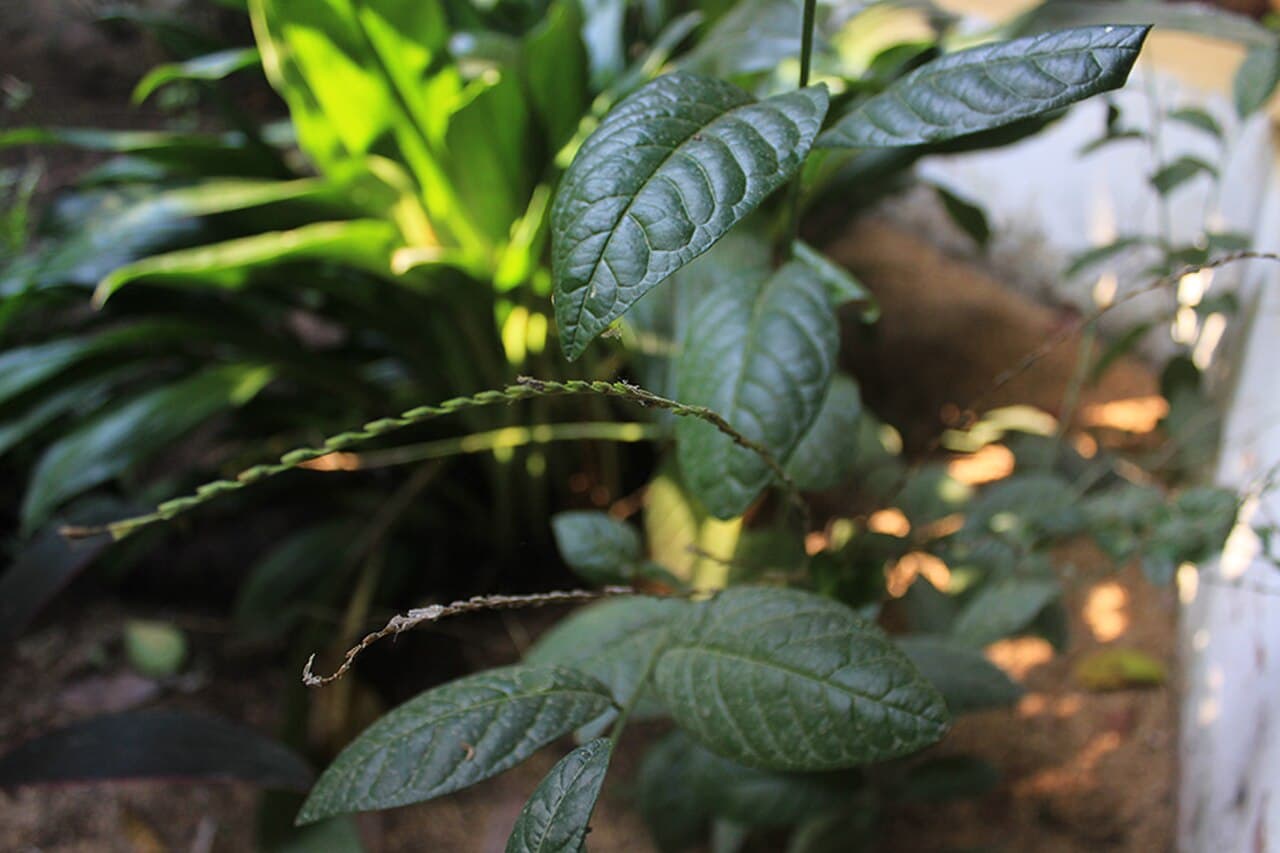
Photo: Wikimedia Commons contributor (CC BY-SA 4.0)
Guinea Hen Weed - known locally in Trinidad and Tobago as "wild chive" or "guinea hen weed" - is a pungent, sprawling herb of forest margins and disturbed ground whose distinctive garlic-like smell and strong medicinal reputation make it one of the most recognisable plants in the T&T countryside.
Guinea Hen Weed - known locally in Trinidad and Tobago as "wild chive" or "guinea hen weed" - is a pungent, sprawling herb of forest margins and disturbed ground whose distinctive garlic-like smell and strong medicinal reputation make it one of the most recognisable plants in the T&T countryside. Used across the Caribbean, Central America, and parts of Africa as a bush medicine for a wide range of complaints, it is also an important plant in Spiritual Baptist and Orisha religious traditions, where it is used for spiritual cleansing and protection.
Description
A semi-woody, perennial herb or sub-shrub growing 60 cm to 1.5 metres tall, with a sprawling, loose habit and reddish-green stems. The entire plant has a strong, garlic-onion smell that intensifies when the leaves or stems are bruised. Leaves are simple, elliptic to lanceolate, alternate, slightly hairy. Flowers are tiny, white to greenish-white, produced in long, slender spikes; they are inconspicuous but produced continuously. The fruit is a small, barbed achene that clings to clothing and animal fur, aiding dispersal. The roots are the most pungent part of the plant.
Medicinal and Ritual Use
Guinea Hen Weed is one of the most widely used medicinal plants in Trinidad and Tobago. Root and leaf preparations are used as teas, baths, and poultices for fever, colds, flu, rheumatism, arthritis, skin infections, and as a general immune tonic. The plant contains allicin-like compounds, flavonoids, and alkaloids, and laboratory research has identified antimicrobial, anti-inflammatory, and immunomodulatory activity. In Spiritual Baptist and Orisha traditions the plant is used for ritual baths believed to provide protection and spiritual cleansing; bundles are also placed at thresholds. It is one of the plants most consistently mentioned in accounts of T&T spiritual and folk healing.
Ecology
Petiveria alliacea is a weed of disturbed and semi-shaded habitats: forest edges, gardens, roadsides, abandoned land, and secondary vegetation. It tolerates a wide range of soil conditions and spreads effectively through its barbed, sticky fruits. The strong-smelling foliage is avoided by most grazing animals, giving it a competitive advantage in pastured areas. The plant is native to tropical America and is considered naturalised rather than endemic across the Caribbean, though it is so deeply integrated into T&T culture as to be regarded as a local plant.
Threats
- No conservation concern; abundant in disturbed habitats
- Over-harvesting of roots from wild plants in areas where cultivated supply is limited