Shrubs & Herbs
Shrubs & Herbs
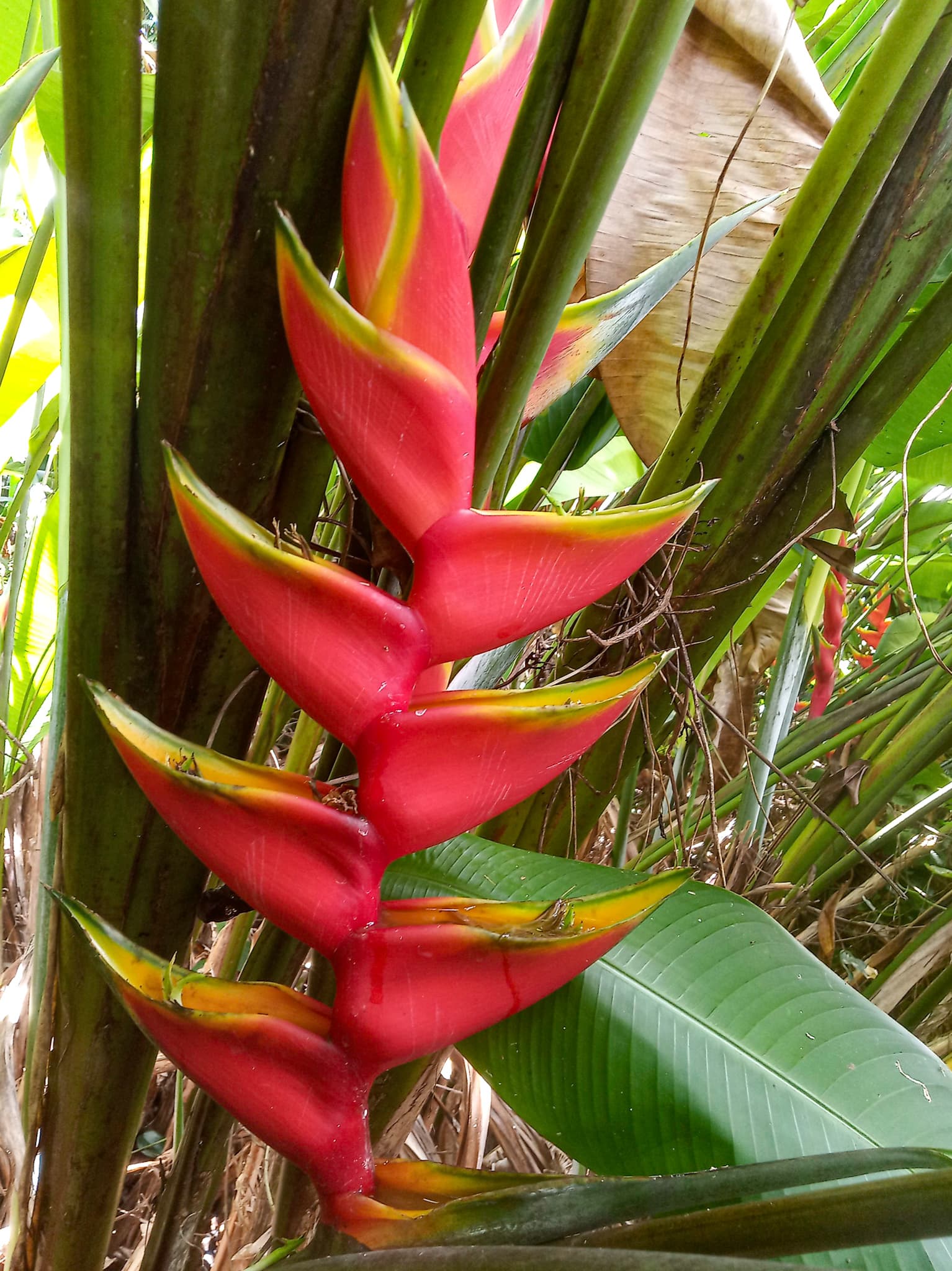
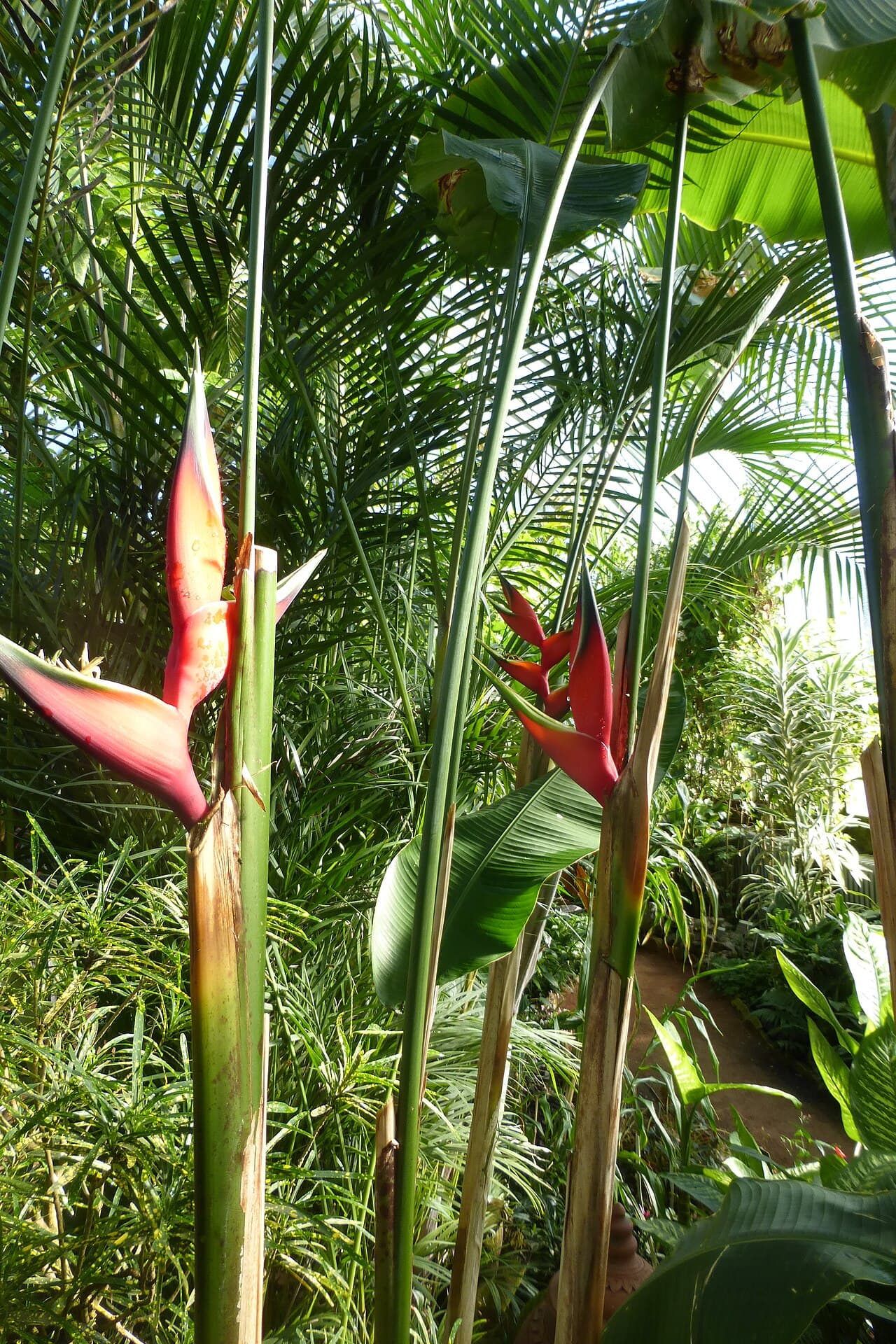
Lobster Claw Heliconia
Heliconia bihai
Photo: Wikimedia Commons contributor · Conservatory of Botanical Gardens, Geneva (CC BY-SA 4.0)
The Lobster Claw Heliconia is one of the most visually striking plants of Trinidad and Tobago's rainforest understorey, its large, paddle-like leaves and bold, waxy bracts in red, orange, and yellow - shaped like a lobster's claw - making it instantly recognisable.
The Lobster Claw Heliconia is one of the most visually striking plants of Trinidad and Tobago's rainforest understorey, its large, paddle-like leaves and bold, waxy bracts in red, orange, and yellow - shaped like a lobster's claw - making it instantly recognisable. A keystone plant for hummingbirds, which are the primary pollinators of its deep, curved tubular flowers, heliconia clumps are among the most important food sources for long-billed hummingbirds in T&T's forest and forest-edge habitats.
Description
A robust, rhizomatous herb growing 1.5 to 4 metres tall from underground rhizomes, forming dense clumps. The large, banana-like leaves are held on long sheaths; they tear easily along the veins and the tattered look of old leaves is a familiar feature of forest-edge habitats. The inflorescence is the most distinctive feature: an erect or pendent spike bearing several large, boat-shaped, waxy bracts in vivid combinations of red, orange, yellow, and green. Each bract encloses a row of small, tubular flowers. The form and colour vary considerably between populations and in cultivation many varieties exist.
Hummingbird Partnership
Heliconia bihai has a co-evolutionary relationship with long-billed, curve-billed hummingbirds. The curved, tubular flowers are precisely shaped to match the bill curvature of specific hummingbird species; shorter-billed hummingbirds are excluded from the nectar and do not effectively pollinate the flowers. In Trinidad and Tobago, the White-necked Jacobin and Rufous-breasted Hermit are among the regular visitors. This tight mutualism makes heliconia an important anchor of the hummingbird-pollination network in T&T's forested areas.
Ecology and Use
Heliconia clumps grow in disturbed forest, forest edges, riverbanks, and shaded clearings throughout humid parts of Trinidad and Tobago. The water pooled in the upright bracts creates microhabitats for tree frogs, insects, and specialist invertebrates. The leaves are used locally for wrapping food and for thatching. The plant is widely grown as an ornamental and cut flower. The fruit is a small blue drupe eaten by birds.
Threats
- Loss of long-billed hummingbird pollinators reducing reproductive success
- Clearing of forest-edge habitat where dense clumps establish