Mangroves
Mangroves
White Mangrove
Laguncularia racemosa
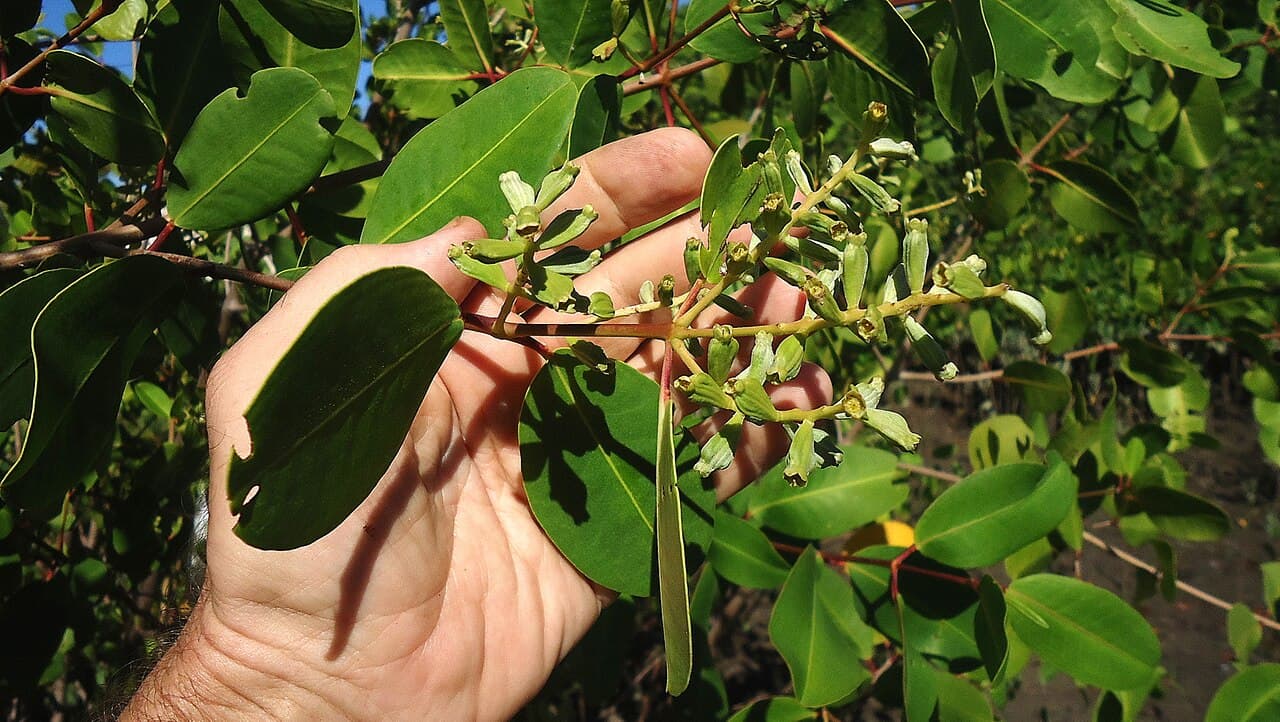
Photo: Wikimedia Commons contributor (CC BY 2.0)
The White Mangrove is the third pillar of Trinidad and Tobago's mangrove ecosystem, typically growing landward of the Red and Black Mangroves in the upper intertidal and supratidal zones.
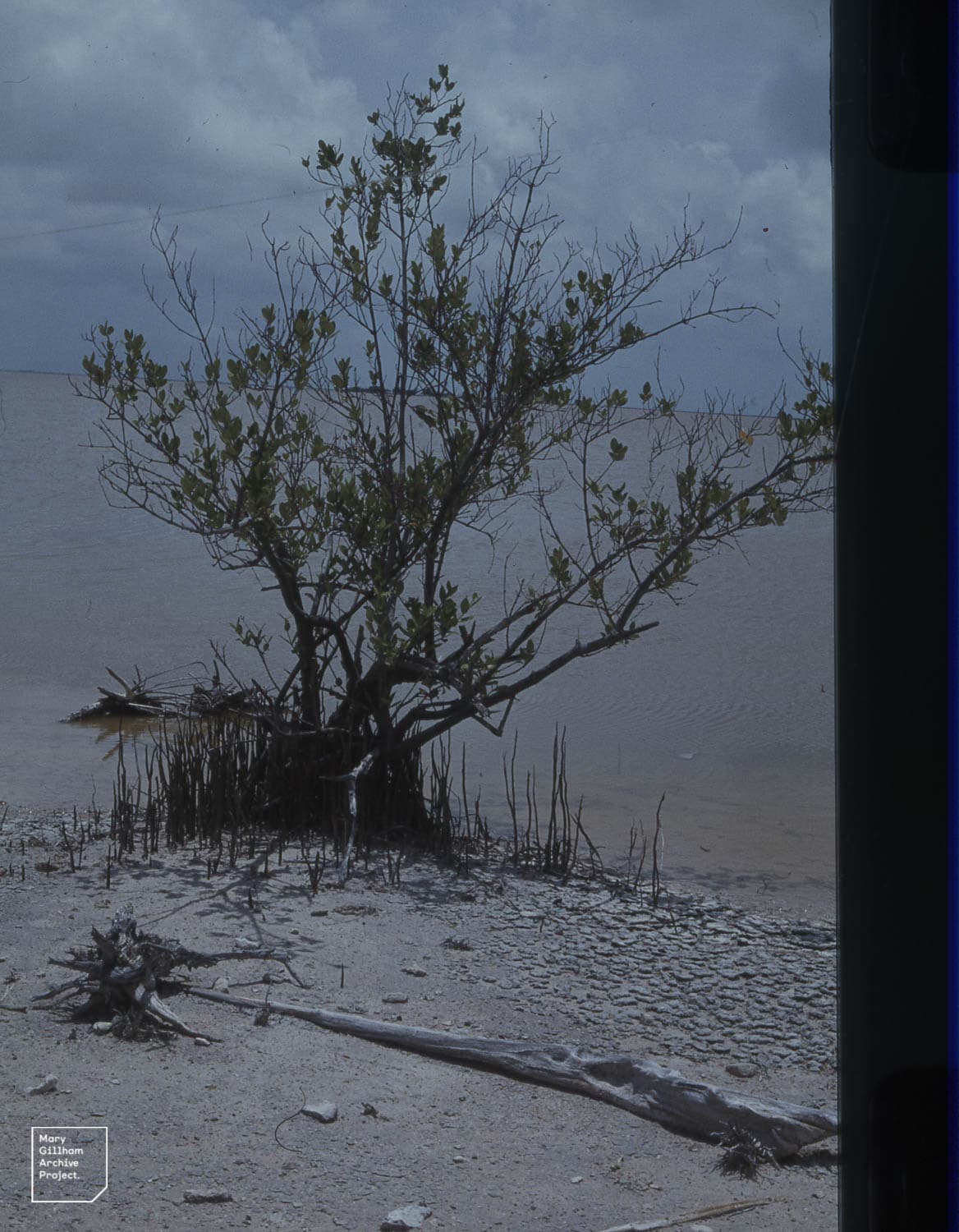
The White Mangrove is the third pillar of Trinidad and Tobago's mangrove ecosystem, typically growing landward of the Red and Black Mangroves in the upper intertidal and supratidal zones. Less immediately recognisable than its relatives without the dramatic prop roots or pneumatophores, it nonetheless plays a vital role in stabilising the transition from brackish mangrove to terrestrial vegetation and provides critical nesting and foraging habitat at forest edges.
Description
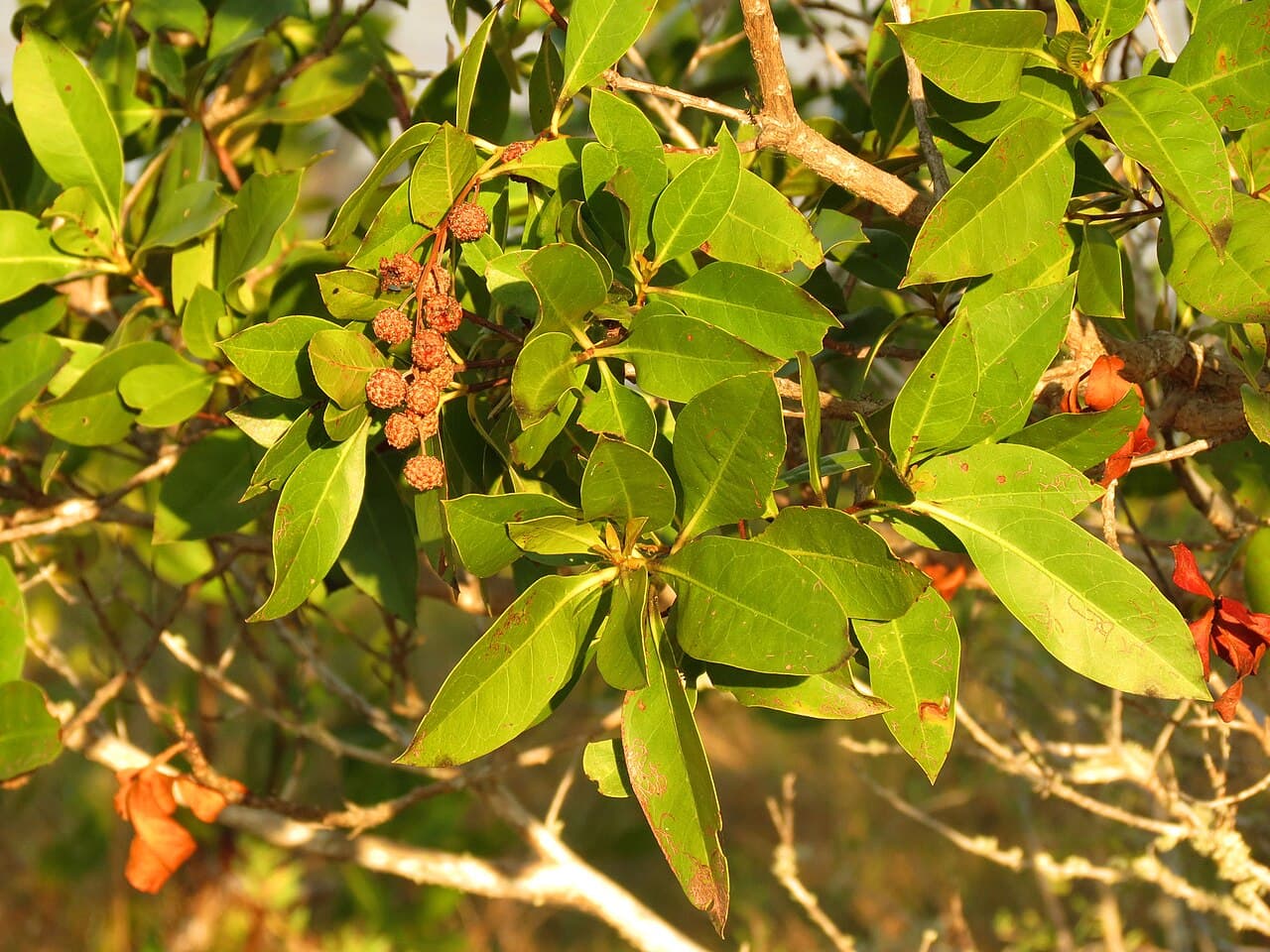
A shrub to medium tree, typically 5 to 15 metres tall, occasionally reaching 20 metres in favourable conditions. It lacks the prominent aerial roots of the Red Mangrove and the pencil-like pneumatophores of the Black Mangrove, though small pneumatophores may develop in poorly drained sites. The leaves are a key identification feature: oval, pale green to yellowish-green, with two small salt-excreting glands at the base of the leaf blade, visible as small bumps or pores. Flowers are small, white, and clustered in short racemes. Fruit is a small, ribbed, oblong drupe containing a single seed, capable of limited floating dispersal.
Ecology
White Mangrove occupies the landward fringe of mangrove forests, where salinity is lower and inundation less frequent than in the seaward zones dominated by Red Mangrove. It is a salt-tolerant species but less so than Black Mangrove, and it manages salt via specialised leaf glands that actively excrete excess salt. This zone is ecologically critical as a buffer between fully marine-influenced mangrove and dryland: it provides shelter for birds nesting in the upper canopy, and the leaf litter feeds the detritus food web that supports mangrove fisheries. In Trinidad and Tobago, White Mangrove is a component of the Caroni, Nariva, and smaller coastal mangrove systems.
Protection
As part of Trinidad and Tobago's mangrove ecosystem, White Mangrove benefits from the same legal protections as its relatives. Caroni and Nariva swamps are Ramsar-listed wetlands of international importance; Nariva is also a national Environmentally Sensitive Area. Mangrove clearance of any species is regulated under the EMA Act and the Forests Act. The species is not separately listed on CITES or IUCN as globally threatened.
Threats
- Coastal development encroaching on upper mangrove fringe
- Freshwater diversion reducing landward mangrove habitat
- Sea-level rise compressing the mangrove zone against hard infrastructure