Ferns
Ferns
Resurrection Fern
Pleopeltis polypodioides
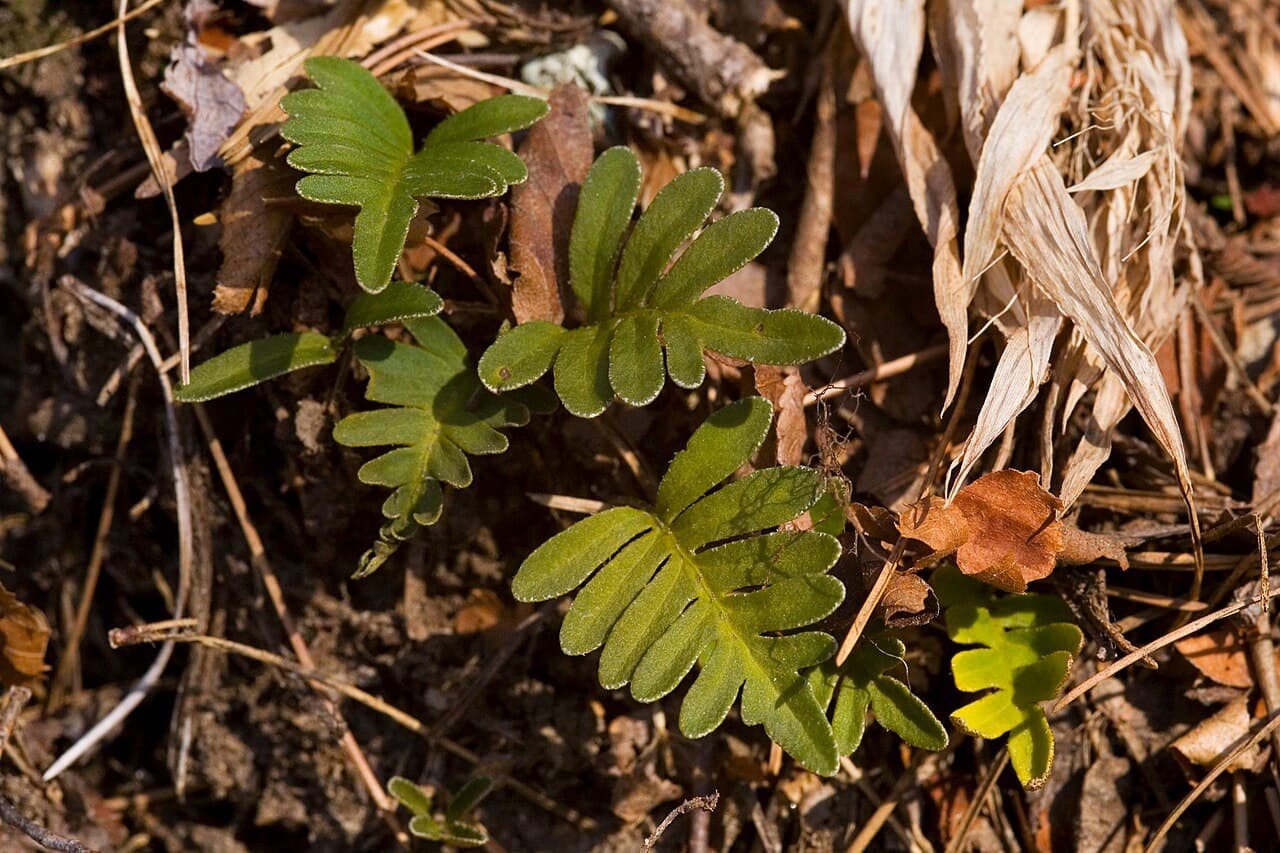
Photo: aspidoscelis (CC0)
The Resurrection Fern can lose up to 97% of its water content, curl into a shrivelled brown husk that appears completely dead, then fully revive within 24 hours of rain, unfurling green and alive as if nothing happened.
The Resurrection Fern can lose up to 97% of its water content, curl into a shrivelled brown husk that appears completely dead, then fully revive within 24 hours of rain, unfurling green and alive as if nothing happened. An epiphyte of tree bark and rock surfaces, it is one of the most drought-tolerant vascular plants known and a compelling demonstration of botanical adaptation for any audience.
Description
A small to medium epiphytic fern with fronds reaching up to 25 cm in length. Fronds are deeply pinnatifid (divided into rounded lobes), leathery in texture, and yellow-green when hydrated. The underside of each pinna is covered in distinctive peltate (shield-shaped) scales with a dark central stripe and pale brown margins; these scales serve a dual function, reflecting excess light and physically protecting the desiccated tissue during dry periods. The rhizome is slender (approximately 2 mm diameter) and creeps across bark or rock surfaces. Spores are produced on the underside of the fronds.
The Resurrection Ability
Most plants die after losing only 8 to 12% of their water content; the Resurrection Fern survives losing up to 97%. This property, called poikilohydry, means the plant's internal water content simply tracks the moisture of its environment, much like a lichen or moss. When dry, the fronds curl inward and upward, minimising exposed surface and turning brown. Inside the desiccated cells, sugars accumulate to stabilise cell membranes and protect proteins from damage. Upon rehydration, cells reabsorb water, sugars return to solution, and the frond unfurls fully within 24 to 48 hours. The plant may survive centuries in this dormant state. Studies suggest it may have been sent into space and returned viable.
Habitat and Ecology
The Resurrection Fern grows as an epiphyte on the bark of trees and on rock surfaces, often carpeting the upper sides of large horizontal branches in humid forest. It is also found in exposed, desiccating habitats where other vascular plants cannot persist, making it a true pioneer of bark surfaces. In Trinidad, it occurs in forest and rainforest environments across the island. Its range spans the southeastern USA, Mexico, Central America, the Caribbean, and northern South America. No specific T&T legal protection for this species was confirmed in available sources.
Threats
- Host-tree loss from deforestation
- Air pollution