Ferns
Ferns
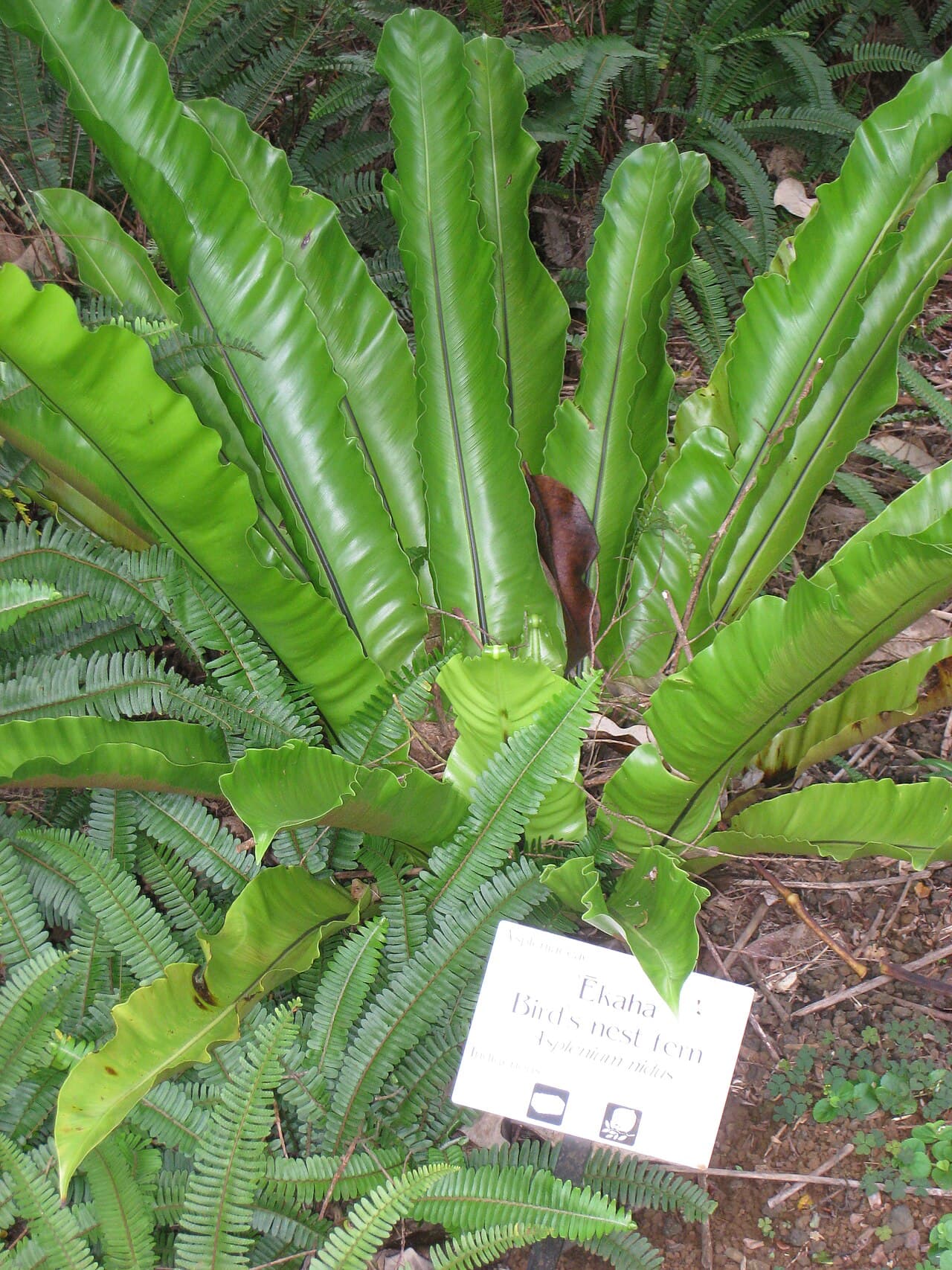
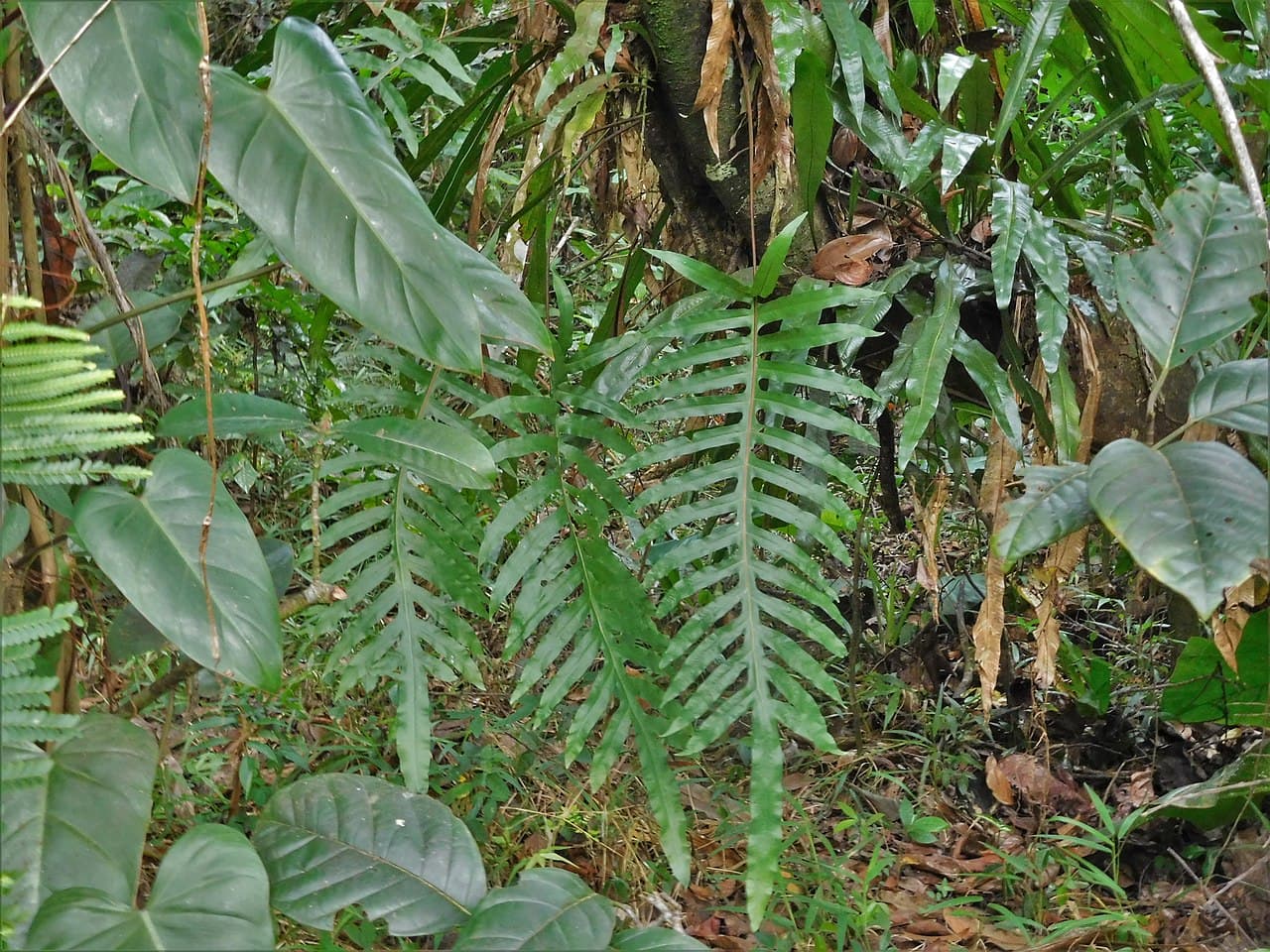
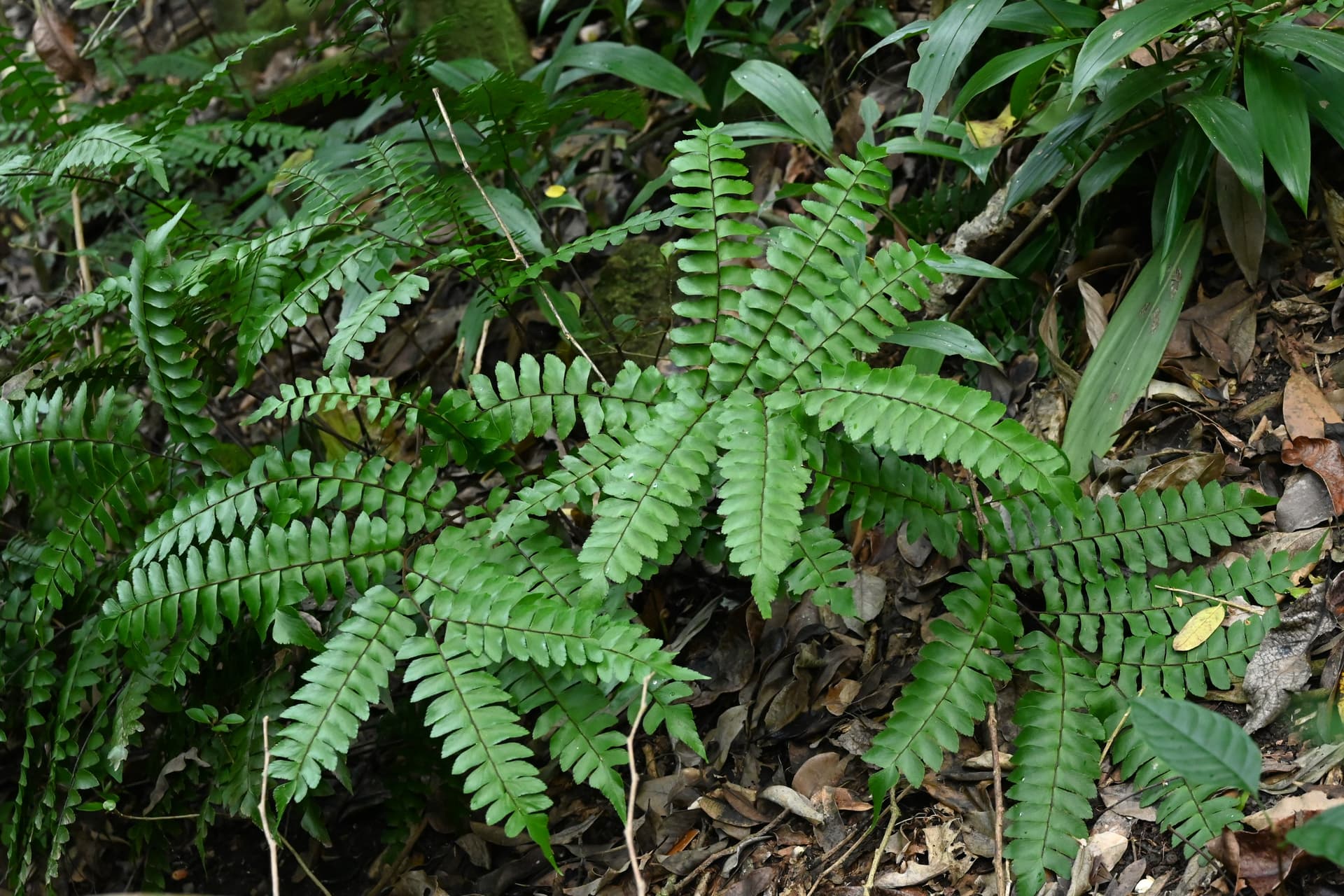
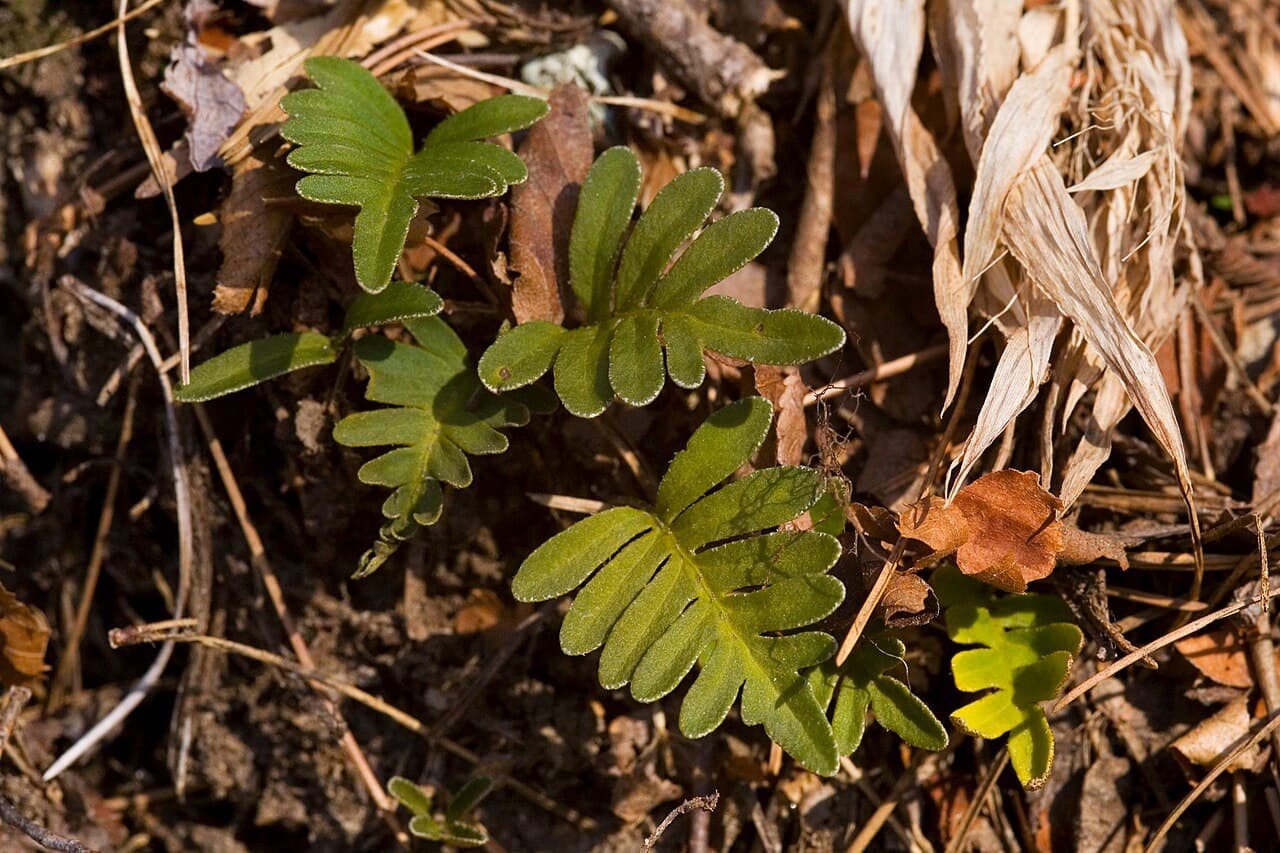
Staghorn Fern
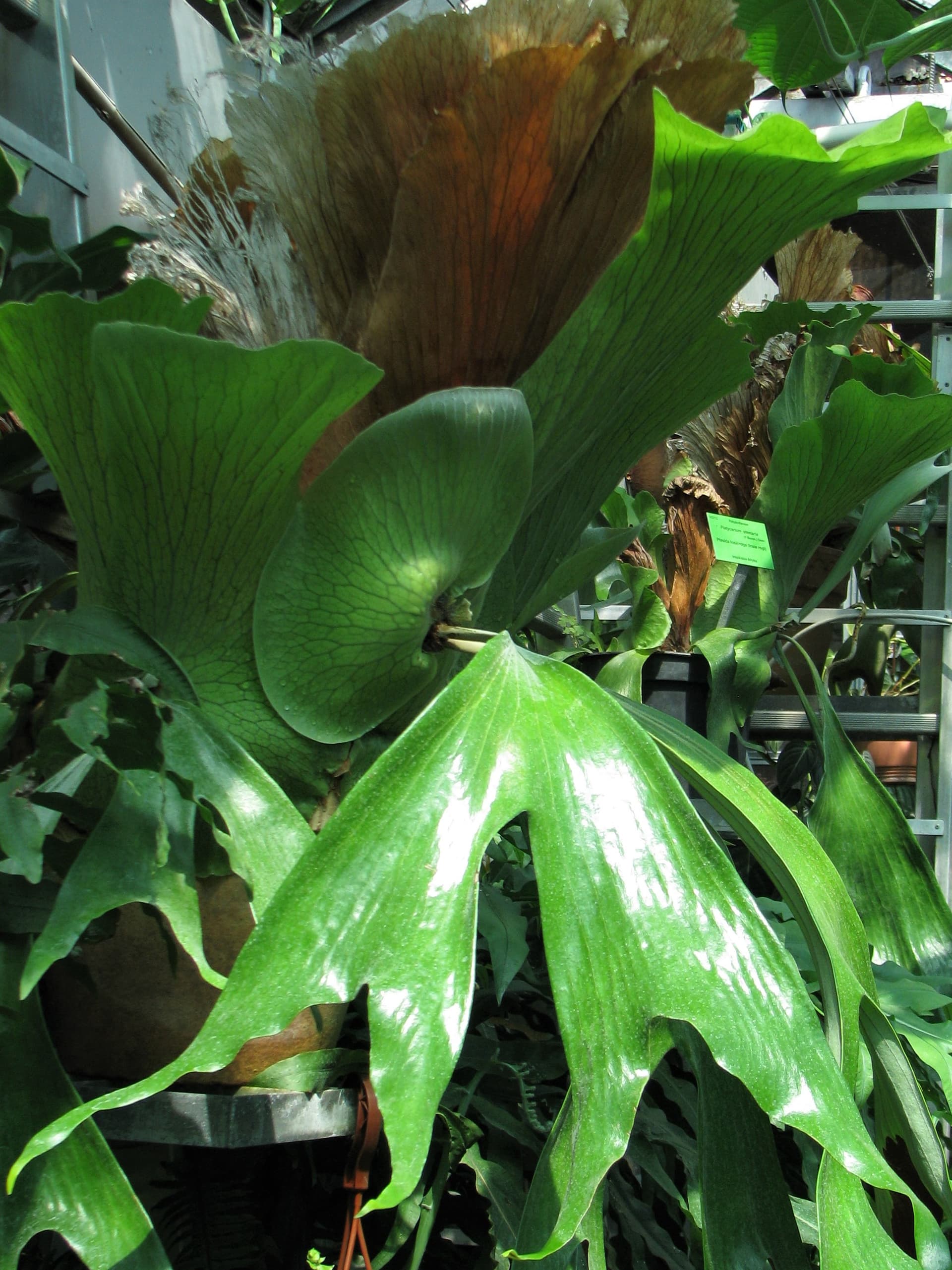
Platycerium stemaria
Photo: Wikimedia Commons contributor (CC BY-SA 4.0)
The Staghorn Fern is one of the most visually distinctive epiphytic plants in Trinidad and Tobago's rainforests, its forked, antler-like fertile fronds projecting outward from the bark of tree trunks and branches with an architectural boldness quite unlike any other fern.
The Staghorn Fern is one of the most visually distinctive epiphytic plants in Trinidad and Tobago's rainforests, its forked, antler-like fertile fronds projecting outward from the bark of tree trunks and branches with an architectural boldness quite unlike any other fern. Perched high in the forest canopy or on lower trunks in humid gullies, the staghorn fern collects falling debris in its shield-shaped nest fronds and houses its own miniature ecosystem. Widely collected as an ornamental, it is also a popular mounted house plant worldwide.
Description
Staghorn ferns are epiphytic ferns that grow directly on the bark of trees without soil. They produce two distinct frond types. Nest fronds (also called shield fronds or basal fronds) are round to kidney-shaped, papery, pale brown when mature, and pressed flat against the bark of the host tree; they overlap and form a basket that collects falling leaf litter and debris, creating a compost-like substrate for the plant's own roots. Fertile fronds (the "staghorns") project outward and are deeply forked, resembling a deer's or elk's antlers; they are grey-green, covered in tiny star-shaped hairs, and bear spore patches (sori) on their lower undersides near the tips.
Ecology
Staghorn ferns grow on the bark of large forest trees in humid rainforest and montane forest, typically on the lower to mid trunk in positions of moderate shade and high air humidity. They are not parasites; they obtain water and nutrients entirely from rainfall, mist, and the organic matter that accumulates in their nest fronds. The nest frond basket is a miniature ecosystem, harbouring ants, beetles, spiders, and small frogs that live within the accumulated debris. The plant propagates by spores and also by offshoots (pups) from the base, which can be separated to start new plants.
Collection and Conservation
Staghorn ferns are widely collected from the wild across their range for the ornamental plant trade, and this pressure has reduced populations in accessible forest. In T&T, specimens are occasionally removed from forest trees for garden use. The plant grows slowly and large specimens represent many years of growth; removal of large individuals is difficult to justify ecologically. Cultivated plants are readily available and collection from the wild is not necessary for horticultural purposes.
Threats
- Wild collection for ornamental trade
- Loss of large host trees
- Forest fragmentation reducing humidity