Ferns
Ferns
Golden Polypody
Phlebodium aureum
Photo: Wikimedia Commons contributor (CC BY-SA 4.0)
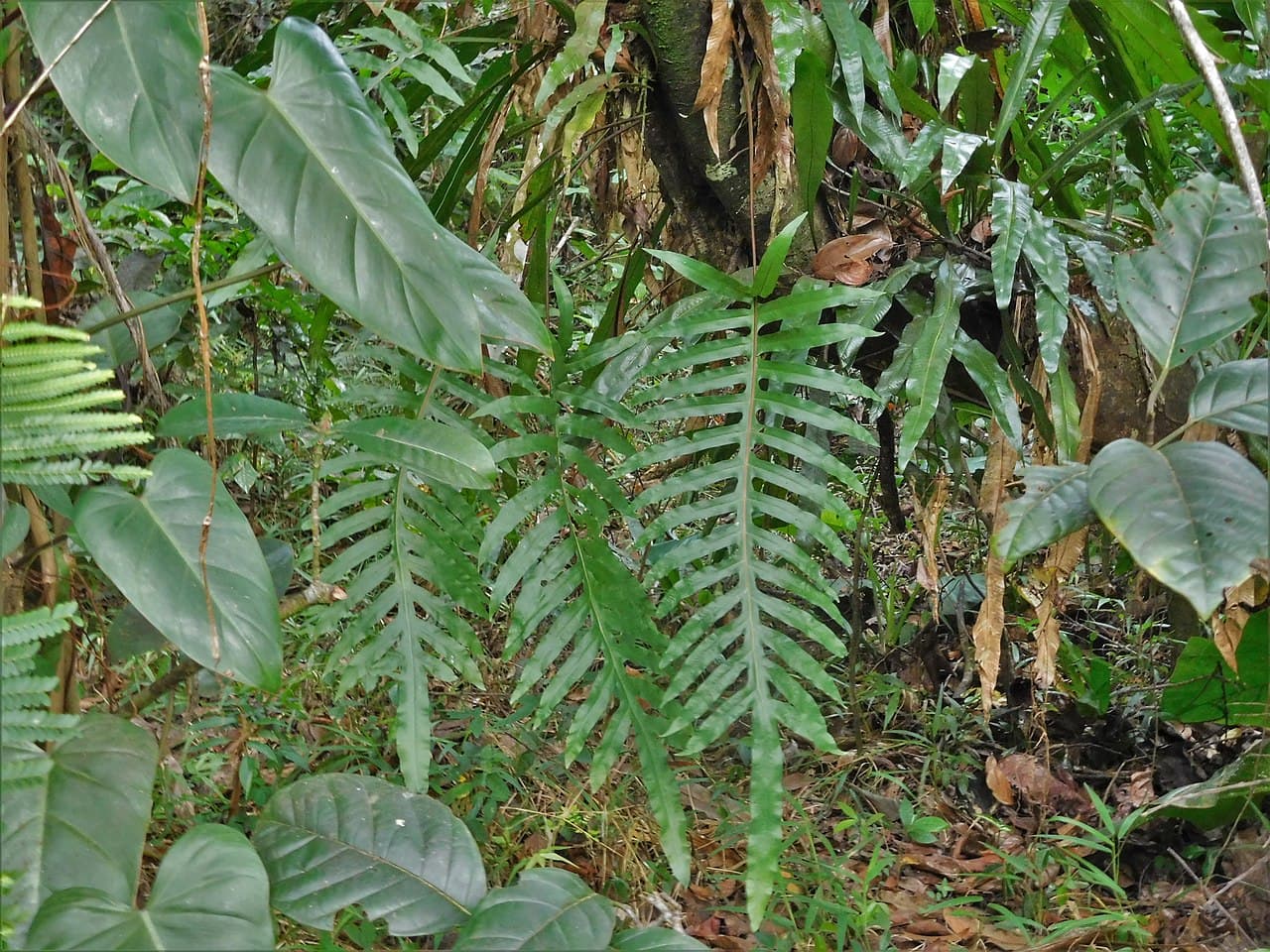
The Golden Polypody is one of the most striking and widespread epiphytic ferns in Trinidad and Tobago, its large, deeply lobed blue-green fronds arching from the trunks and crowns of palms, rough-barked trees, and garden walls across both islands.
The Golden Polypody is one of the most striking and widespread epiphytic ferns in Trinidad and Tobago, its large, deeply lobed blue-green fronds arching from the trunks and crowns of palms, rough-barked trees, and garden walls across both islands. Named for the thick, creeping golden rhizomes covered in bronze-gold scales that anchor it to its host, it is equally at home in dense rainforest and suburban gardens, making it one of the most familiar ferns in the country.
Description
A robust epiphytic fern with a thick, creeping rhizome densely covered in golden-brown scales - the source of both the "golden" common name and the genus name Phlebodium (Greek for "full of veins"). Fronds are large, 30 to 100 cm long, deeply pinnately lobed with smooth, rounded lobes, and a distinctive blue-green to grey-green colour with a slightly waxy surface. The underside carries round, golden-yellow spore clusters (sori) arranged in two rows along each lobe. The rhizome creeps along the surface of bark, anchoring with wiry roots while the fronds hang or arch outward.
Ecology
Golden Polypody is an epiphyte, meaning it grows on other plants for physical support without parasitising them. It is particularly common on Cabbage Palms, Royal Palms, and rough-barked trees in forest and forest-edge habitats, but also colonises old walls, fence posts, and garden structures. The thick rhizome stores water, allowing it to withstand drier periods that would kill many other ferns. In humid rainforest it can grow very large, its fronds forming impressive cascades from high in the canopy. Spores are wind-dispersed and the plant establishes readily on any suitable rough surface.
Uses
Golden Polypody is widely cultivated as an ornamental fern in hanging baskets and on garden walls, prized for its unusual blue-green colour and tolerance of drier conditions compared to most ferns. The rhizome has been used in traditional medicine across its range as an anti-inflammatory and in treatments for respiratory complaints, though no clinical evidence supports these uses. In some Caribbean traditions the rhizome tea is used as a general tonic.
Threats
- No significant conservation concern
- Wild collection for ornamental use