Marine Mammal
Marine Mammal
West Indian Manatee
Trichechus manatus
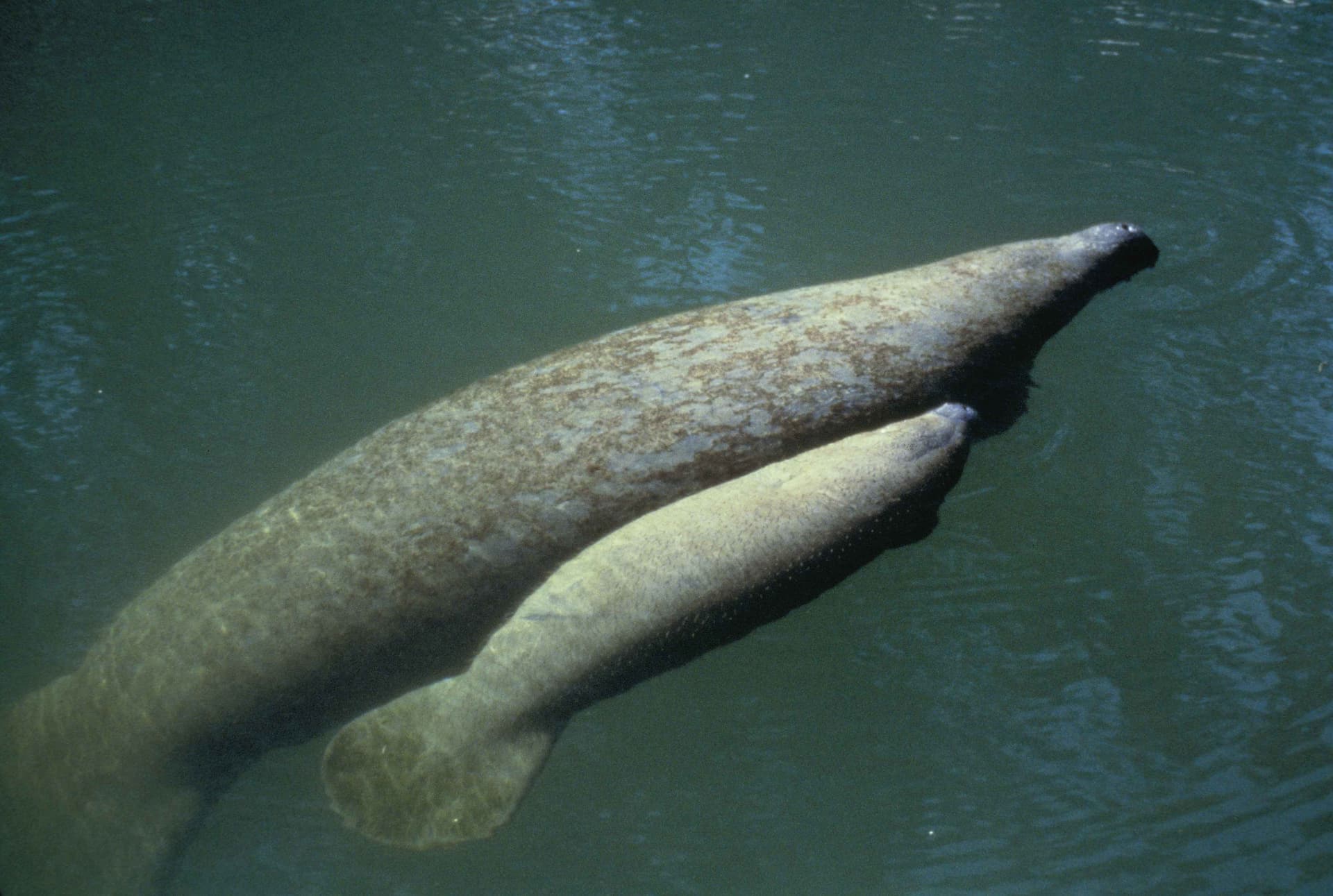
Photo: Doug Perrine / USFWS (Public Domain)
The West Indian Manatee is one of the largest freshwater and coastal mammals in the Americas: a slow-moving, completely herbivorous giant that grazes on aquatic vegetation in rivers, swamps, and shallow coastal seas.
The West Indian Manatee is one of the largest freshwater and coastal mammals in the Americas: a slow-moving, completely herbivorous giant that grazes on aquatic vegetation in rivers, swamps, and shallow coastal seas. In Trinidad, the Nariva Swamp is the primary stronghold for a small and vulnerable local population.
Identification
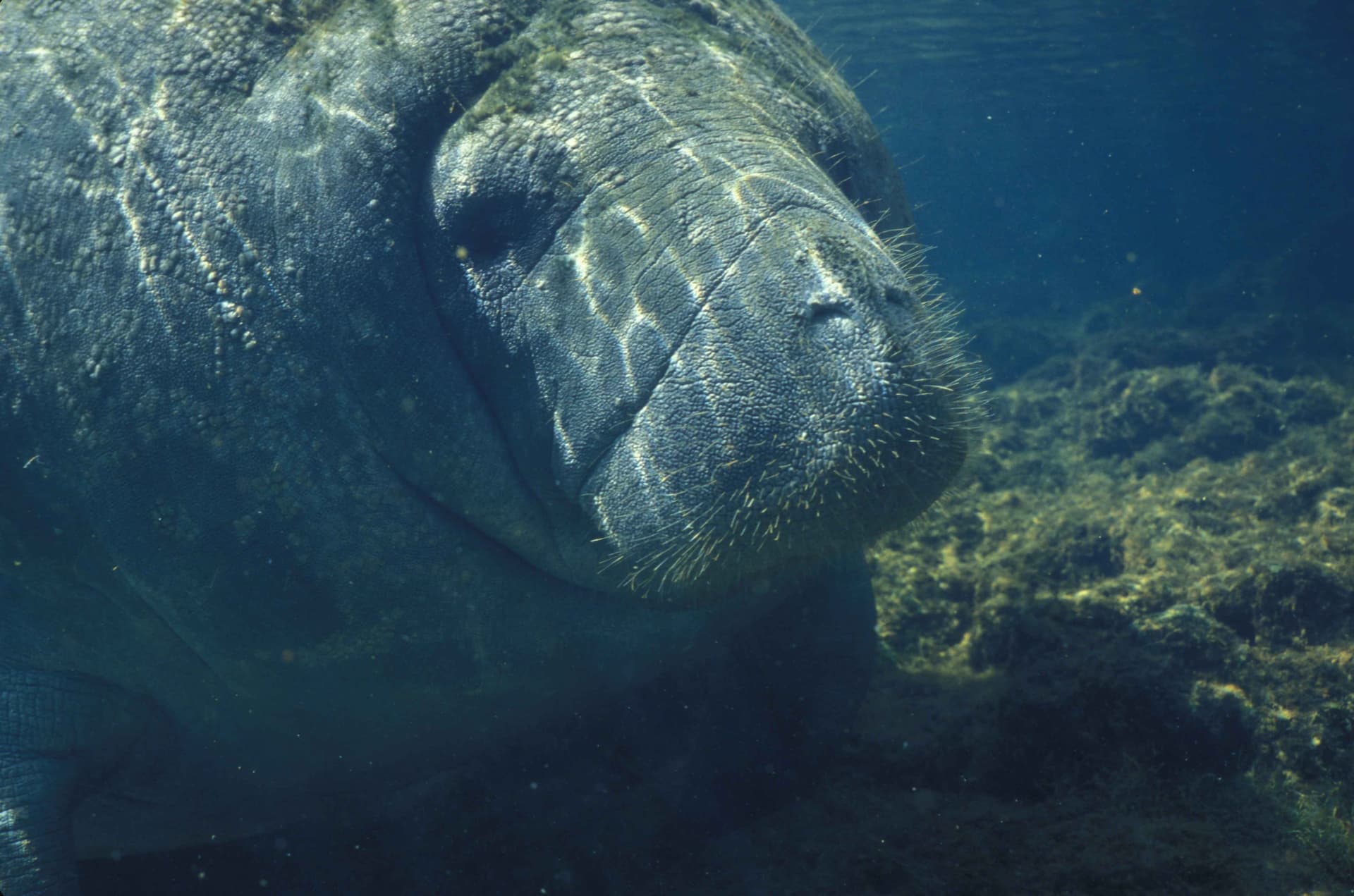
A massive, grey, fusiform mammal with paddle-like forelimbs, no hind limbs, and a broad, spatula-shaped tail. Adults are typically 2.5 to 3.5 m long and 400 to 600 kg in weight. The skin is tough and wrinkled, often marked with algae and scars from boat propellers. Manatees breathe air and surface every few minutes; they are completely silent to human ears except for a soft churring used between mother and calf.
Ecology
Manatees are obligate herbivores, grazing on seagrass, water hyacinth, marsh grasses, and submerged aquatic vegetation for six to eight hours per day. A single animal can consume 10 percent of its body weight daily. Despite their bulk, they are buoyant specialists, adjusting lung volume to control depth in the water column. They are non-territorial and generally solitary, though cows with calves form close pair bonds that last two years.
Nariva Swamp Population
Nariva Swamp on Trinidad's east coast is the most reliable location to observe manatees in Trinidad and Tobago. The swamp's freshwater marshes, palm forest, and Nariva River system provide year-round foraging habitat. The population is small and has experienced historic pressure from hunting. Boat traffic in canals and rivers poses an ongoing collision risk.
Legal Protection
Fully protected under the Conservation of Wild Life Act. Nariva Swamp is a Ramsar Site and a national Environmentally Sensitive Area. Internationally, the West Indian Manatee is listed on CITES Appendix I, CMS Appendix I, and SPAW Annex II, reflecting its critical status across its Caribbean and Atlantic range.
Threats
- Boat-strike injuries from motorised traffic in swamp canals
- Habitat degradation from agriculture, drainage, and rice cultivation in and around Nariva
- Historical hunting pressure
- Entanglement in fishing nets
- Pollution from agricultural runoff