Reptile
Reptile
Water Mapepire
Helicops angulatus
The Water Mapepire is a semi-aquatic, non-venomous colubrid found throughout Trinidad's rivers, swamps, and marshes.
The Water Mapepire is a semi-aquatic, non-venomous colubrid found throughout Trinidad's rivers, swamps, and marshes. Its local name reflects a superficial resemblance to the venomous Mapepire Balsain in body pattern and habit, though the two are entirely unrelated. An important predator of fish and frogs in freshwater habitats, it is fully protected under the Conservation of Wildlife Act, and is one of the most commonly killed snakes in Trinidad due to the fear its name inspires.
Description
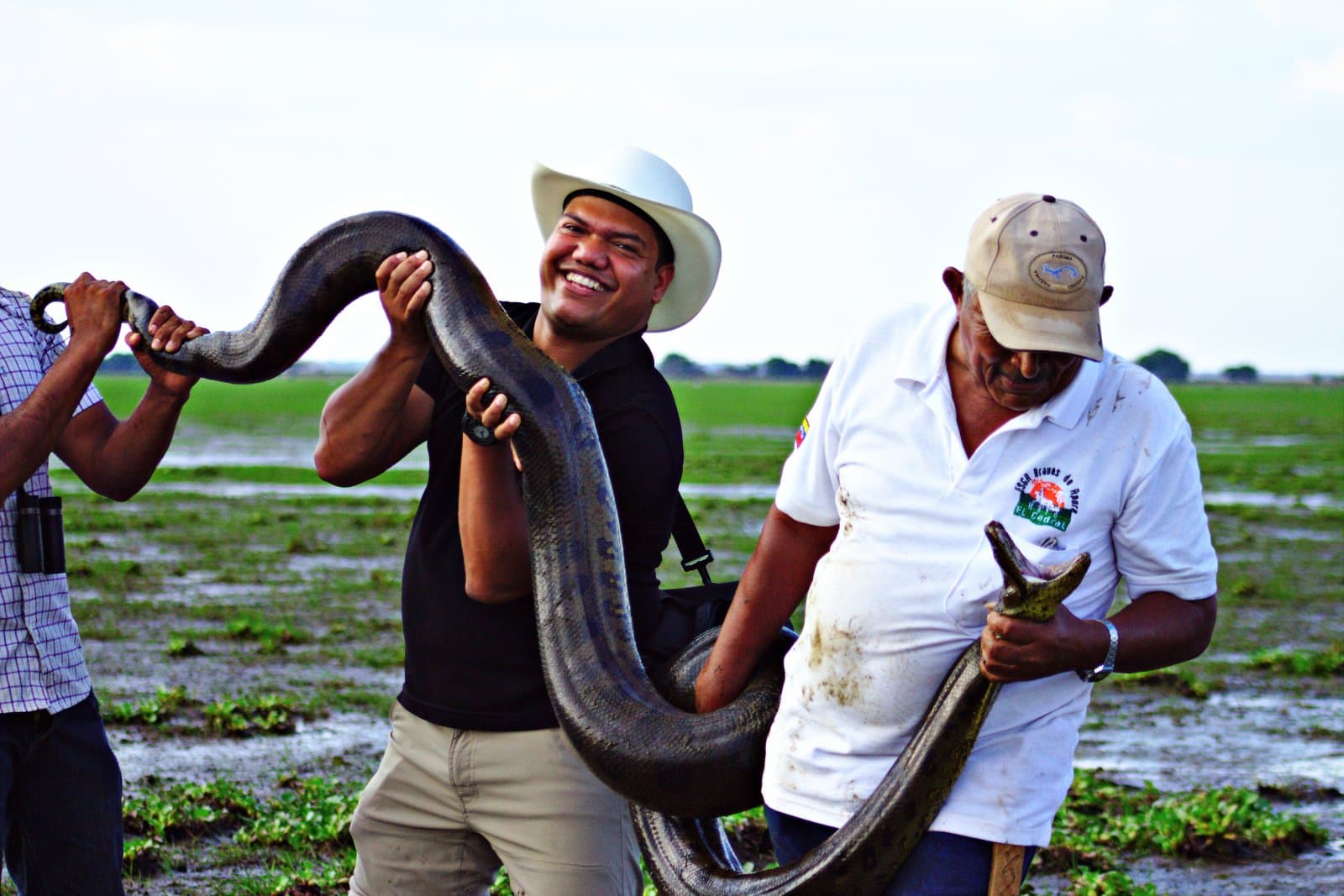
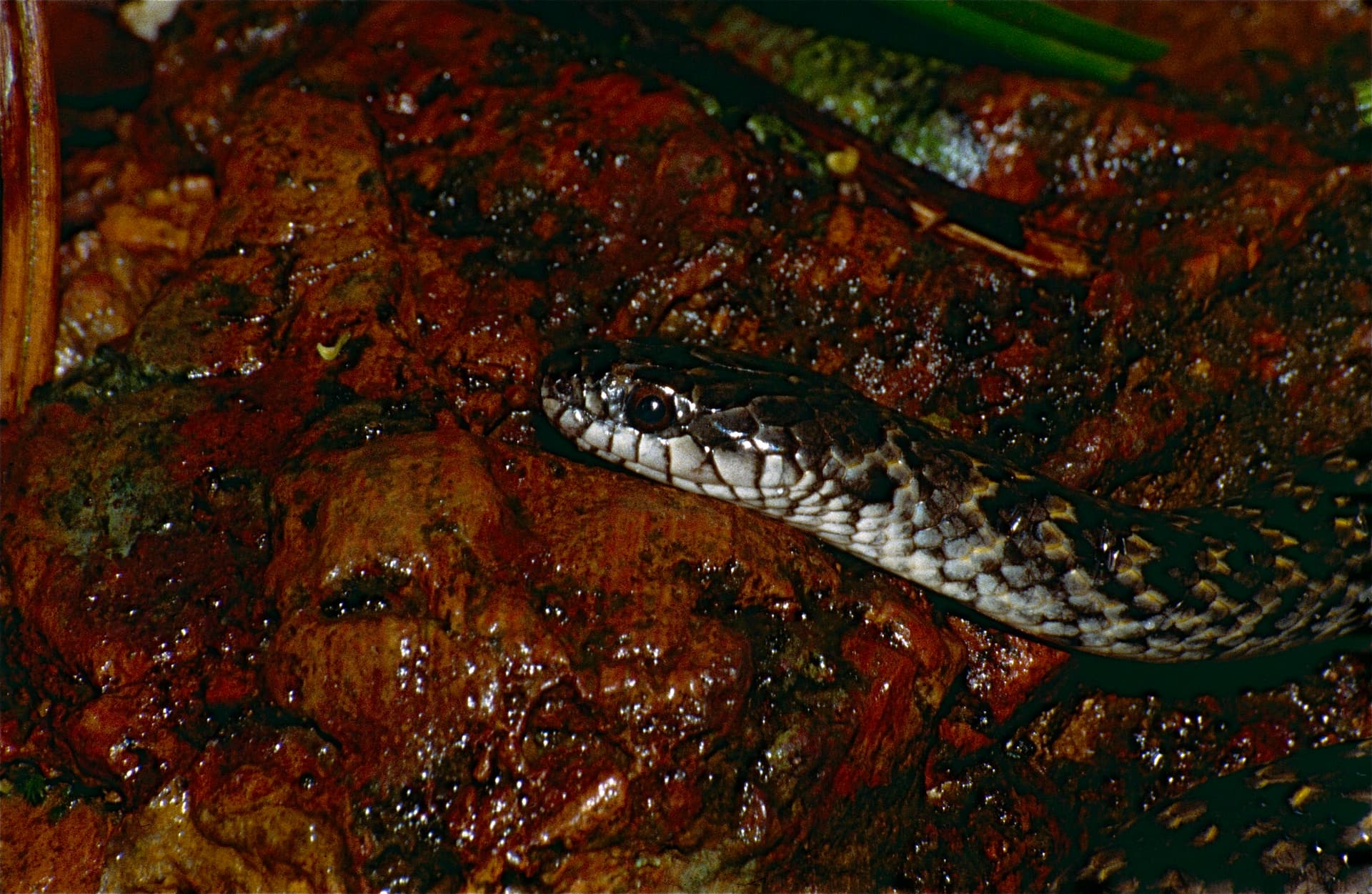
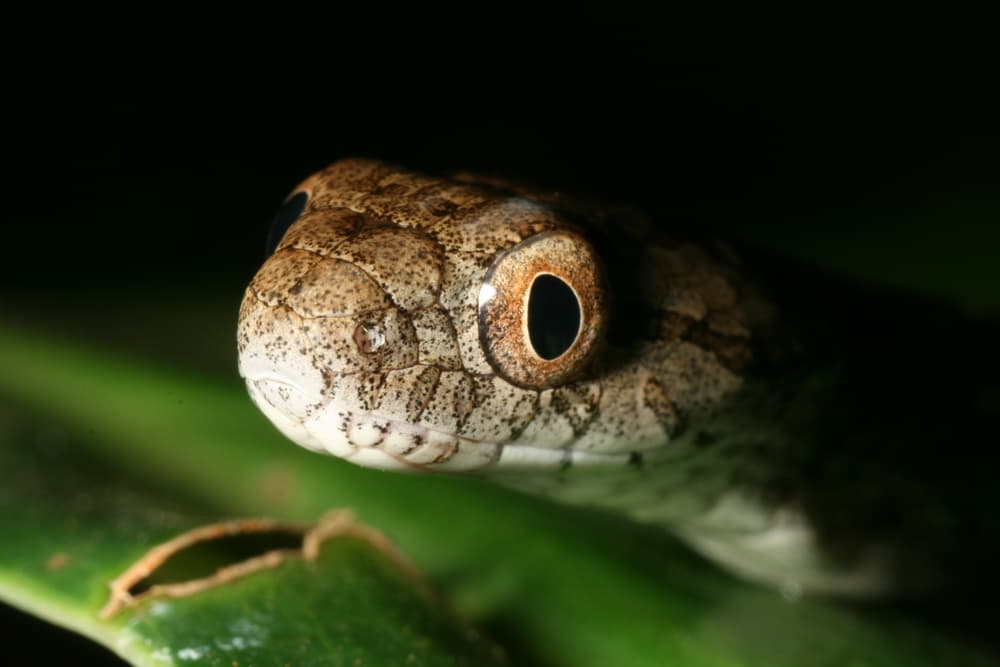
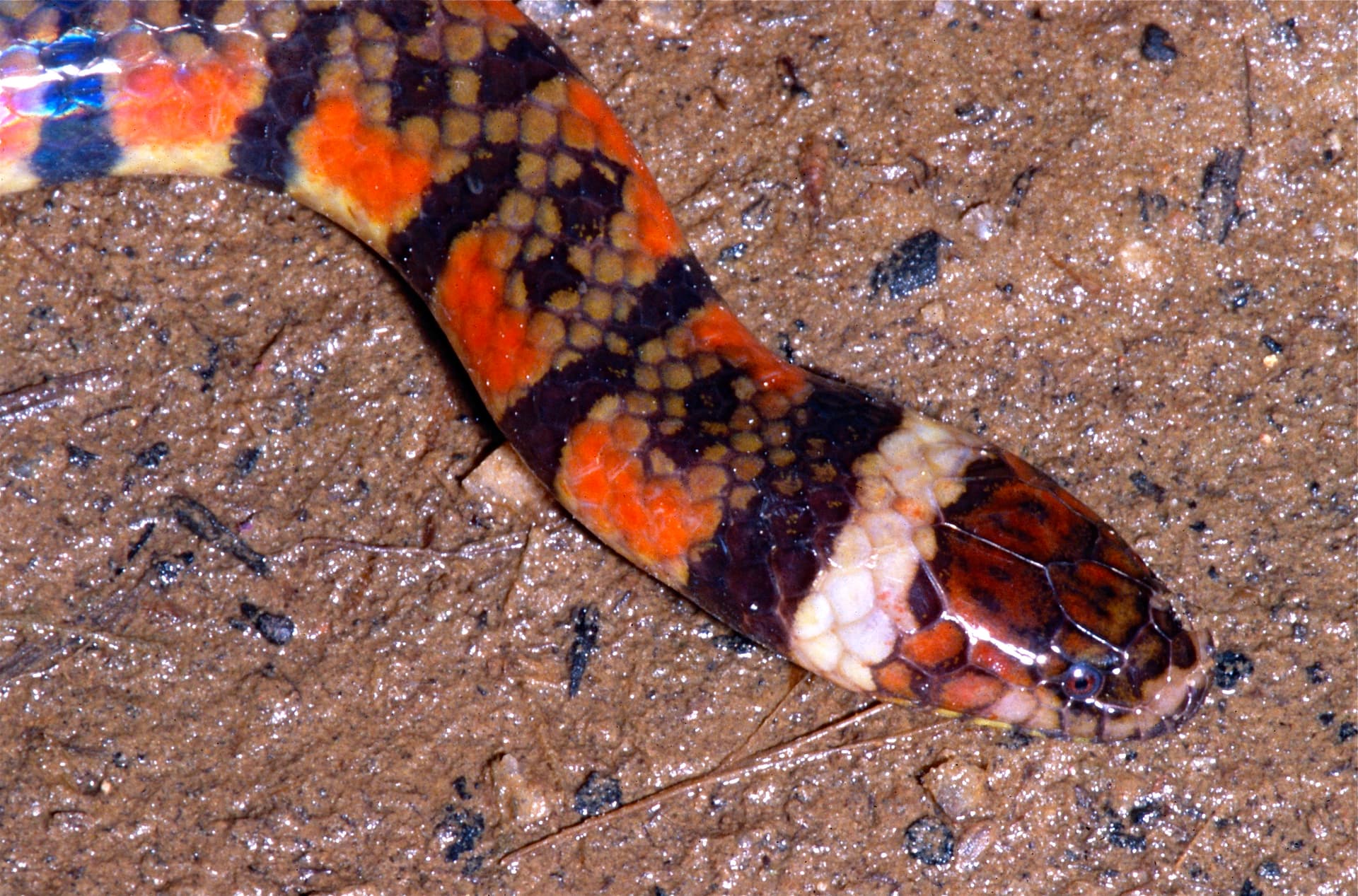
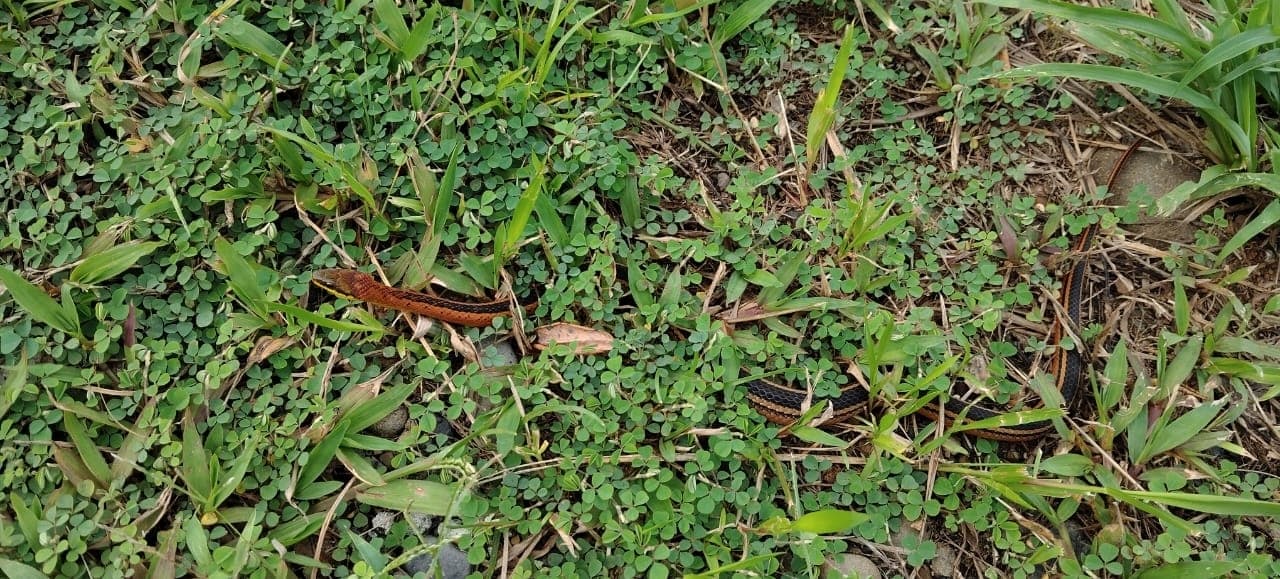
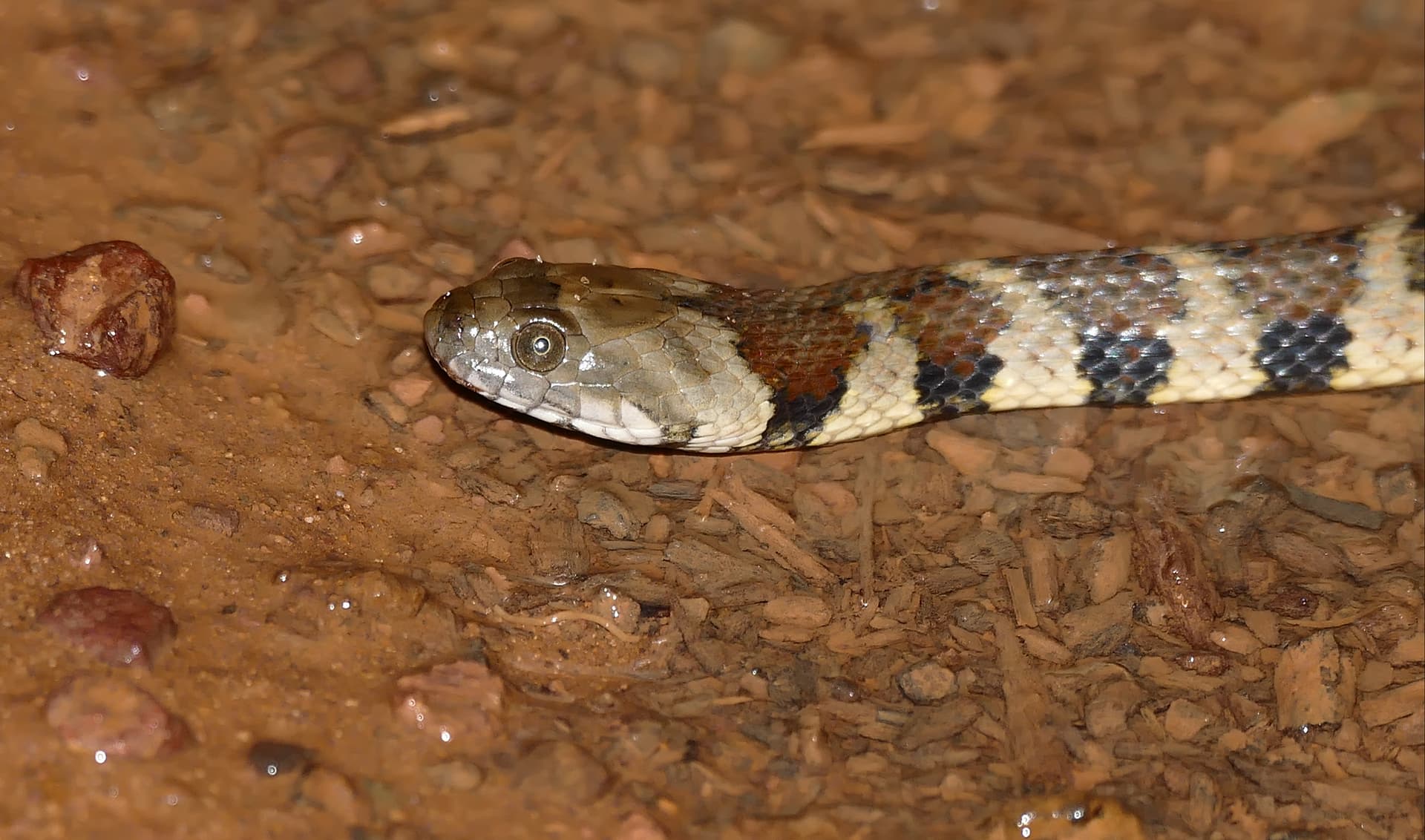
Helicops angulatus is a moderately sized, robustly built snake reaching approximately 70 to 100 cm. The body is laterally compressed, an adaptation for swimming, with a large, broad head. The dorsal pattern varies: dark brown, grey, or olive markings over a lighter ground colour, often with dark lateral blotching. The belly is typically pale, spotted, or checkered in yellow and black. The eyes and nostrils are positioned high on the head, allowing the snake to breathe and scan for prey while largely submerged, in the same manner as the anaconda but on a much smaller scale.
Ecology
The Water Mapepire is a crepuscular and nocturnal hunter along the banks and shallow margins of rivers, streams, swamps, and rice fields. It feeds primarily on fish and frogs, which it seizes in rapid strikes at the water's edge. Like all Helicops species, it is rear-fanged, with Duvernoy's gland secretions used to immobilise fish prey. The venom is fish-specific and has no medical significance for humans. When handled it may flatten and musk, and the bite, while not venomous, can cause mild irritation.
Conservation
The name "Water Mapepire" is the most misleading common name in T&T herpetology. It has led to the deaths of countless harmless snakes by people who could not know from the name alone that the animal is non-venomous, non-aggressive, and protected. The actual mapepires (Bothrops atrox and Lachesis muta muta) are terrestrial forest snakes and are never encountered in open water in the way the Water Mapepire routinely is. The species is found throughout Trinidad; there are no records from Tobago.
Threats
- Persecution: killed in large numbers due to the misleading "mapepire" name
- Freshwater habitat degradation: pollution, channelisation, and wetland drainage
- Decline of fish and frog prey in degraded waterways