Reptile
Reptile
Striped Swamp Snake
Thamnodynastes sp.
The Striped Swamp Snake is a small to medium semi-aquatic colubrid found in freshwater and wetland habitats in Trinidad.
The Striped Swamp Snake is a small to medium semi-aquatic colubrid found in freshwater and wetland habitats in Trinidad. The Trinidad population represents an undescribed subspecies or possibly a distinct species within the broadly distributed Thamnodynastes complex, pending formal taxonomic revision. It is non-venomous to humans, feeds on frogs and small fish, and is fully protected by law.
Description
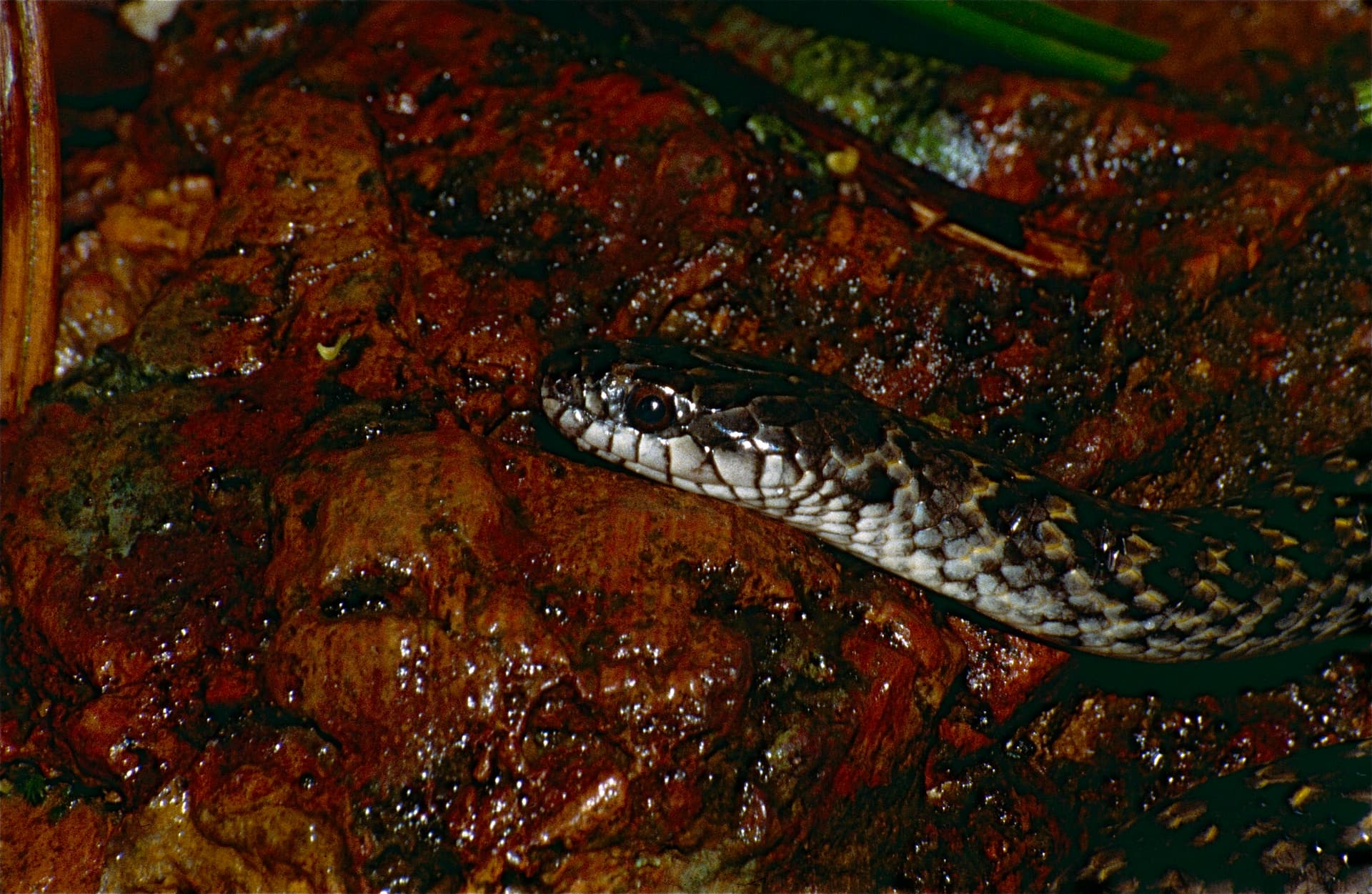
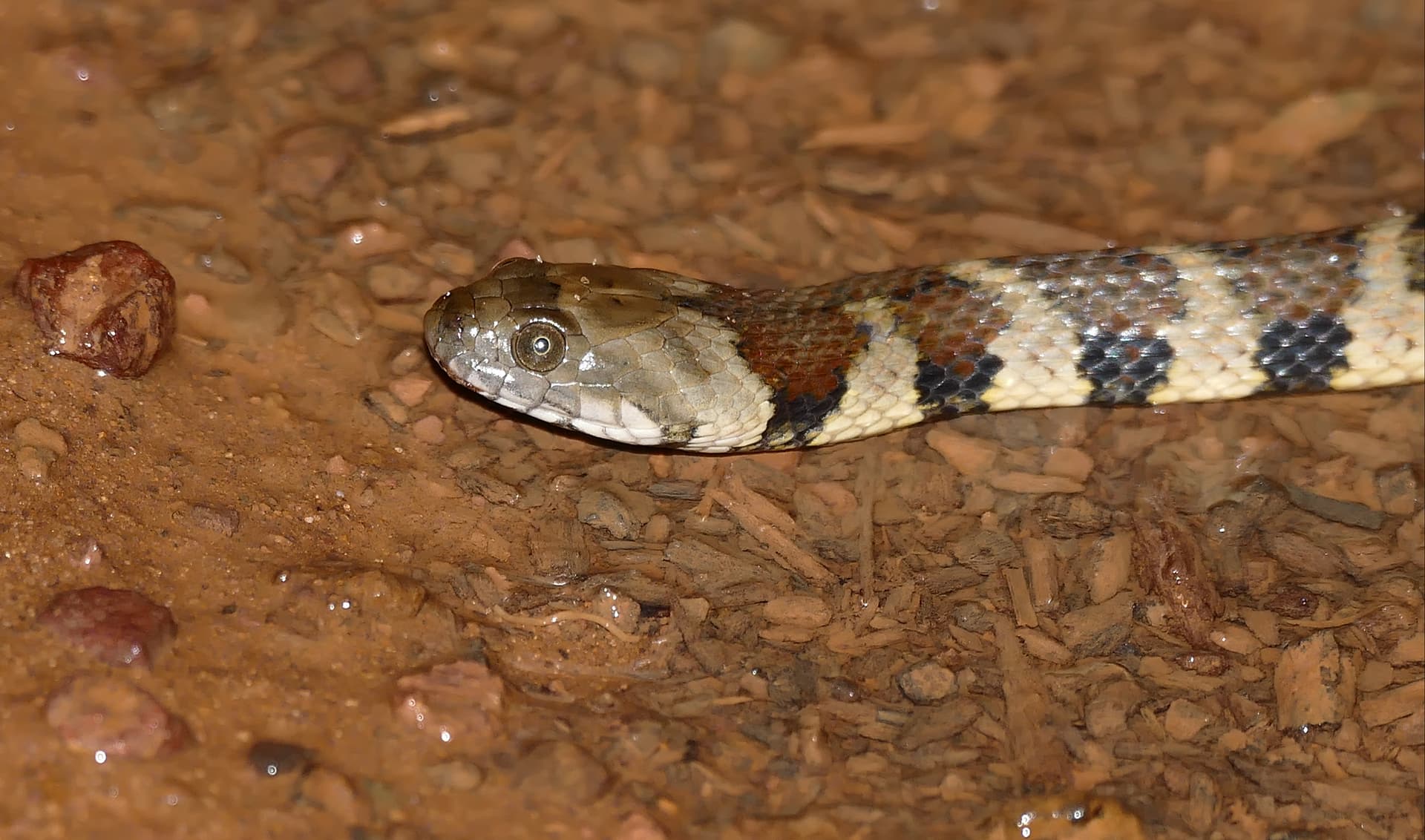
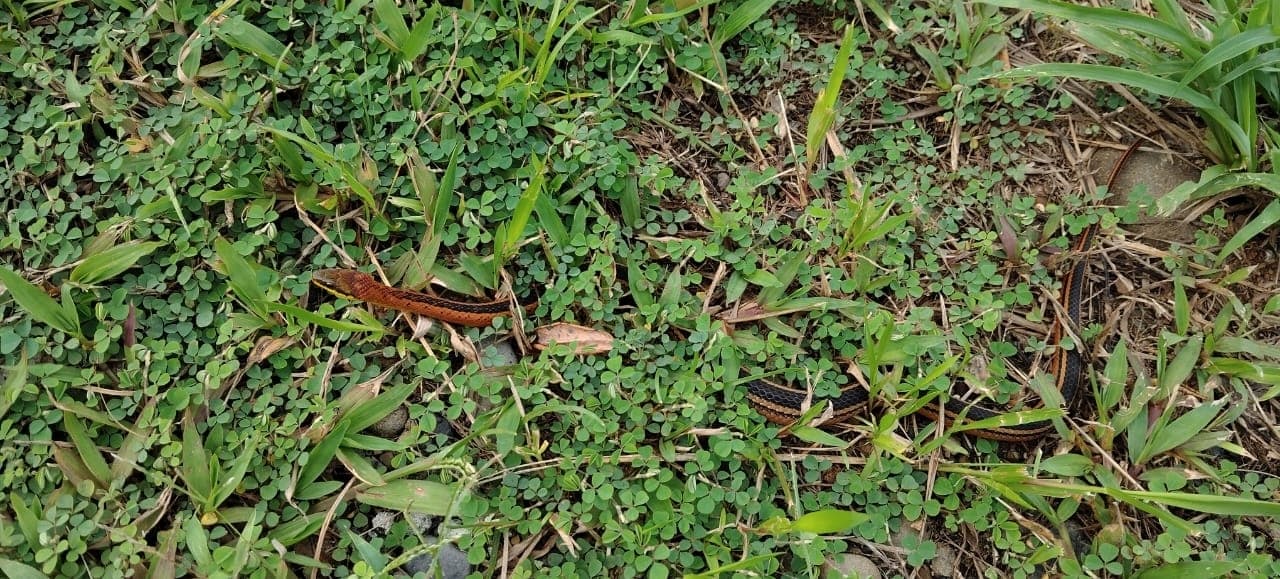
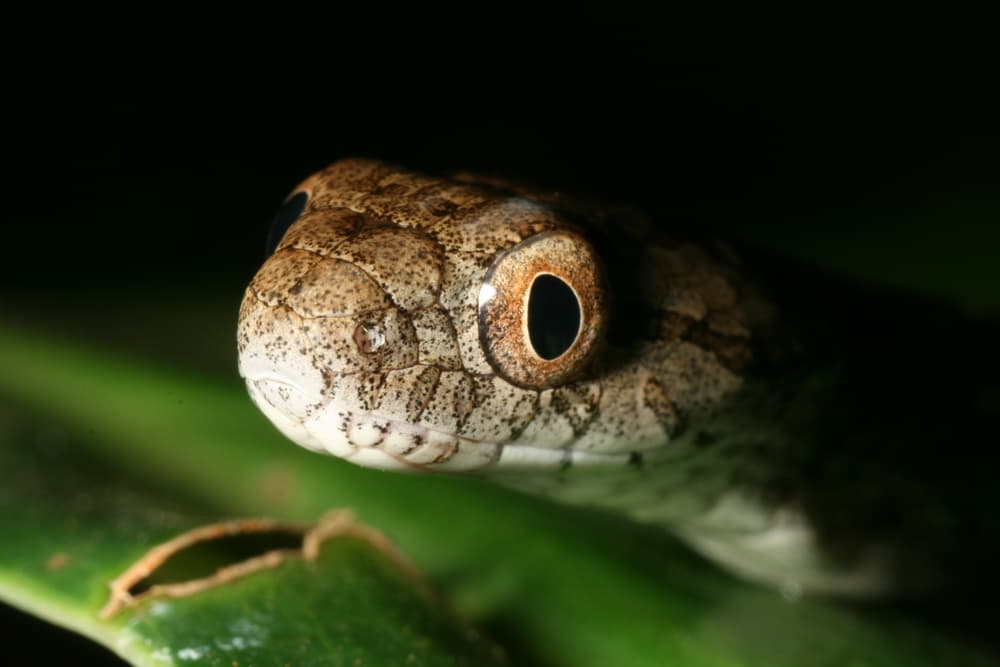
The Thamnodynastes of Trinidad is a slender, moderately sized colubrid, typically reaching 50 to 80 cm, with a distinctly striped dorsal pattern: pale lateral stripes run the length of the dark brown to olive body, giving it its common name. The head is relatively small and the eyes are moderately large. The body is somewhat laterally compressed, and the posture and movement suggest a species comfortable both on land and in shallow water. The exact scale counts and characteristics that would formally separate the Trinidad population from mainland Thamnodynastes taxa have not been comprehensively published.
Ecology
An active, semi-aquatic predator, the Striped Swamp Snake forages at the margins of freshwater habitats, particularly around grassy wetlands, rice fields, flooded forest edges, and drainage canals. Its diet consists primarily of frogs, tadpoles, and small fish. Crepuscular in activity, it is most often encountered at dusk or early evening near water. Like all Thamnodynastes, it is rear-fanged, with Duvernoy's gland secretions used to immobilise small prey, but presents no medical risk to humans.
Conservation
The taxonomic uncertainty surrounding this population reflects a broader pattern in Trinidadian herpetology: several species on the island represent undescribed or poorly differentiated populations whose status requires modern molecular and morphological analysis. In the meantime, the species is covered by the general COWA protection for all non-venomous snakes in Trinidad. Wetland drainage and agricultural conversion of freshwater habitats in the lowlands represent the primary threats to this species.
Threats
- Freshwater wetland drainage and conversion to agriculture
- Water pollution reducing frog and fish prey populations
- Taxonomy unresolved; population trends unmonitored