Reptile
Reptile
Mapepire Mangue
Liophis cobellus cobellus
The Mapepire Mangue is a semi-aquatic colubrid of Trinidad's freshwater marshes, swamps, and rice fields.
The Mapepire Mangue is a semi-aquatic colubrid of Trinidad's freshwater marshes, swamps, and rice fields. Its local name, "mapepire mangue" (swamp mapepire), reflects its preference for wet habitats, though it is entirely non-venomous and bears no relationship to the venomous Mapepire Balsain. Despite sharing a name that causes fear, this small snake is completely harmless and plays a useful role as a predator of frogs and small fish.
Description
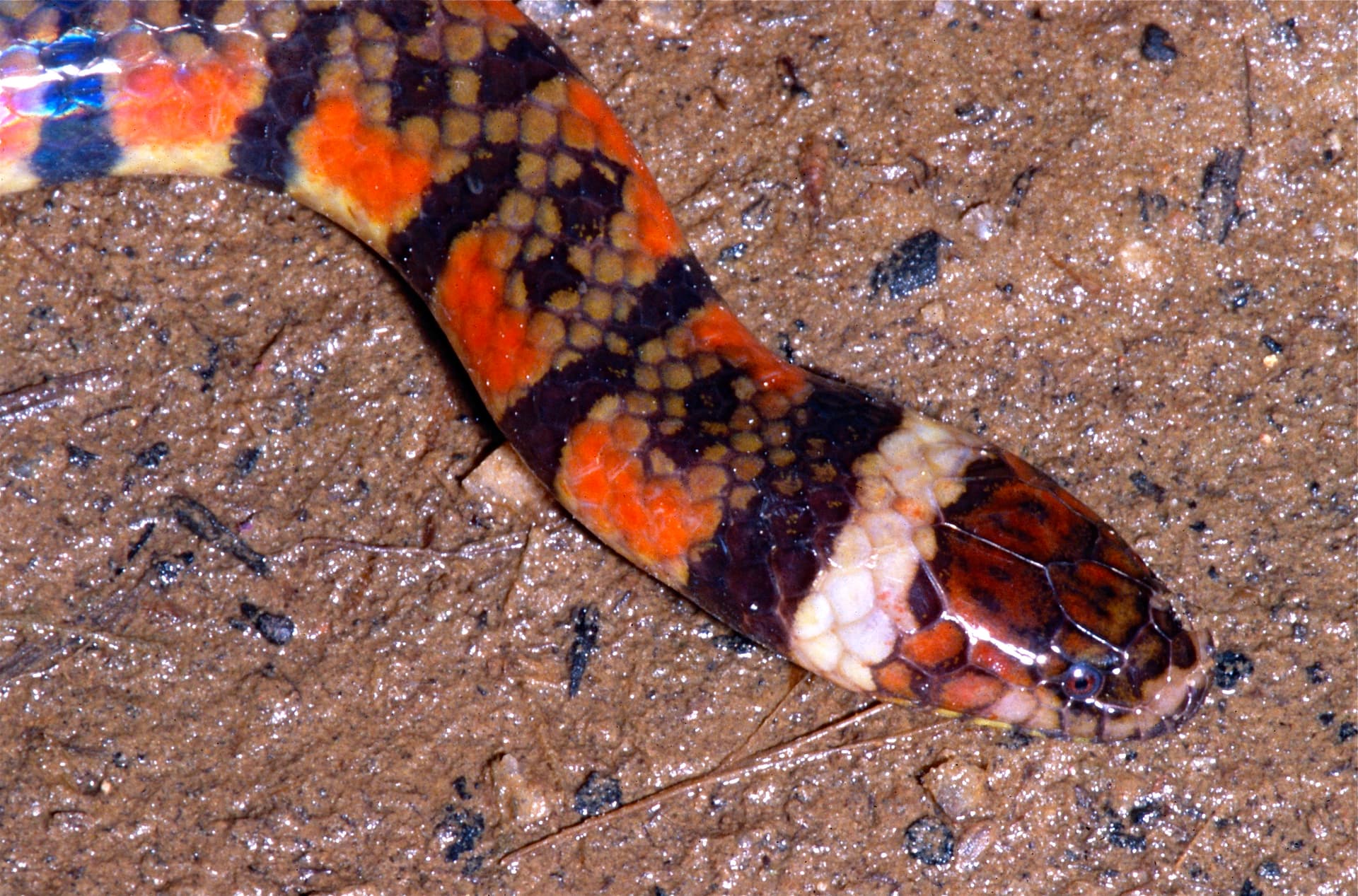
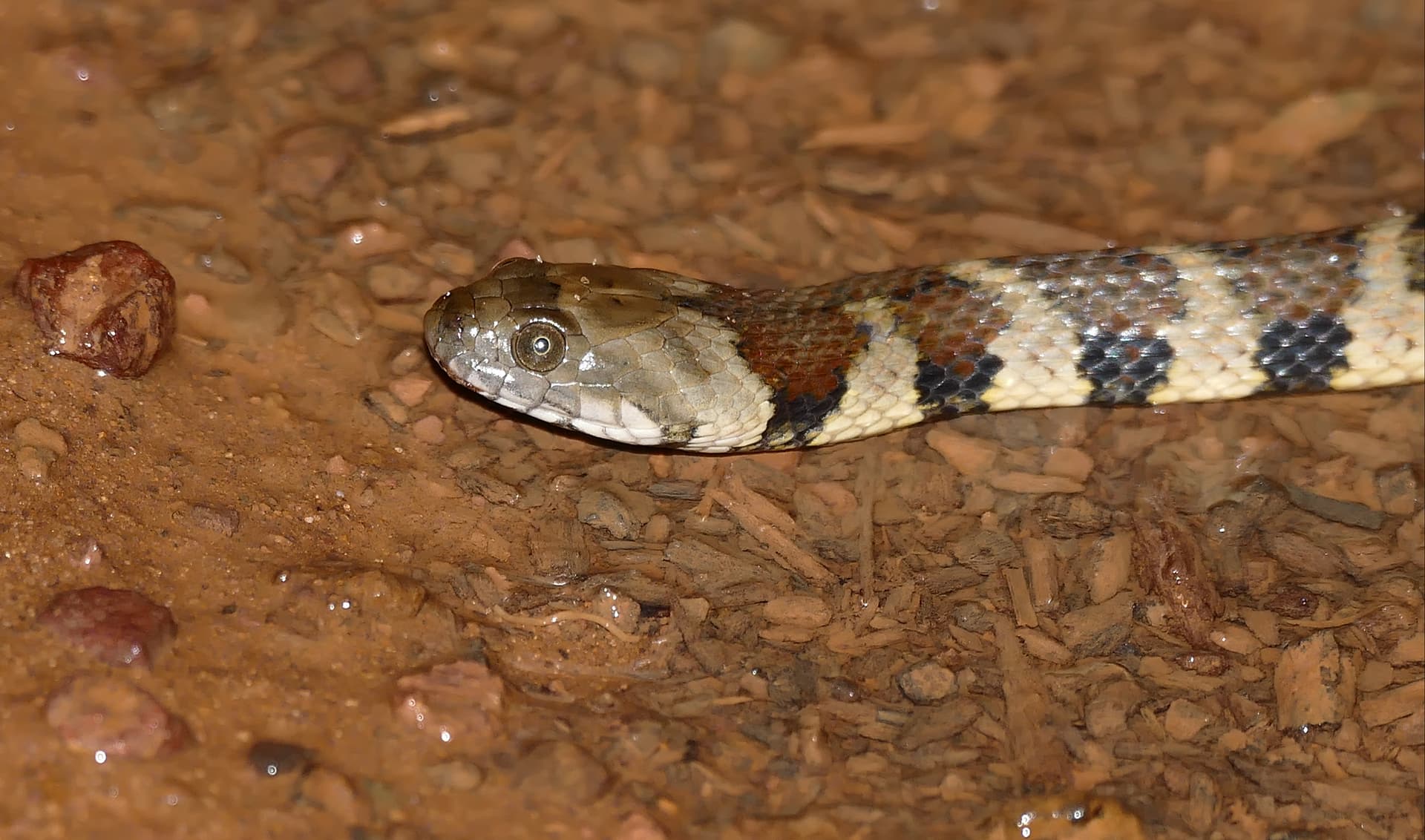
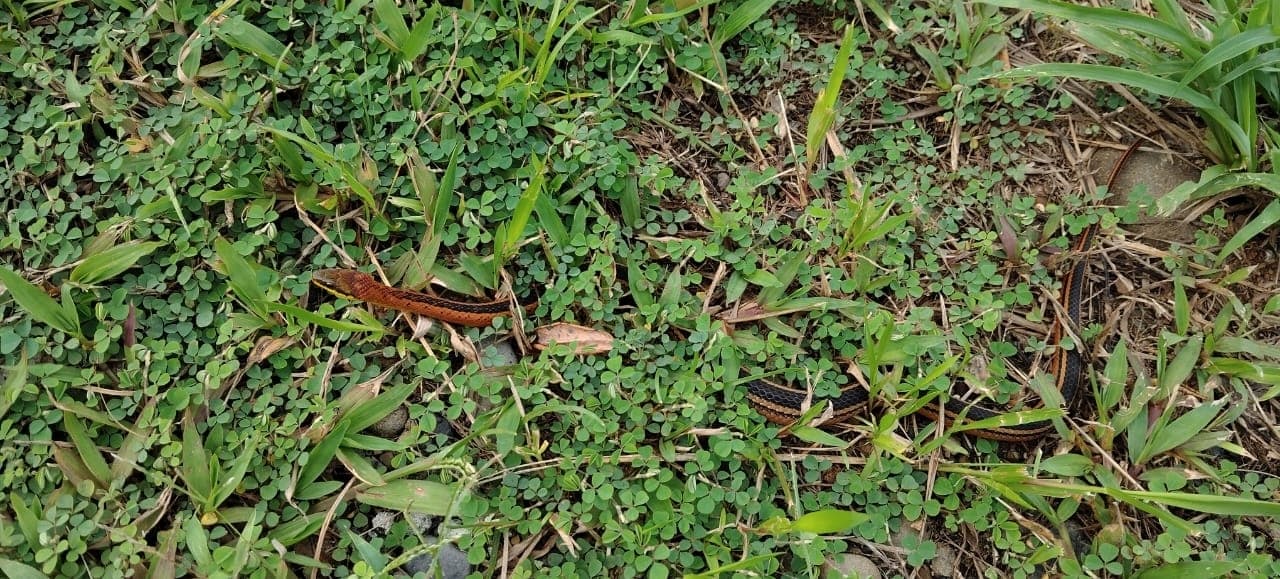
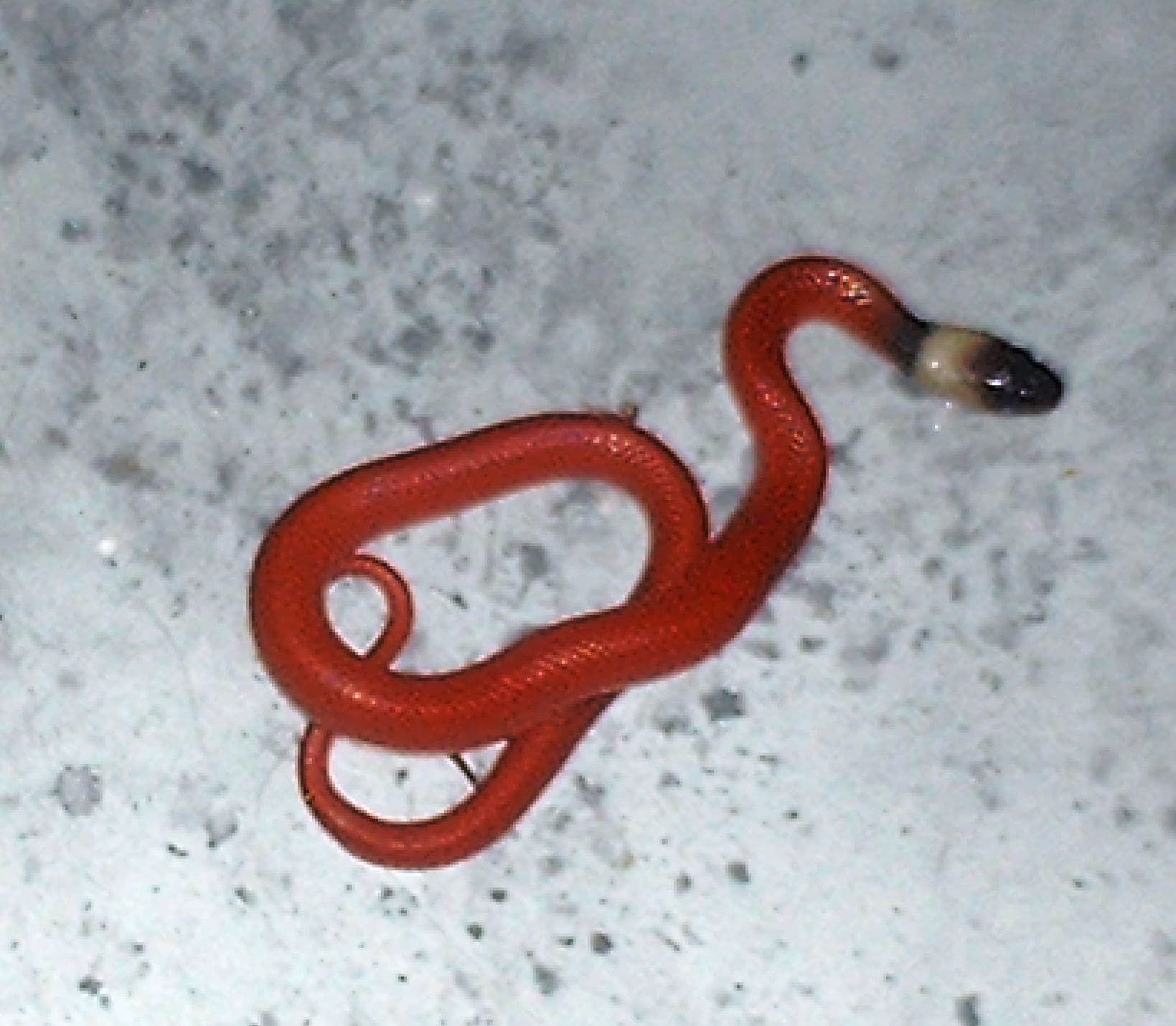
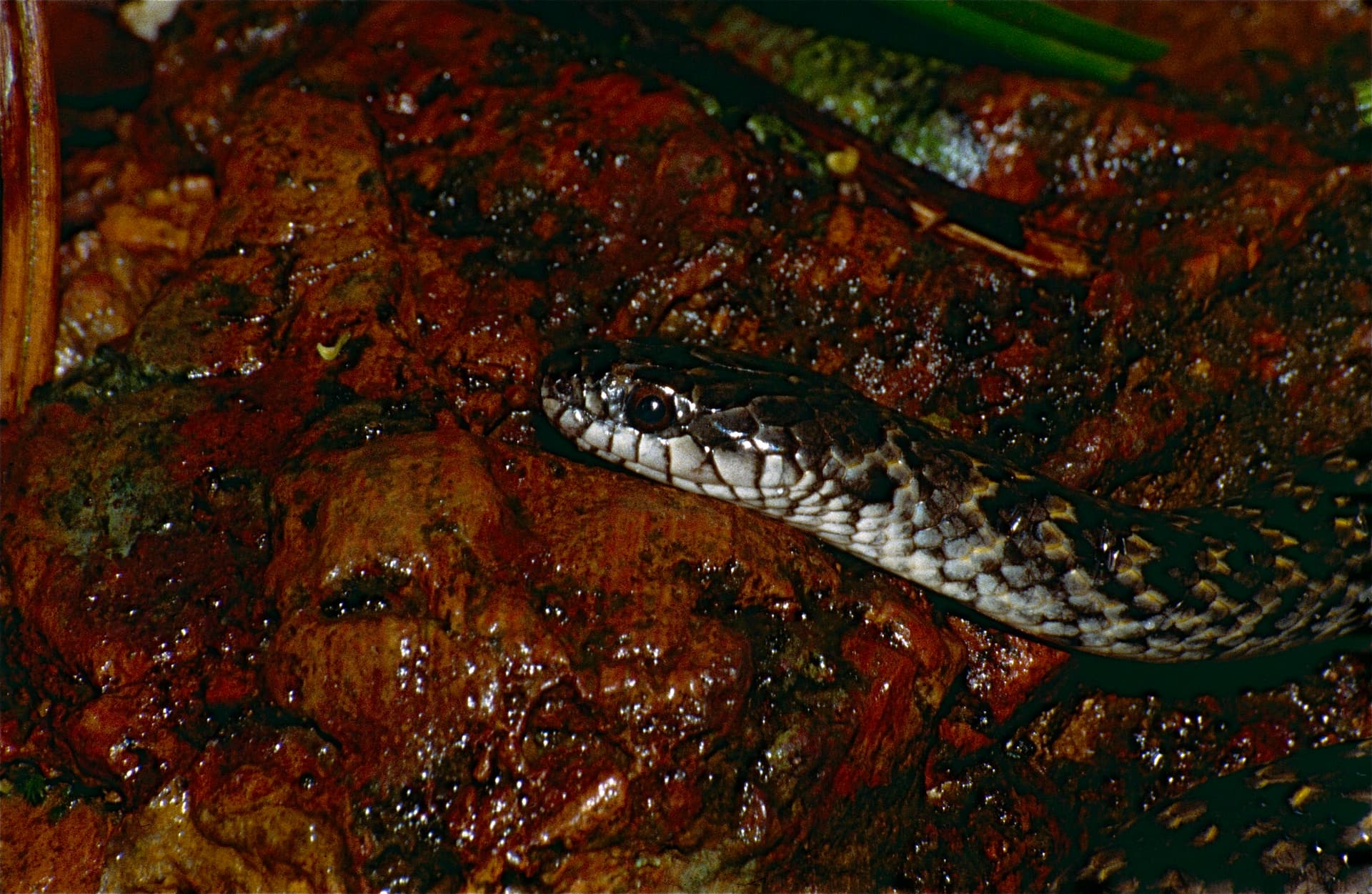
Liophis cobellus cobellus is a medium-sized, semi-aquatic colubrid reaching approximately 50 to 80 cm. The dorsal colour is dark olive-brown to greyish-brown, while the belly is pale with reddish or orange tones, often with dark flecking along the ventral edges. This ventral colouration is visible when the snake flattens its body in a defensive posture or when it moves through shallow water. As a member of the broadly distributed genus Liophis (treated by some authors as part of the expanded Erythrolamprus), it is rear-fanged with a Duvernoy's gland, but the venom is harmless to humans.
Ecology
A crepuscular and semi-aquatic hunter, the Mapepire Mangue forages at the margins of freshwater bodies, moving through dense emergent vegetation and flooded rice fields in search of frogs, small fish, and tadpoles. It is a good swimmer and will enter the water freely when hunting. When encountered on land near wetlands, it is frequently misidentified as a venomous mapepire species and killed on sight, a case of mistaken identity that is driven entirely by the shared vernacular name.
Conservation
Found in the lowland freshwater habitats of Trinidad, particularly the Caroni Swamp margins, the Nariva Swamp wetlands, southern rice-growing areas, and other low-lying wet environments. The species does not occur on Tobago. It is fully protected under the Conservation of Wildlife Act, and like all the non-venomous snakes that share the "mapepire" name, it benefits significantly from public education campaigns that clarify which animals are genuinely dangerous.
Threats
- Freshwater habitat loss and drainage
- Pollution of freshwater bodies reducing prey availability
- Persecution due to the mapepire name: killed on sight by people who assume all mapepires are venomous