Reptile
Reptile
Water Coral
Hydrops triangularis neglectus
The Water Coral is a secretive, highly aquatic colubrid found in freshwater habitats in Trinidad.
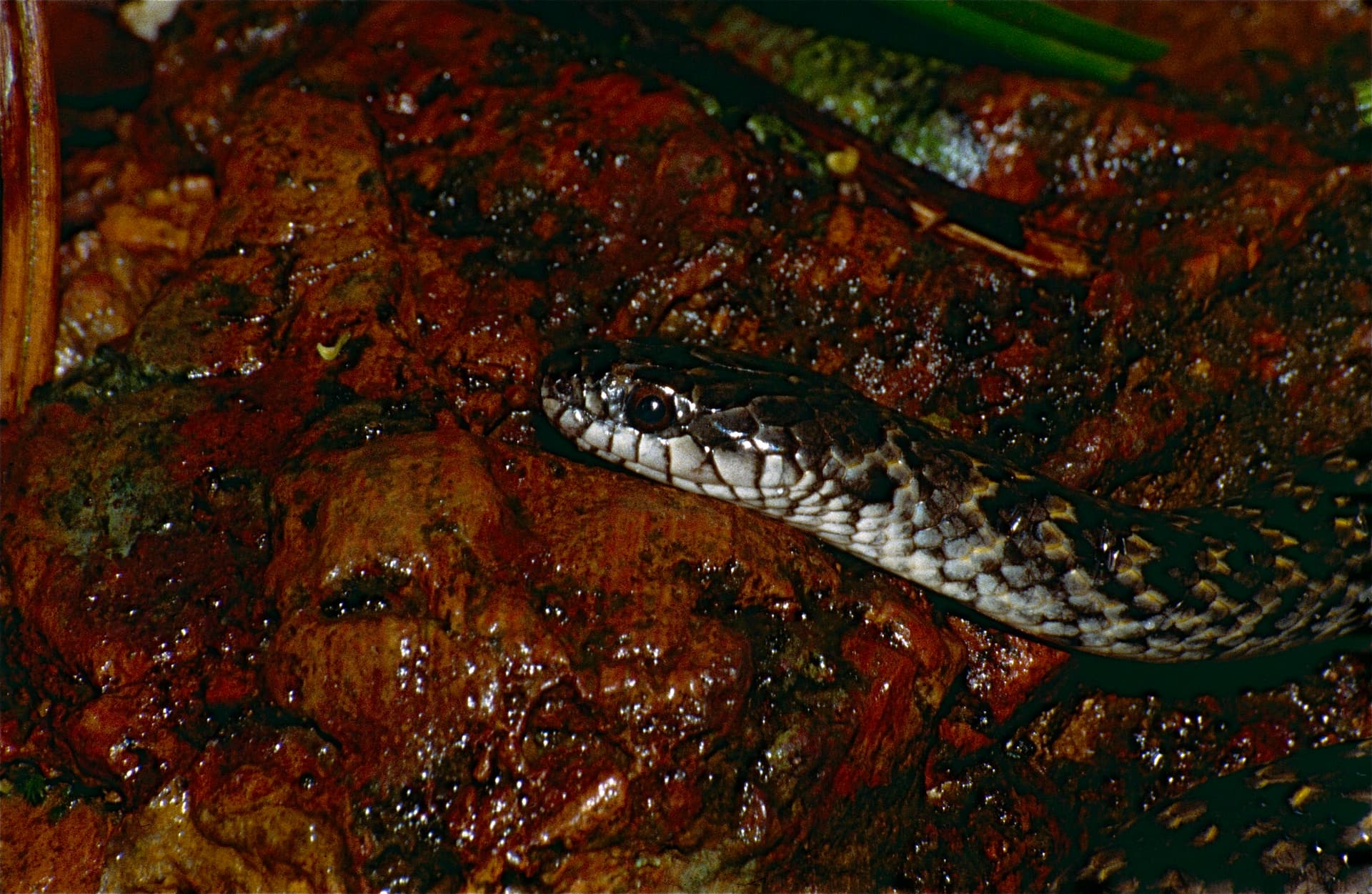
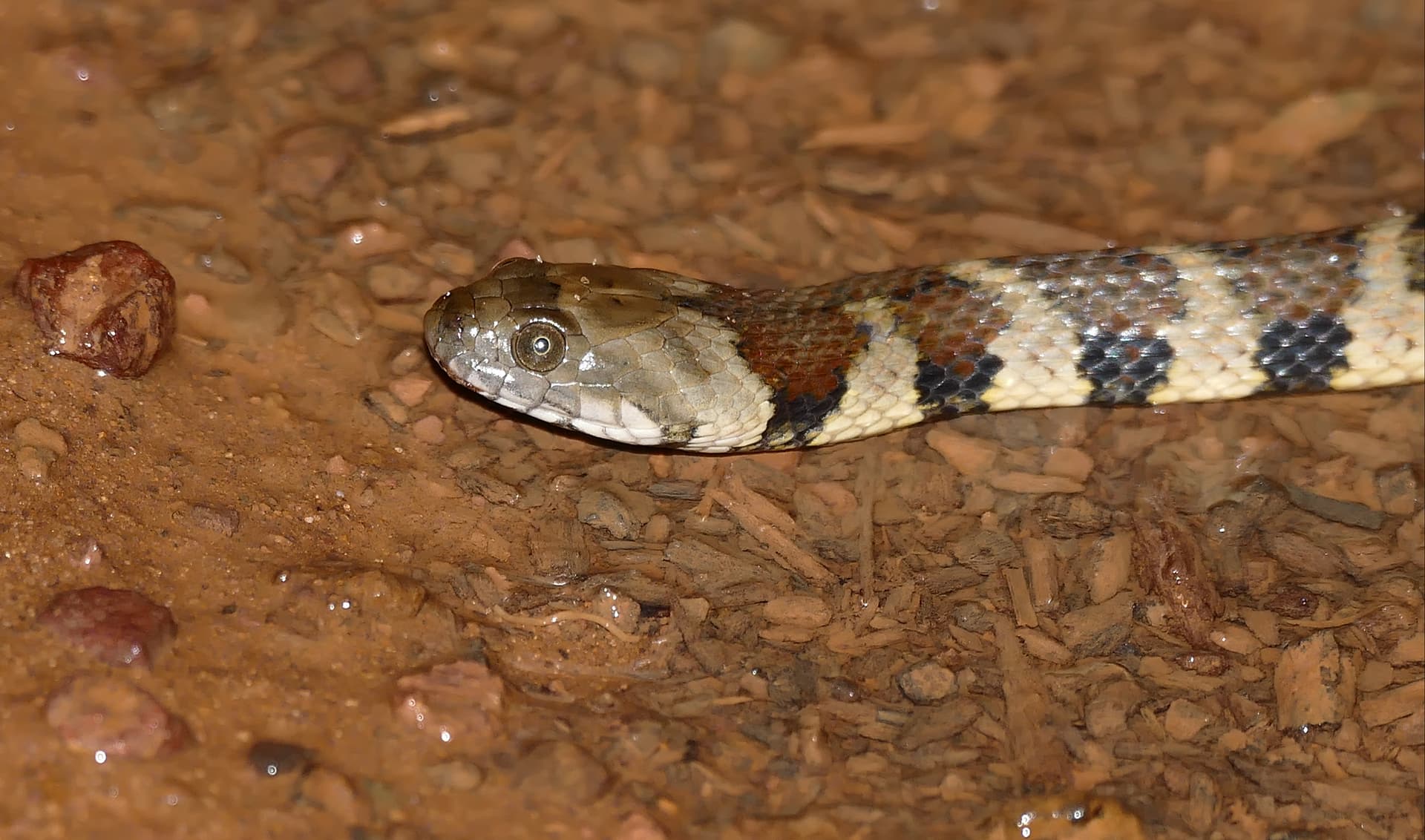
The Water Coral is a secretive, highly aquatic colubrid found in freshwater habitats in Trinidad. Named for the banded pattern that superficially resembles a coral snake, it is non-venomous and a specialist predator of freshwater eels and fish. It is among the least-studied snakes on the island, rarely encountered and likely considerably under-recorded.
Description
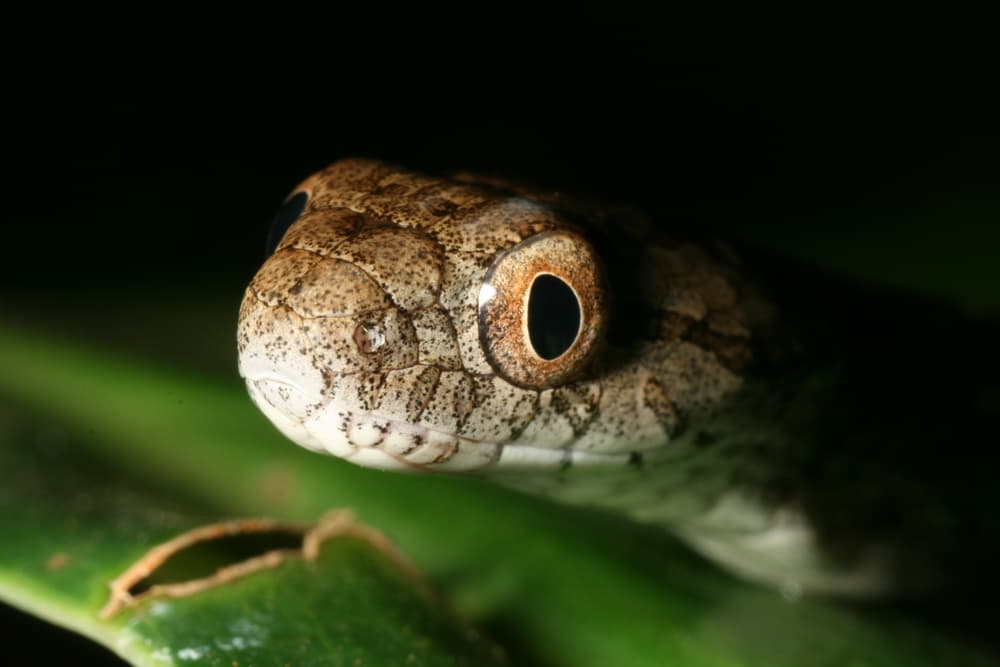
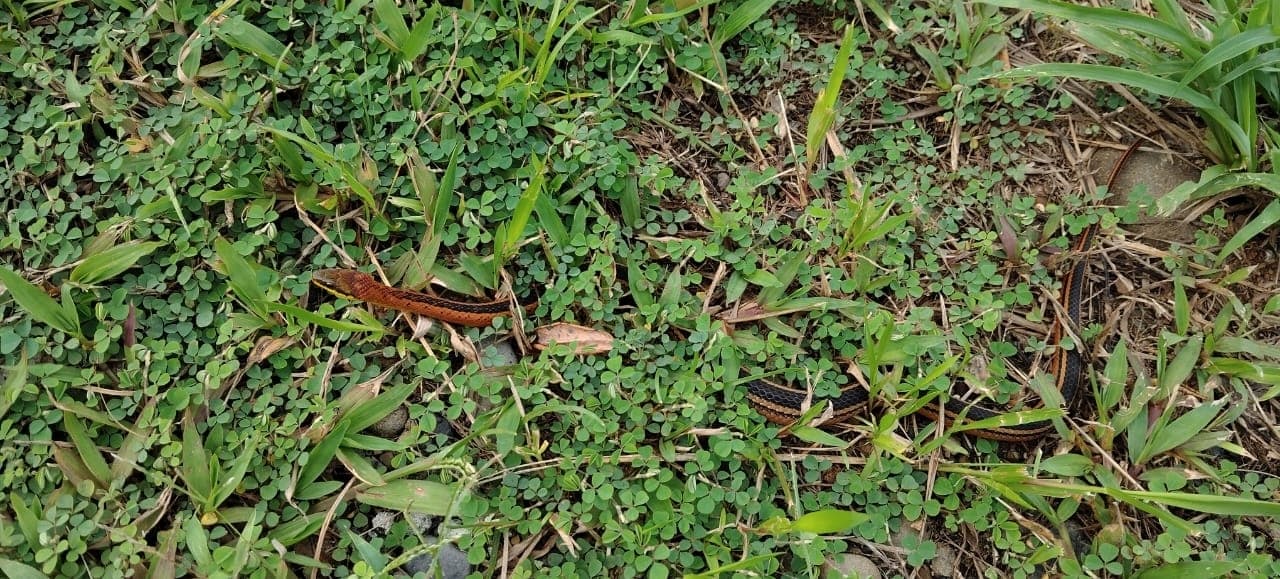
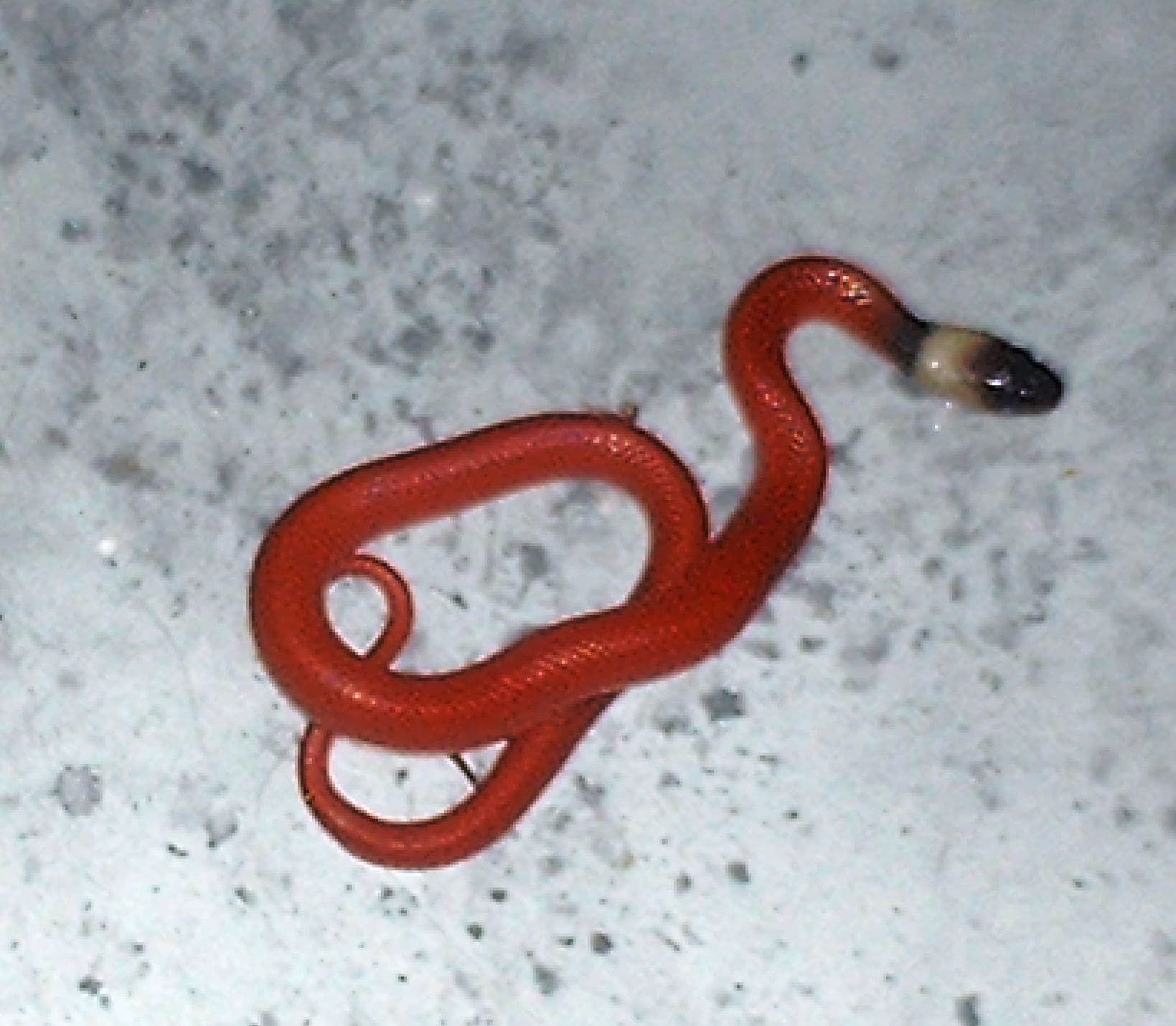
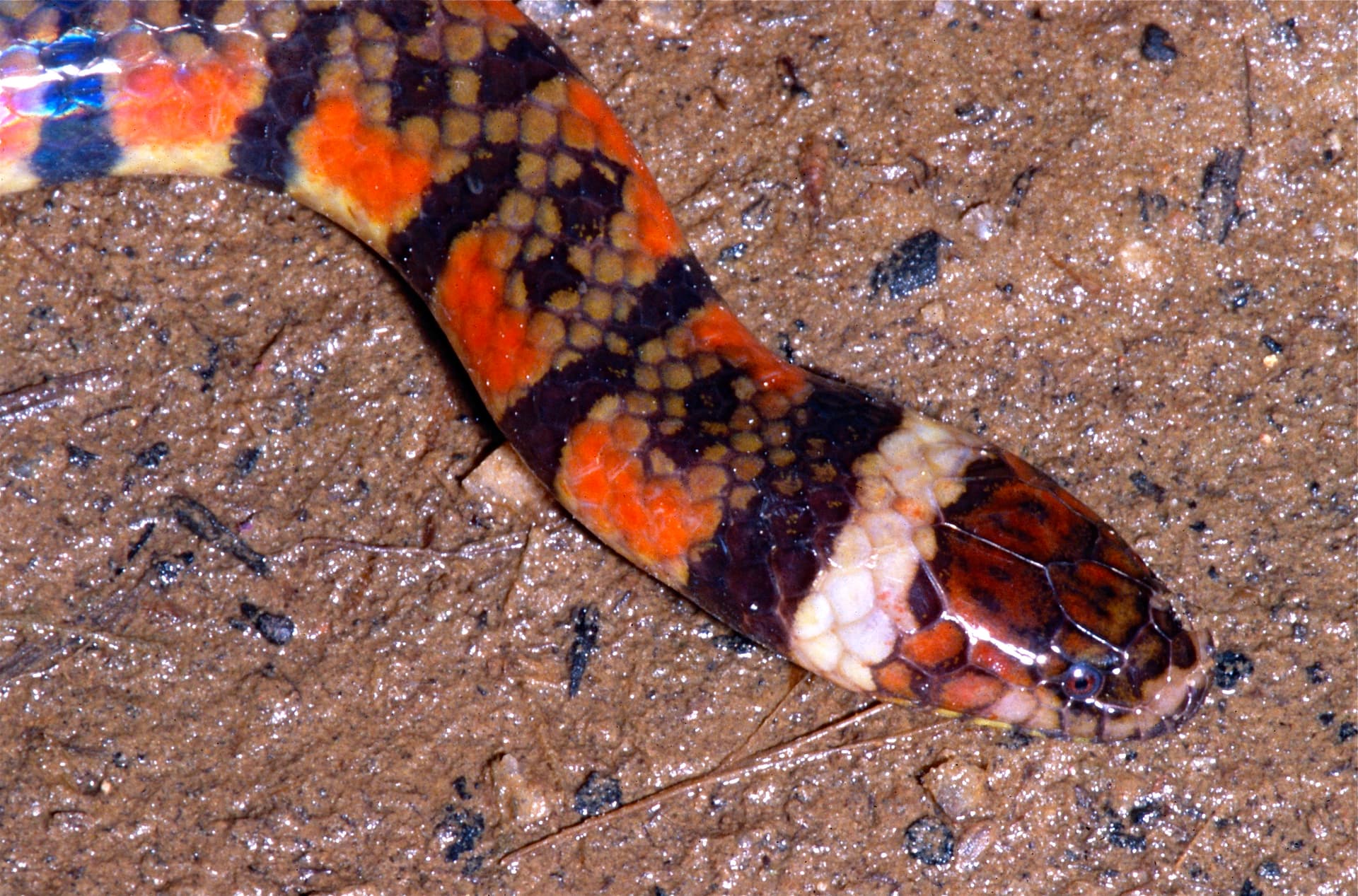
Hydrops triangularis neglectus is a slender, moderately sized snake typically reaching 60 to 90 cm. The body is dark above with black and reddish or orange cross-bands, a pattern that gives it the "water coral" name but which bears no taxonomic relationship to the true coral snakes of the family Elapidae. The head is small and somewhat flattened, and the body is slightly laterally compressed, both adaptations for aquatic life. The eyes are relatively small.
Ecology
Unlike the Water Mapepire (Helicops angulatus), which frequents open water edges, the Water Coral appears to be more closely associated with heavily vegetated, slow-moving or still water, including swamps, flooded forest margins, and canal systems. It feeds predominantly on freshwater eels and smooth-bodied fish, which its recurved, interlocking teeth grip securely and prevent from escaping. The genus Hydrops is exclusively aquatic and found across tropical South America.
Conservation
The subspecies neglectus is the form described from Trinidad; the nominate H. t. triangularis occurs across Venezuela, Colombia, and the Guianas south to Brazil and Bolivia. Records from Trinidad are sparse in the herpetological literature and the species is almost certainly under-recorded due to its secretive, fully aquatic habits. It is fully protected under the Conservation of Wildlife Act.
Threats
- Freshwater habitat degradation and water pollution
- Wetland drainage and canal channelisation
- Decline of freshwater eel and fish populations
- Under-recorded; true status unknown