Bird
Bird
Turkey Vulture
Cathartes aura
The Turkey Vulture is the most abundant and widespread of T&T's three vulture species and one of the most familiar large birds in the skies over both islands.
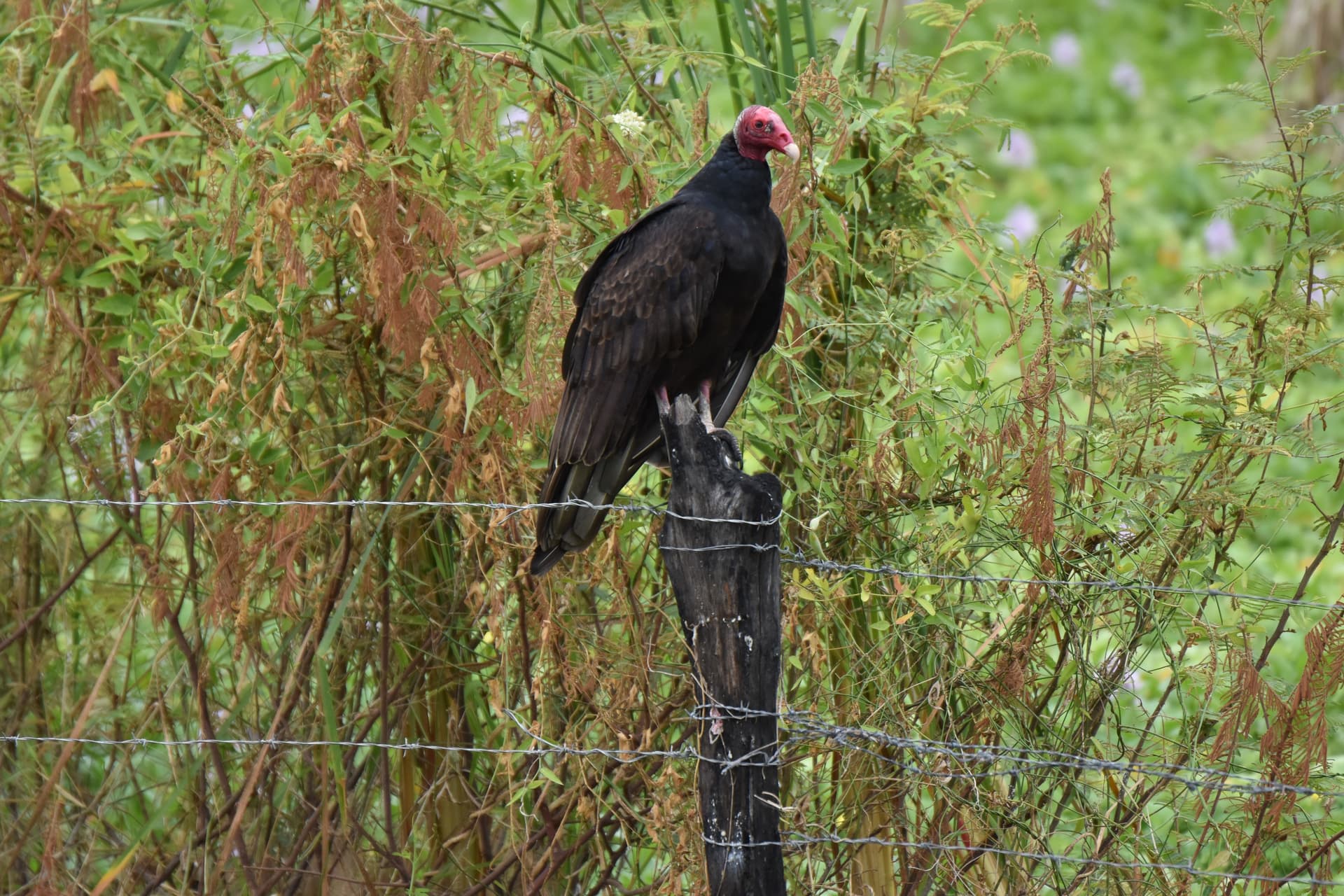
The Turkey Vulture is the most abundant and widespread of T&T's three vulture species and one of the most familiar large birds in the skies over both islands. Recognised by its red, featherless head and the distinctive V-shaped or "dihedral" angle at which it holds its wings while soaring, the turkey vulture is a master of thermalling flight. Unlike most birds, it locates carrion primarily by smell, using an exceptionally developed olfactory system that allows it to detect the gases of decomposition from great distances.
Identification
The Turkey Vulture is a large bird measuring 62 to 81 cm with a wingspan of 160 to 183 cm. The body plumage is entirely dark brown-black. At close range the silvery-grey undersides of the flight feathers contrast with the darker body feathers, creating a two-toned underwing. The bare head and upper neck are bright red in adults and greyish in juveniles. The bill is hooked and pale ivory. In flight, the wings are held in a shallow V-dihedral and the bird rocks and tilts continuously, rarely flapping, relying on thermals and ridge lift. This distinctive rocking flight, combined with the two-toned wing and small red head, separates the turkey vulture from the black vulture at a distance.
Ecology
Turkey Vultures are obligate scavengers, feeding almost exclusively on carrion. Their naked head reduces feather fouling when feeding inside carcasses. The stomach acid is extremely corrosive and kills bacteria such as anthrax and cholera that would be lethal to most vertebrates, making vultures critical ecosystem sanitation workers that prevent the spread of disease. The species locates carcasses primarily by smell using an enlarged olfactory bulb, unique among New World vultures; black vultures often follow turkey vultures to carrion rather than finding it independently. Turkey vultures roost communally and may travel considerable distances each day in search of food.
Status in T&T
The Turkey Vulture is found throughout Trinidad and Tobago in all open and semi-open habitats including savannas, agricultural land, forest edges, and coastlines. It is a year-round resident on both islands, supplemented by migrants passing through on North-South migration. The species is fully protected under the Conservation of Wild Life Act and is not a game species. Its ecological role in disease prevention and carcass removal makes it one of the most ecologically important birds in T&T despite its unglamorous reputation.
Threats
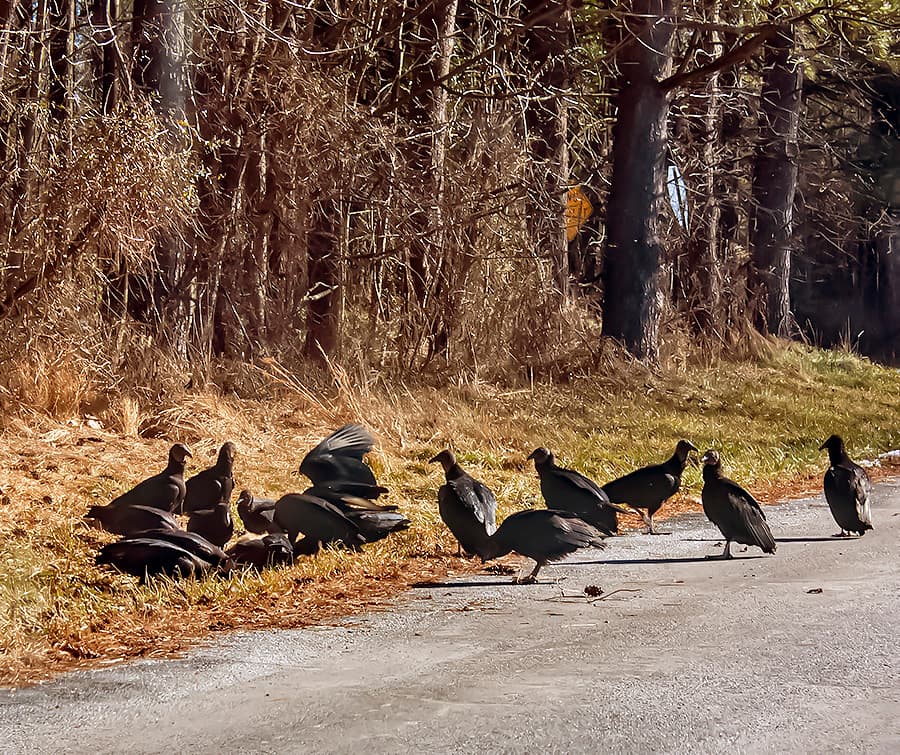
- Vehicle strike on roadsides while feeding
- Secondary poisoning from poisoned bait
- Shooting (illegal)