Bird
Bird
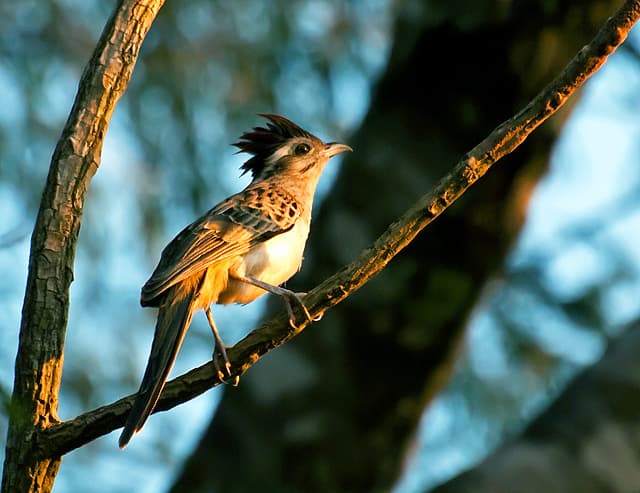
Striped Cuckoo
Tapera naevia
The Striped Cuckoo is a shy, ground-loving brood parasite of Trinidad's savannas and scrubland, more often heard than seen, its clear, whistled, rising call a familiar sound of open country, while its chicks are raised entirely by the unwitting hosts in whose nests the female lays her eggs.
The Striped Cuckoo is a shy, ground-loving brood parasite of Trinidad's savannas and scrubland, more often heard than seen, its clear, whistled, rising call a familiar sound of open country, while its chicks are raised entirely by the unwitting hosts in whose nests the female lays her eggs.
Identification
A slender, long-tailed cuckoo around 27 to 30 cm long, with a distinctive rufous crown, a shaggy, often raised crest, and buff-brown upperparts finely streaked with black, giving rise to the common name. The underparts are pale buff, and the long tail is graduated. It is a skulking, ground-dwelling bird, usually detected first by its distinctive whistled call rather than by sight.
Ecology
The Striped Cuckoo is an obligate brood parasite, laying its eggs in the nests of other bird species, primarily small, dome-nest-building birds such as spinetails and other suboscine passerines, leaving all incubation and chick-rearing to the unwitting host parents. Adults feed mainly on the ground on insects, particularly caterpillars and other large invertebrates, foraging in savanna, scrubland, and overgrown pasture. It is generally solitary and secretive, rarely observed in the open for long.
Status in T&T
Found in savanna, scrubland, and overgrown agricultural land on Trinidad, generally detected by its distinctive call rather than direct observation. It is not threatened. It is protected under the Conservation of Wildlife Act and is not a game species.
Threats
- No major threats; tolerates disturbed savanna and scrub habitat