Bird
Bird
Snail Kite
Rostrhamus sociabilis
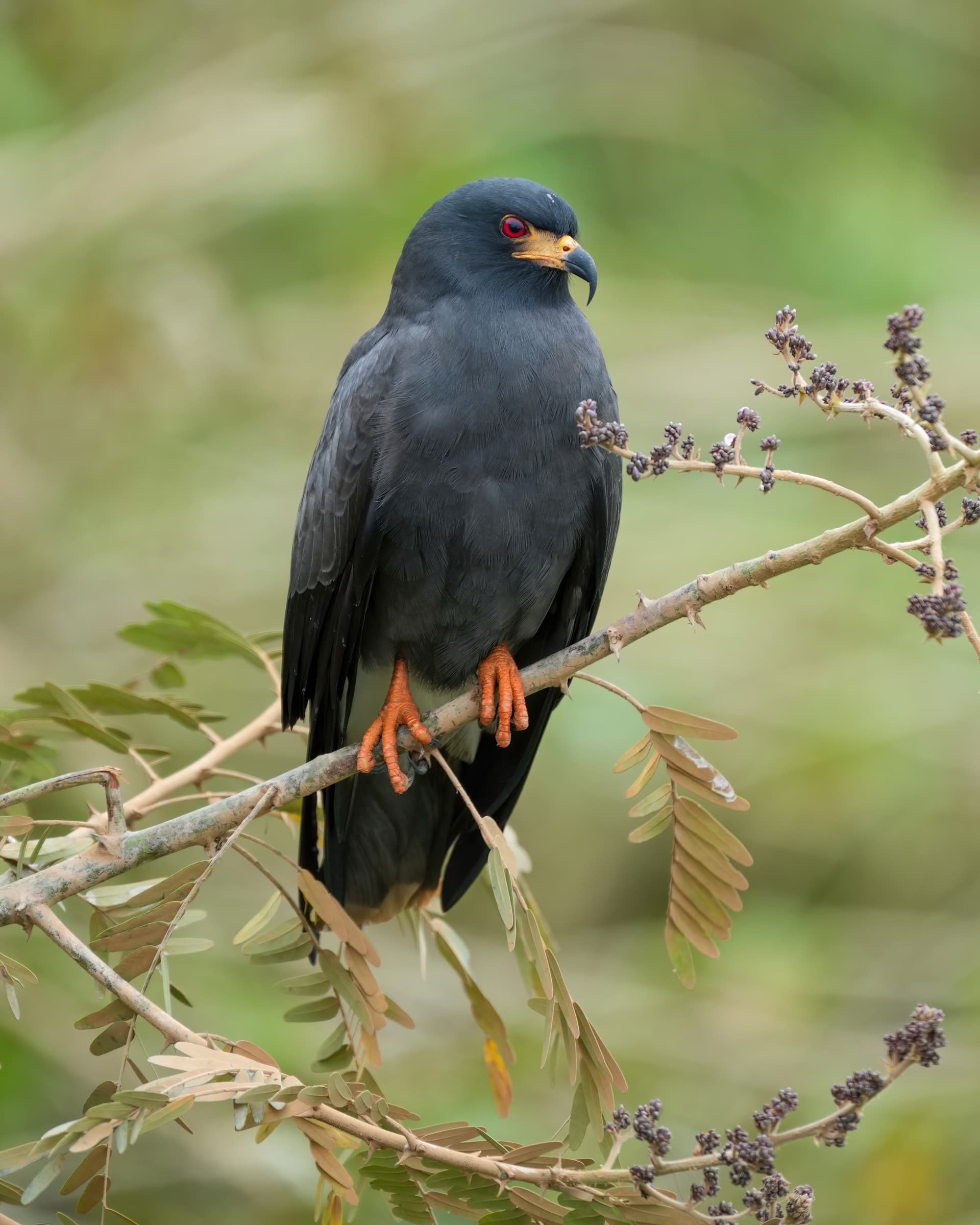
The Snail Kite is one of the most highly specialised raptors in the world, a medium-sized hawk that feeds almost exclusively on freshwater apple snails, which it extracts from the shell with its uniquely long, strongly hooked bill.
The Snail Kite is one of the most highly specialised raptors in the world, a medium-sized hawk that feeds almost exclusively on freshwater apple snails, which it extracts from the shell with its uniquely long, strongly hooked bill. In Trinidad it is a localised but regular resident of freshwater marshes where its prey is abundant, most reliably seen gliding low over reedbeds and marshland on broad, rounded wings as it searches for snails at the water surface. Its extreme dietary specialisation means its presence is a direct indicator of healthy freshwater wetland ecosystems.
Identification
The Snail Kite measures 38 to 48 cm. The male is dark slate-grey throughout with a white base to the tail and white undertail coverts, a bright red-orange bare facial patch, and a vivid red cere and eye. The bill is long, very slender, and strongly hooked, unlike any other hawk in T&T. The female is dark brown above and pale streaked buff-white below, also with the orange facial skin and distinctive bill. In flight the wings are broad and rounded, and the white rump and tail base are conspicuous in both sexes. The flight is slow and buoyant, often low over water.
Ecology
Snail Kites feed almost exclusively on freshwater apple snails of the genus Pomacea. They hunt by flying slowly and low over shallow marsh water, spotting snails at the surface, then swooping to seize them with the feet. The snail is carried to a perch where the strongly hooked bill is used to sever the columellar muscle and extract the snail body whole. The extreme dietary specialisation means snail kite populations track snail availability closely: where Pomacea is abundant, kites congregate in large numbers; where snails decline, kites disappear. They are gregarious, often roosting communally.
Status in T&T
The Snail Kite is found on Trinidad in freshwater marshes and swamp margins, particularly in the Nariva Swamp system where apple snails are present. It is absent from Tobago. Populations fluctuate with water levels and snail abundance. The species is fully protected under the Conservation of Wild Life Act and is not a game species. The health of the Nariva Swamp and similar freshwater habitats is critical for its continued presence in T&T.
Threats
- Freshwater wetland drainage and degradation
- Apple snail population decline from pesticides
- Water level management reducing snail habitat