Bird
Bird
Least Bittern
Ixobrychus exilis
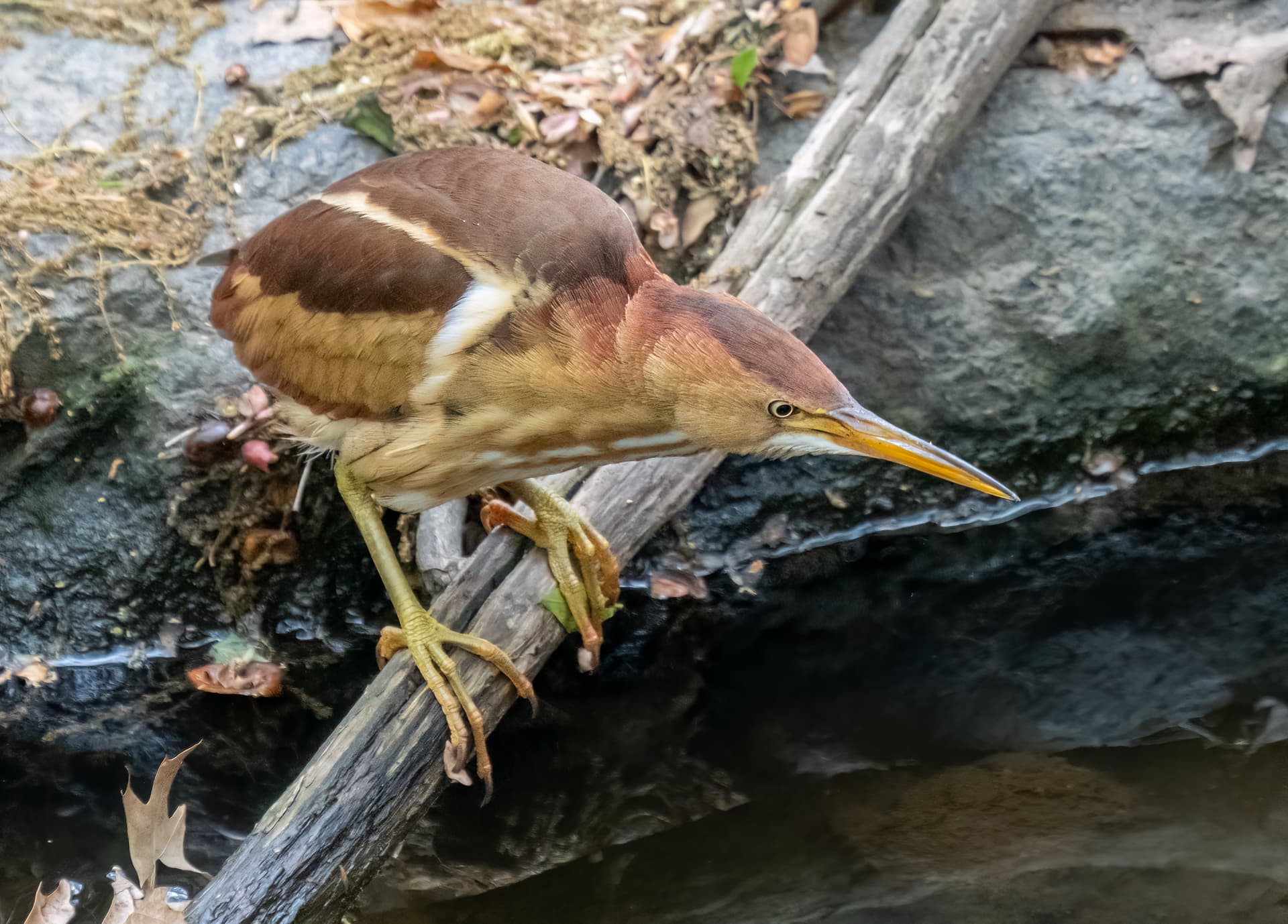
The Least Bittern is the smallest heron in the Americas, an extremely secretive marsh bird of Trinidad's reedbeds and swamp margins that relies on freezing motionless with its bill pointed skyward to disappear among the reeds.
The Least Bittern is the smallest heron in the Americas, an extremely secretive marsh bird of Trinidad's reedbeds and swamp margins that relies on freezing motionless with its bill pointed skyward to disappear among the reeds.
Identification
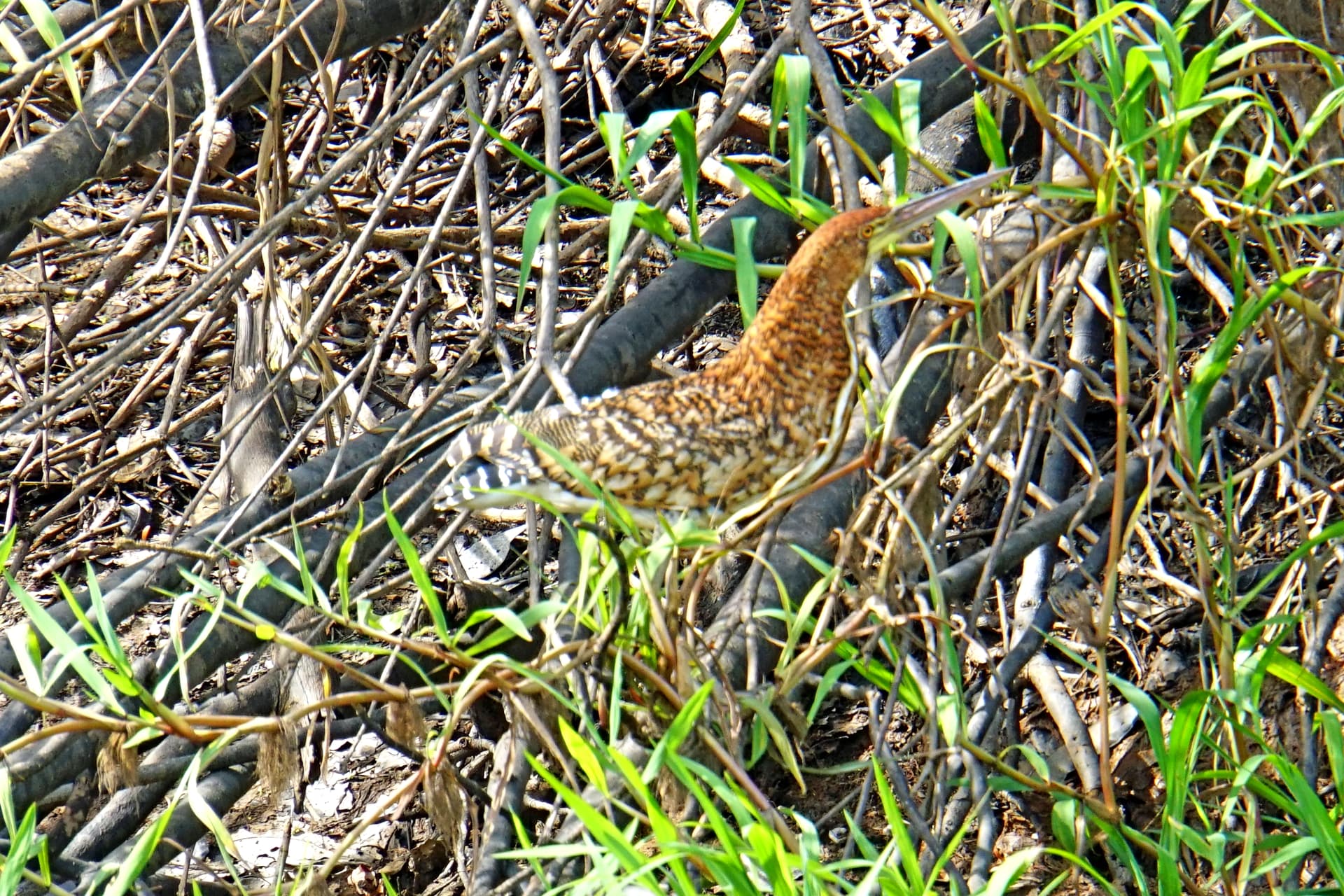
A very small heron around 28 to 36 cm long, with buffy-brown and black plumage that provides excellent camouflage against reeds and marsh vegetation. Males show a glossy black crown and back contrasting with buffy wing patches; females are duller. Its small size and secretive habits make it far more often heard than seen.
Behaviour
Forages by clambering through dense reeds and marsh vegetation on long toes adapted for grasping stems, hunting small fish, amphibians, and aquatic invertebrates. When alarmed it freezes with its bill pointed straight up and body compressed, blending almost perfectly with surrounding reeds, a defensive posture known as "bitterning." Its low, cooing call is usually the first sign of its presence.
Status in T&T
Found in reedbeds, marsh edges, and swamp vegetation across Trinidad, including Caroni and Nariva swamps, though its secretive habits make it difficult to survey and likely under-recorded. Not considered threatened. It is protected as native wildlife under the Conservation of Wildlife Act.
Threats
- Loss and degradation of reedbed and marsh habitat