Reptile
Reptile
Scorpion Mud Turtle
Kinosternon scorpioides
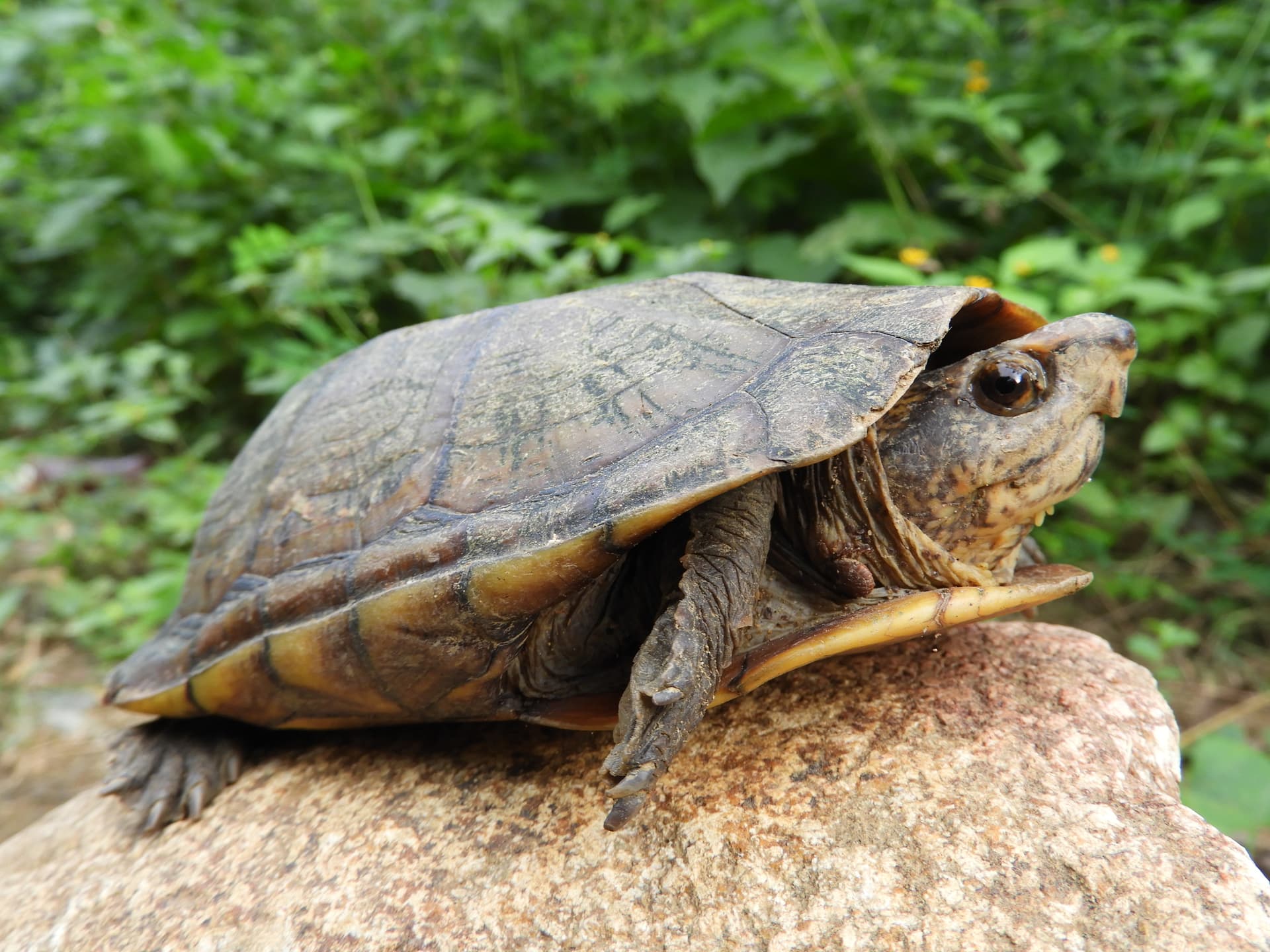
Known locally as the galap, the Scorpion Mud Turtle is Trinidad's small freshwater turtle of ponds, marshes, and slow streams.
Known locally as the galap, the Scorpion Mud Turtle is Trinidad's small freshwater turtle of ponds, marshes, and slow streams. It is a hardy survivor: when its waterway dries out it simply buries itself in the mud and waits for the rains to return.
Appearance
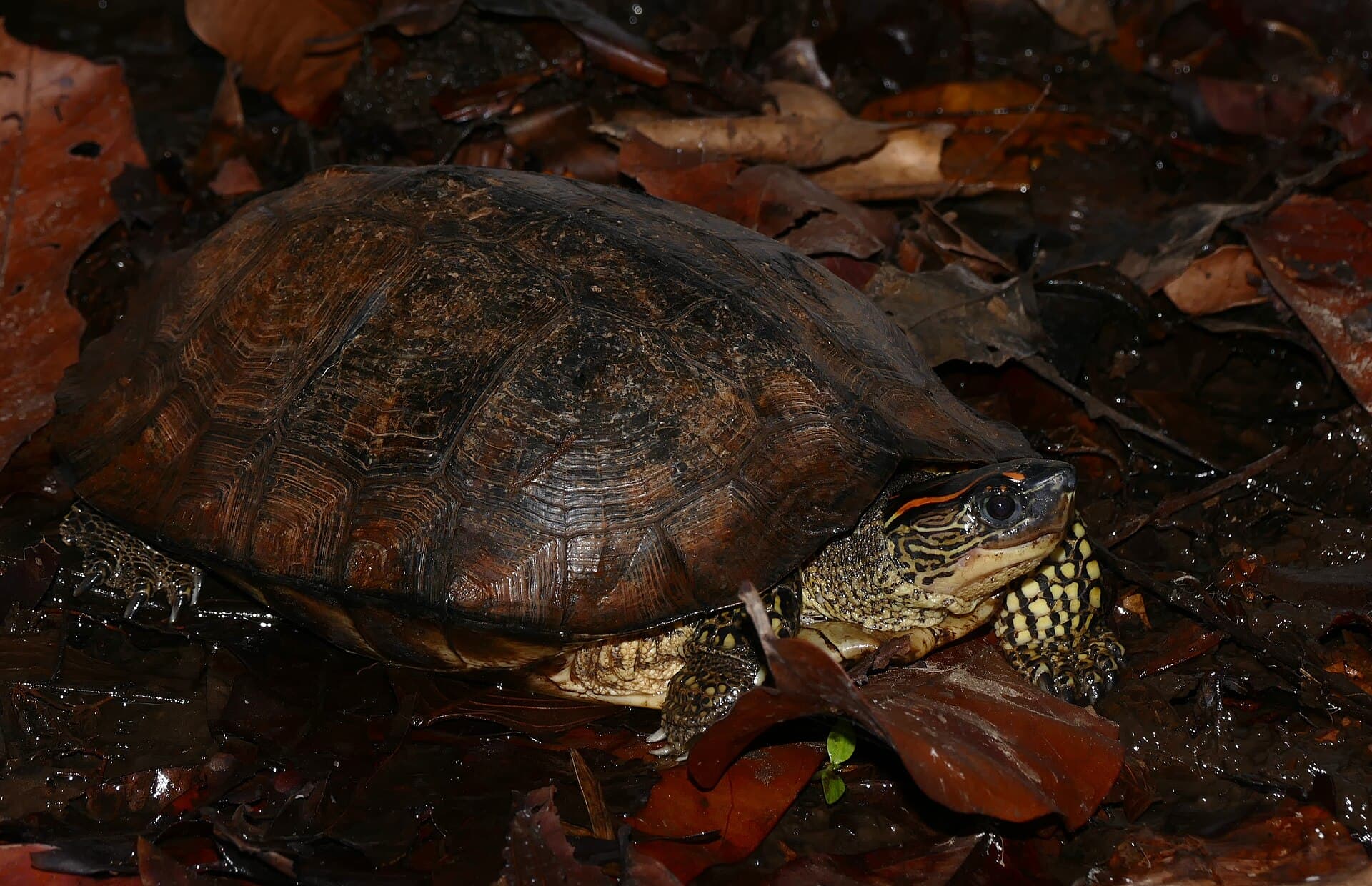
This is a small to medium mud turtle with a domed, oval upper shell that is brown to blackish and typically reaches around 15 to 18 cm in length, though large individuals can be bigger. The lower shell has hinges at front and back that allow the turtle to partly close itself in for protection. The head and limbs are dark, and the species takes its name from a small spine, or scorpion-like tip, at the end of the tail in males.
Behaviour
It is a bottom-dwelling, largely aquatic turtle of slow-moving and still freshwater, spending much of its time walking along the bottom rather than swimming in open water. It is most active in the wet season; during dry spells, or when a pond dries up, it burrows into the mud and aestivates until water returns. It often moves overland between water bodies after rain.
Diet and breeding
The galap is an omnivore that feeds on a wide range of aquatic invertebrates, including insects and their larvae, snails, crabs, shrimp, and worms, along with fish, frogs, carrion, and plant material such as algae, fruits, and seeds. Nesting takes place mainly around the early wet season, with clutches of roughly 6 or more eggs buried in soil near water. The eggs incubate for around three months before the hatchlings emerge.
In Trinidad and Tobago
The Scorpion Mud Turtle is widespread in freshwater wetlands across Trinidad but is not recorded from Tobago. Its dependence on ponds, marshes, and slow streams means wetland drainage and habitat loss are the main local pressures on it. The species is classified as Least Concern across its broad Latin American range.