Reptile
Reptile
Galap (River Turtle)
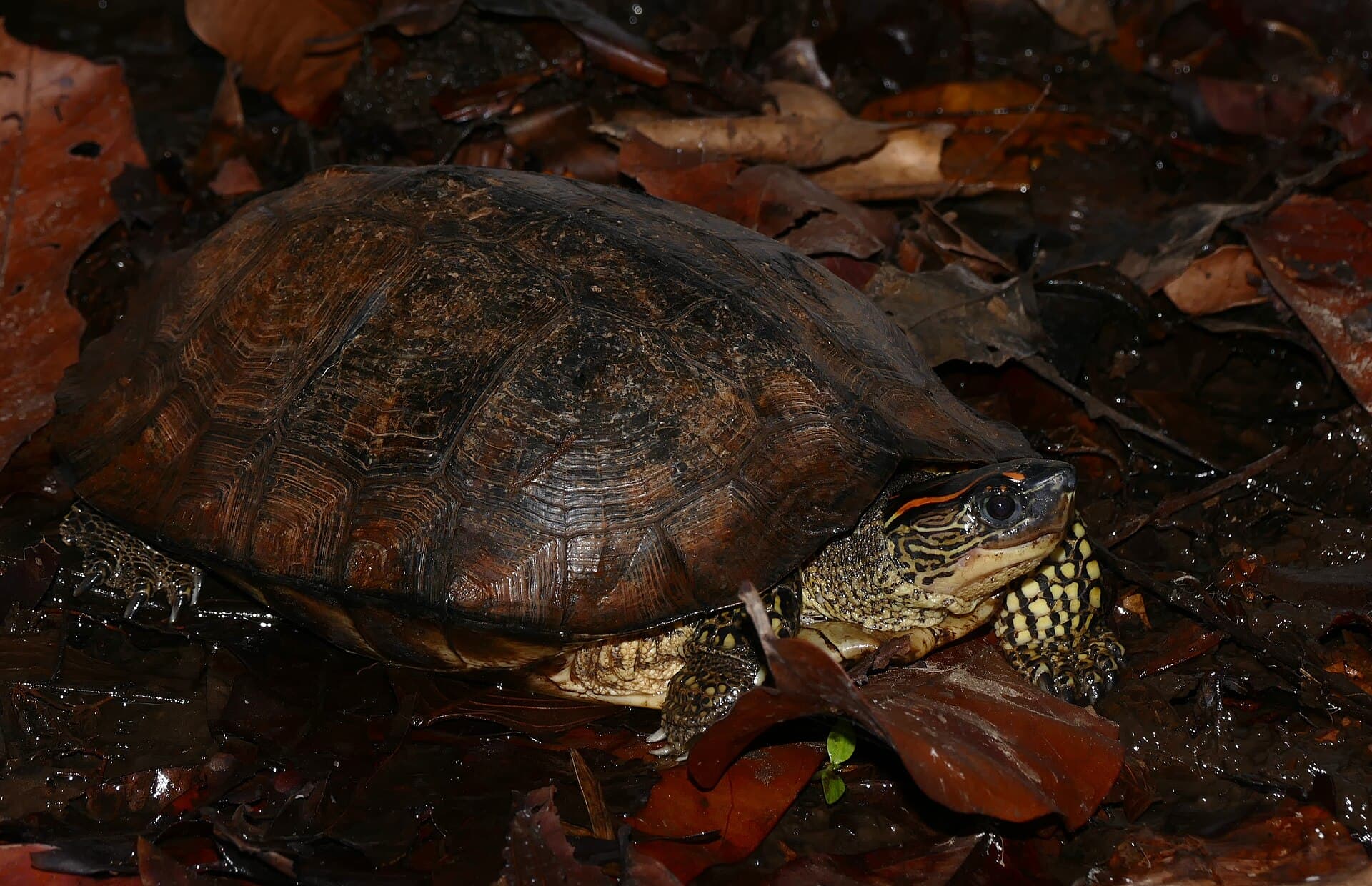
Rhinoclemmys punctularia
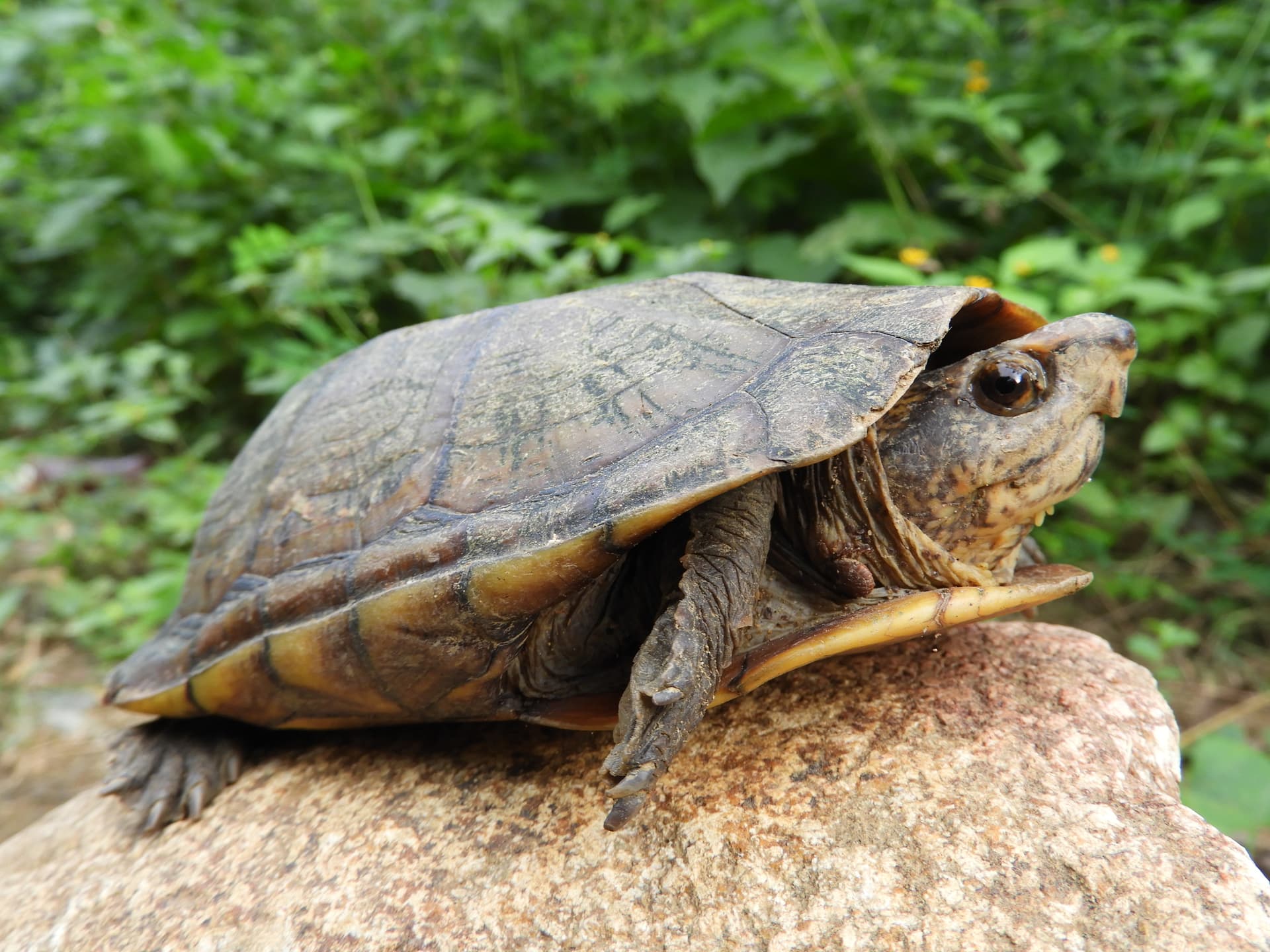
The Galap is a freshwater river turtle found in Trinidad's rivers, swamps, and ponds, valued locally as bush meat and increasingly uncommon in areas of heavy hunting pressure.
The Galap is a freshwater river turtle found in Trinidad's rivers, swamps, and ponds, valued locally as bush meat and increasingly uncommon in areas of heavy hunting pressure. It is one of the most traditionally harvested reptiles in Trinidad's rural interior.
Identification
A medium-sized freshwater turtle with a dark brown to black, moderately domed shell and a head marked with distinctive yellow, orange, or reddish spots and streaks against a dark background, a pattern unique enough to allow confident field identification. Adults reach a shell length of roughly 18 to 22 cm, with females typically somewhat larger than males.
Ecology
An omnivorous inhabitant of slow rivers, swamps, and ponds, feeding on aquatic and streamside plants, fallen fruit, and small invertebrates such as snails and insect larvae. It basks regularly on logs and banks to regulate body temperature and is largely diurnal, more terrestrial than many other freshwater turtles and capable of extended overland movement between water bodies, especially during the wet season.
In Trinidad and Tobago
Found in Trinidad's freshwater wetlands and rivers, particularly in the Central and South Trinidad interior, where it is traditionally hunted for food as "galap" or "river turtle" meat, a pressure that has measurably reduced local populations in easily accessible areas near roads and villages. Harvest is regulated under the closed-season provisions of the Conservation of Wildlife Act.
Threats
- Overharvesting for food
- Wetland habitat loss
- Road mortality during overland movement